



World’s first liquified hydrogen carrier arrives in Australia
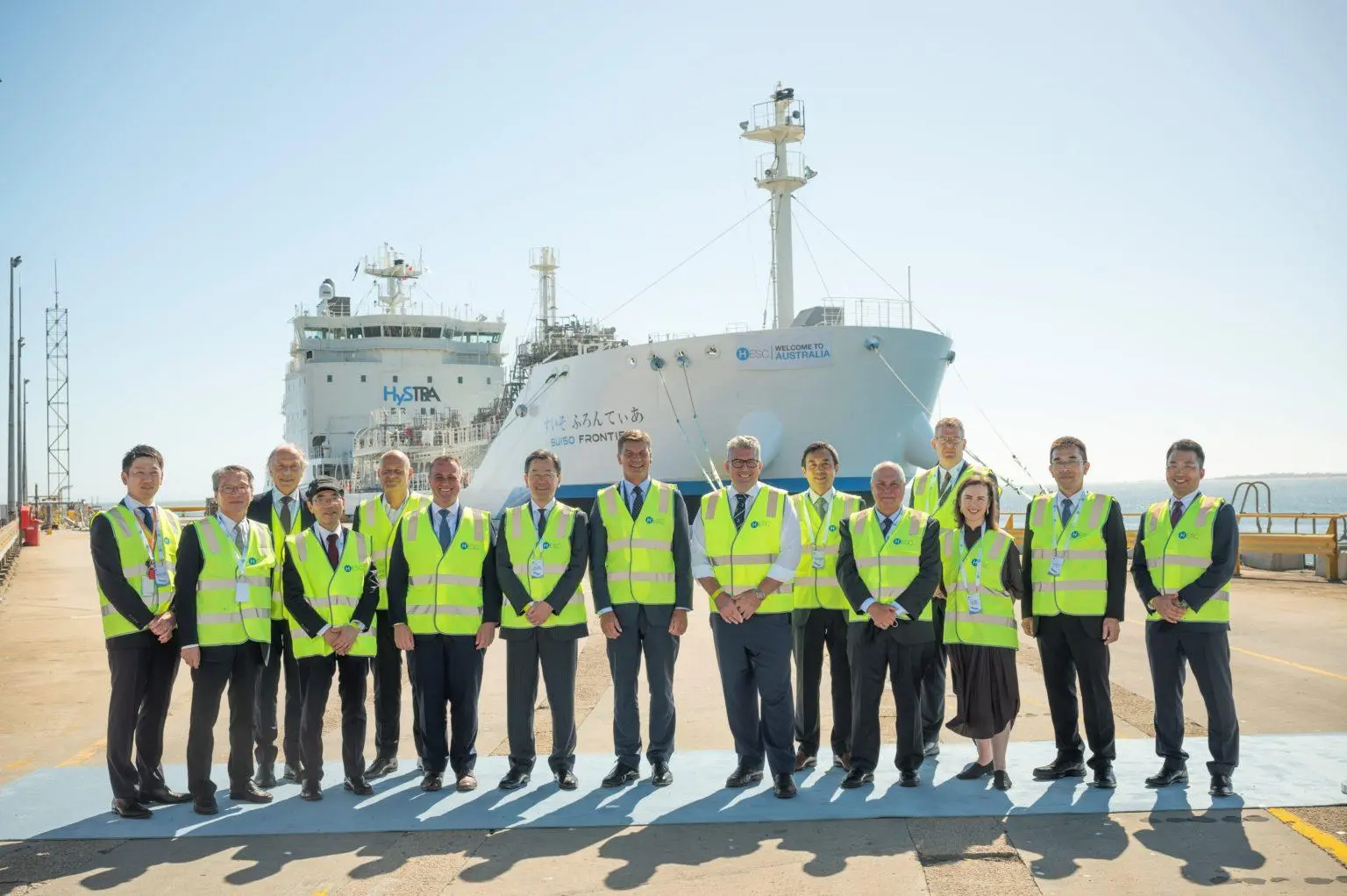
The 9,000dwt, 116 metre vessel’s arrival represents a milestone for the Hydrogen Energy Supply Chain (HESC) Pilot Project. The 99.999% pure hydrogen has been produced from Latrobe Valley coal and biomass via gasification, trucked to Hastings, cooled to -253 degrees and subsequently liquified to less than 800 times its gaseous volume, ready for shipment.
The loading of liquefied hydrogen onto the Suiso Frontier for the return journey to Kobe, Japan, makes the HESC Project the first in the world to make, liquefy and transport liquid hydrogen by sea to an international market.
HESC plans to produce 225,000 tonnes of carbon neutral hydrogen a year from a mix of Latrobe Valley coal and biomass, capturing and storing CO2 via the CarbonNet Project – a plan to establish a commercial scale carbon capture and storage network in Gippsland, Victoria.
Over the next two years, the project partners will develop technical and operational requirements for a commercial-scale project. Further refining and testing of the biomass feedstock for hydrogen production will be undertaken, along with other research aimed at improving technologies to reduce costs and carbon intensity across the supply chain. This includes further development of the ortho-para conversion catalyst for creating liquid hydrogen in partnership with Australian research body CSIRO.
The HESC project partners are: Kawasaki Heavy Industries, Electric Power Development Co., Iwatani Corporation, Marubeni Corporation, AGL Energy and Sumitomo Corporation. Royal Dutch Shell, ENEOS Corporation and K-Line are also involved in the Japanese portion of the project.
ClassNK conducted the design review of the Suiso Frontier’s cargo containment system, as reported by The Motorship.
Related Articles
 ALTERNATIVE FUELS & LUBRICANTS
 ALTERNATIVE FUELS & LUBRICANTS
 ALTERNATIVE FUELS & LUBRICANTS