



ABS Grants AiP to WTIV Integrated Feeder Barge with BargeRack
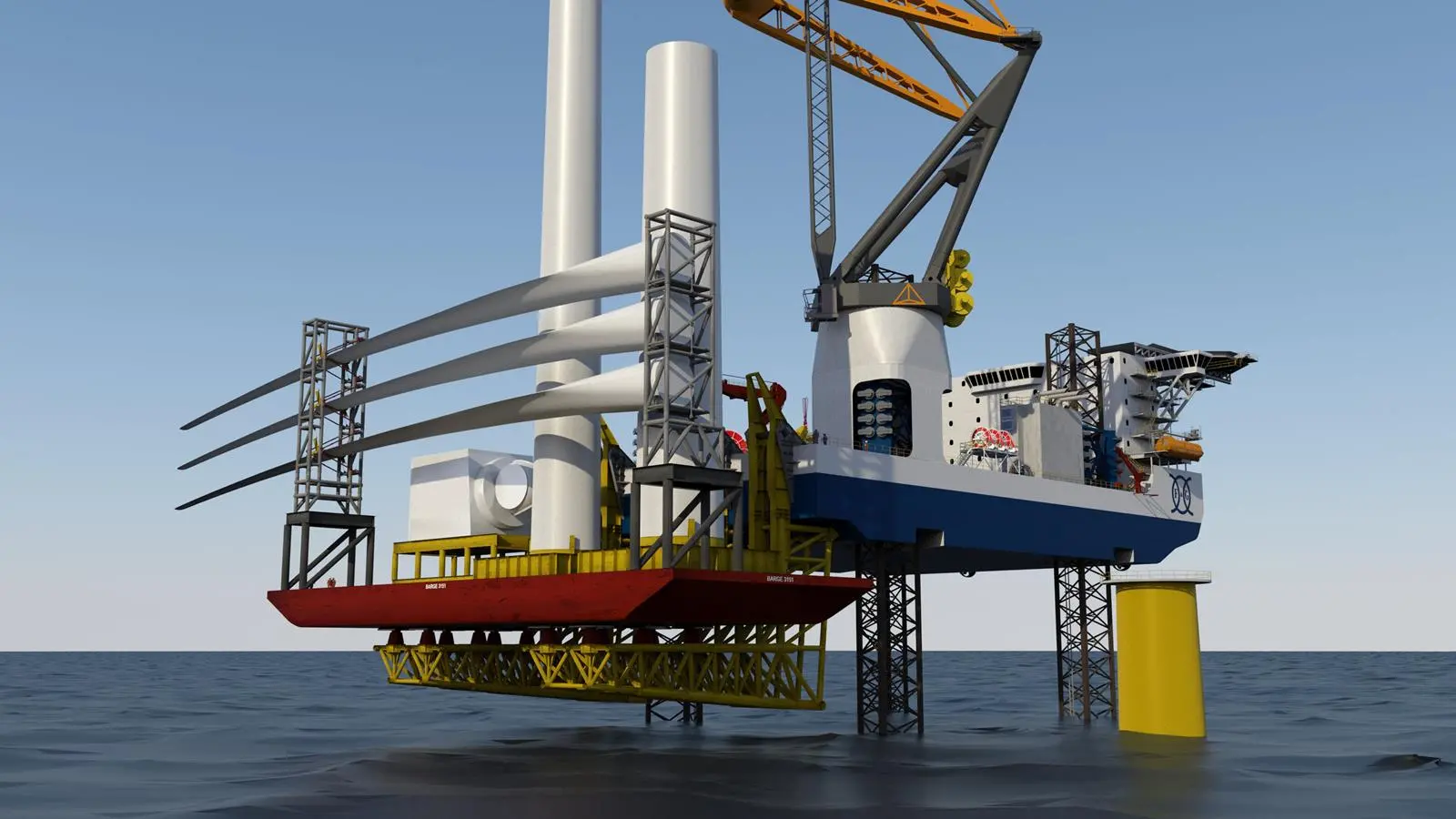
The design includes the Jones Act-compliant barge in a lifting system attached to the WTIV that F&G says reduces motion and increases the window of operational time. Typical feeder solutions are inherently risky due to feeder vessel motions, with the impact on equipment transfer. “We’ve solved this problem by completely eliminating the feeder vessel motion, as well as reducing the feeder vessel cost by an order of magnitude compared to other feeder vessels,” said Robert Clague, Vice President of Engineering at F&G.
The F&G website notes that BargeRack is used to lift the barge with wind turbine components as the WTIV vessel is elevated. This removes the need for expensive motion compensation equipment, because there are no relative motions between the barge and the vessel.
Development of the BargeRack WTIV is the latest vessel designed specifically for U.S. offshore wind operations to be supported by ABS. A subsea rock installation vessel is to be built to ABS Class and Charybdis, the first Jones Act-compliant WTIV, is also now under construction to ABS Class. The first U.S.-flagged Jones Act offshore wind farm service operation vessel (SOV) ever ordered will be built to ABS Class. These vessels will join the first ABS-classed crew transfer vessel (CTV) in the U.S., Windserve Odyssey. ABS has also issued AIPs for a series of wind support vessels from various designers.
Related Articles
 PROPULSION
 GENERAL NEWS
 HYDROGEN