



MAN Energy Solutions introduces new laser-technology drive shaft rings
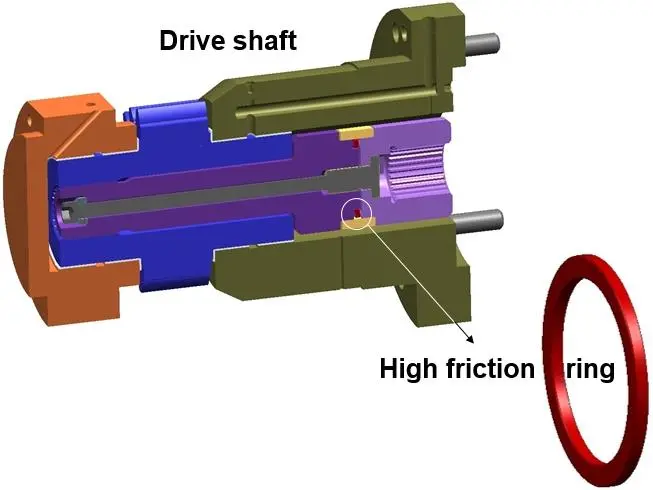
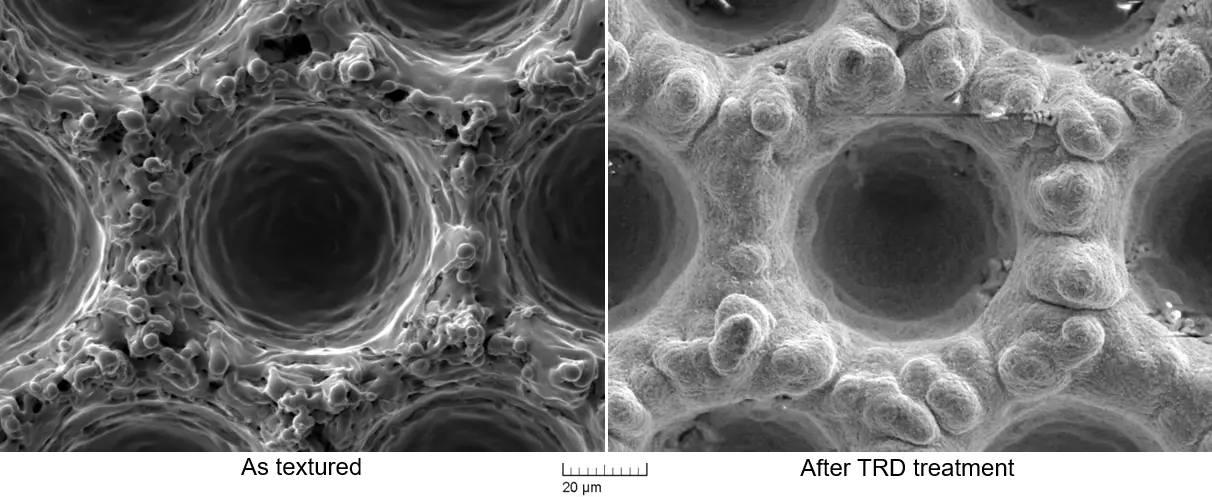
The new rings have a surface texture created by a network of 55 micron pits surrounded by mounds of spatter so that the result resembles a uniform hexagonal array of hole saws. The texture is created using nanosecond-pulsed fibre lasers and then hardened using a chromium-based process developed by Denmark-based TRD Surfaces.
“The drive shaft transfers torque from hydraulic pumps to the gear, and the high friction rings perform this function. They are also designed to slip if the torque exceeds a certain level to prevent overload of the gear,” said Dr Jesper Vejlø Carstensen, Senior Research Engineer at MAN Energy Solutions. “The high friction ring ensures this dual functionality but it requires the friction coefficient to be within a certain specific range.”

Previously, the rings were textured using a thermal spray coating. This provided less control of the variation in the coefficient of static friction, which should be at least 0.6. If the coefficient is too low, unintentional slippage can occur, and if it is too high, excessive torque can be transferred to the drive train, leading to catastrophic damage to the component. In both cases, significant extra cost is involved as the pumps must be shut down while the drive shaft is disassembled and the ring replaced.
After successful laboratory testing, the new rings were mounted on 2 x 3 driveshafts in two different marine engines on ships. The parts performed well, and after 1,500 hours of operation there was no evidence of slipping. “We have achieved a coefficient of static friction of 0.74 (0.6 requirement) and a relative standard deviation of 3–4% as opposed to 13–14% for thermally sprayed samples,” said Carstensen. He anticipates that the new rings will reduce maintenance costs by around 90%.
MAN Energy Solutions has now introduced a set of new, more stringent specifications for the part. The previous requirement that the coefficient of static friction be at least 0.6 has been changed to require the coefficient of static friction to be within a range of 0.7 to 0.9.
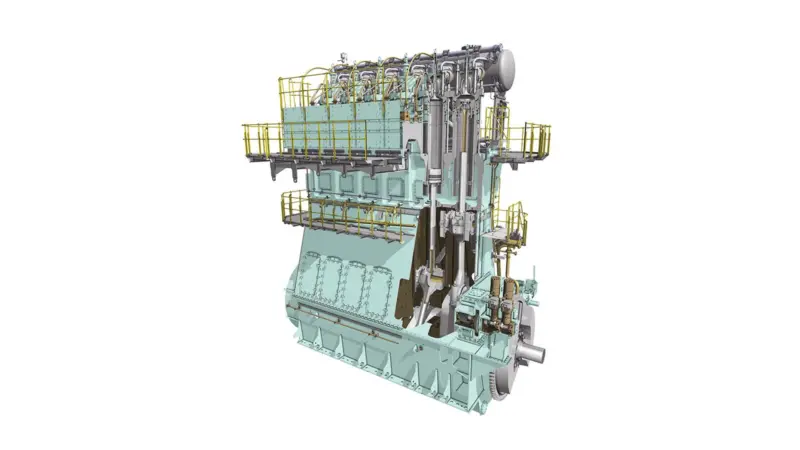
Carstensen notes that while the engines that have the rings fitted are huge, weighing up to 2,300 tons and exceeding 23 metres in length, the new design demonstrates that even details at the micrometre level are important. High friction rings elsewhere on MAN Energy Solutions engines will now be evaluated to see if the new technology will be beneficial.
The research behind the development was undertaken by MAN Energy Solutions, Heriot-Watt University in Scotland and TRD Surfaces as part of the SHARK project funded by the European Union’s Horizon 2020 Framework Programme for Research and Innovation. The results were published in Materials.
The paper is available here.
Related Articles
 2-STROKE & 4-STROKE
 2-STROKE & 4-STROKE
 2-STROKE & 4-STROKE