



Australia investigates LH2 carrier malfunction
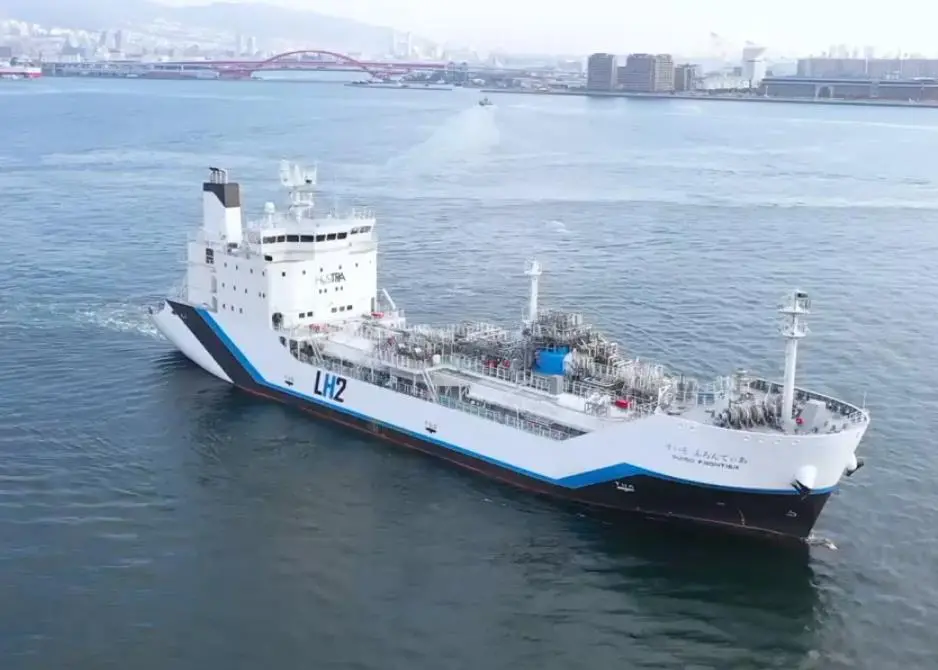
At 2147 AEST on 25 January 2022, a flame was seen coming from the gas combustion unit’s exhaust on deck. The unit was immediately shutdown and isolated before the crew implemented the fire prevention response plan. No further abnormalities were reported, and there were no injuries, damage or pollution.
The vessel left port on 28 January, 2022, for its return journey to the Port of Kobe in Japan after loading liquid hydrogen as part of the Hydrogen Energy Supply Chain (HESC) project.
The hydrogen gas was cooled to -253 degrees Celsius at the Hastings hydrogen liquefaction plant and then transferred to the purpose built tank aboard the ship.
The Suiso Frontier is expected to arrive in Kobe later in February. Once the vessel arrives in Kobe, the team will unload the liquefied hydrogen into a purpose-built storage tank onshore. The next phase of the project will involve the HESC Project Partners undertaking analysis of the pilot’s learnings with the intent of moving to a commercial scale project in the mid-to-late 2020s.
HESC’s vision is to produce carbon neutral hydrogen through extraction from a mix of Latrobe Valley coal and biomass, capturing and storing CO2 via the CarbonNet Project and optimising energy efficiency in the HESC supply chain.
The HESC project partners are: Kawasaki Heavy Industries, Electric Power Development, Iwatani Corporation, Marubeni Corporation, AGL Energy and Sumitomo Corporation. Shell ENEOS Corporation and Kawasaki Kisen Kaisha (K-Line) are also involved in the Japanese portion of the project.
Related Articles
 ALTERNATIVE FUELS & LUBRICANTS
 ALTERNATIVE FUELS & LUBRICANTS
 ALTERNATIVE FUELS & LUBRICANTS