



AiP for ABB and Ballard high-power PEM fuel cell concept
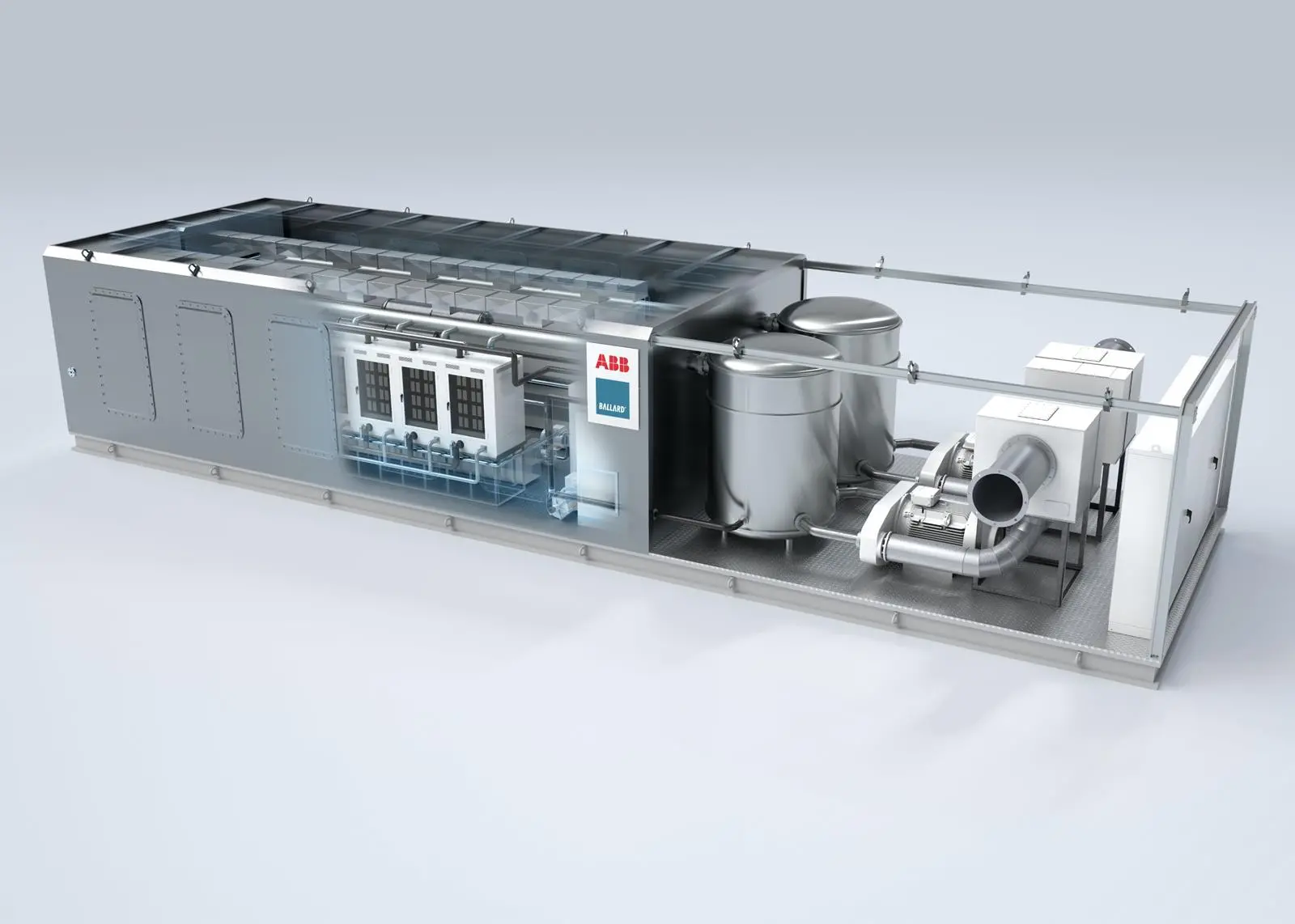
“ABB’s industry-leading experience in marine solutions and Ballard’s expertise in development and deployment of megawatt-scale fuel cell systems for land-based use has proven to be the right combination, enabling us to take the next step in our joint efforts to make this technology available for larger vessels,” said Jesper Themsen, President and CEO of Ballard Power Systems Europe A/S. “Securing an AiP offers a signpost to the maritime industry regarding the potential of this truly transformative concept.”
The successful development of a high-power fuel cell system concept builds on a collaboration between ABB and Ballard, the leading global provider of proton exchange membrane (PEM) fuel cell solutions, initiated in June 2018. As part of its strategy to develop alternative emission-free technologies, ABB is already well advanced in collaborative development of fuel cell systems for ships.
Considered among the most promising technologies available in terms of greenhouse gas reduction, zero-emission hydrogen fuel cells are already powering smaller vessels over short distances and the technology is on the verge of being ready for installation on larger ships.
“This AiP is an important milestone in making high-power fuel cells commercially available, and it underpins our commitment to bring new levels of efficiency, reliability and sustainability to the global shipping industry,” said Juha Koskela, Division President, ABB Marine & Ports. “As we continue to pave the way towards decarbonizing shipping, we are confident that vessel electrification, including fuel cell technology, will play a pivotal role in helping the marine industry achieve its environmental targets.”
The high-power fuel cell unit is a flexible solution that will support the energy needs of a diverse range of vessels requiring multiple 3 MW blocks of power. A cruise vessel operating in coastal areas could either run entirely on fuel cell power or switch to it when operating in environmentally sensitive areas or emission control zones, while a ferry with a regular schedule and frequent bunkering opportunities could operate solely on fuel cell power. For ocean going vessels, fuel cell power could support auxiliary needs. The concept of the solution also envisions the integration with an energy storage system.
Related Articles
 ALTERNATIVE FUELS & LUBRICANTS
 ALTERNATIVE FUELS & LUBRICANTS
 ALTERNATIVE FUELS & LUBRICANTS