



RWE plans to builds ammonia terminal in Brunsbüttel
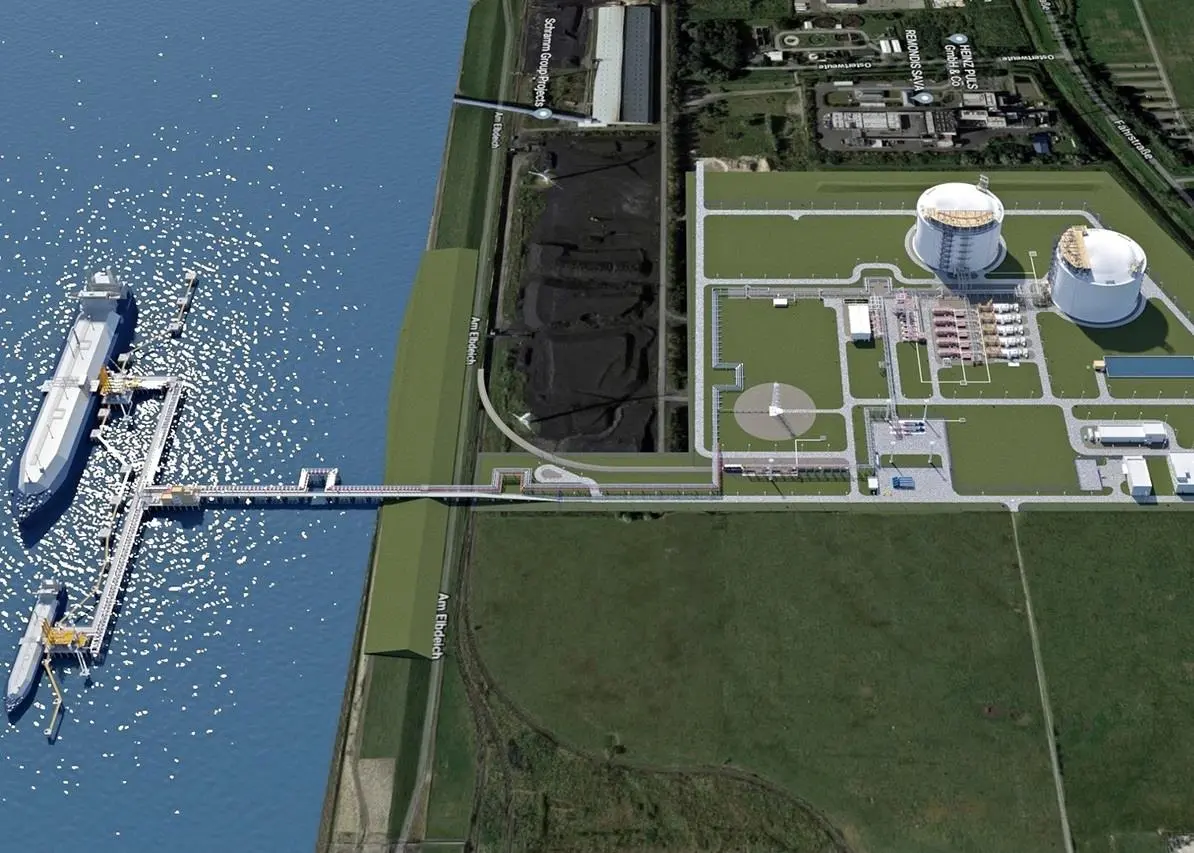
RWE is relying on green ammonia as the most competitive hydrogen derivative with the highest level of technological maturity. The project is intended to help facilitate the subsequent conversion of the entire site ready to import green molecules.
From as early as 2026, around 300,000 tonnes of green ammonia per year are due to arrive in Germany via the terminal and be distributed to customers. The next step is to build a cracker on a large industrial scale at the terminal to produce green hydrogen on site as well. This will then be transported to industrial customers via a dedicated hydrogen pipeline. An increase in the volume of ammonia to 2 million tonnes per year is also planned.
Due to its direct access to the North Sea and the Baltic Sea, and its connection to European inland waterways, the Brunsbüttel site offers ideal logistical conditions for the project. Brunsbüttel Ports is supporting the project with space and as a logistics partner with port infrastructure to unload tankers.
Hydrogen pipeline under consideration
The Federal Minister for Economic Affairs and climate Action Robert Habeck welcomes the project: “Russia’s brutal war against Ukraine has made it abundantly clear that we must become independent of fuel imports from Russia. The LNG terminal in Brunsbüttel is an important element in this, as it will increase the capabilities to import gas to Germany. Green ammonia as a liquefied hydrogen derivative can make an important contribution to supplying Germany with green hydrogen. At the same time, we can gain important experience with this project for the conversion from LNG to green hydrogen or hydrogen derivatives.”
Mr Harbeck also met with Norway’s Prime Minister Jonas Gahr Store in Oslo on 16 March. After the meeting, the two countries agreed to undertake a feasibility study on the construction of a pipeline to transport hydrogen from Norway to Germany.
Brunsbüttel LNG terminal
Earlier in March, the KfW (on behalf of the German Federal Government), Gasunie (100% owned by the Dutch state), and RWE signed a Memorandum of Understanding (MoU) on a joint project to build a terminal for the import of LNG at Brunsbüttel. The KfW will acquire 50% of the shares in the LNG terminal for the Federal Government. Gasunie will operate the facility.
The terminal will have an annual regasification capacity of 8 billion m3 and provide a possibility to import gas directly to the German market from regions which cannot be reached by gas pipelines.
Sigrid Kaag, Finance Minister of the Netherlands, added: “Gasunie, the Dutch state-owned enterprise, is making an important contribution towards Europe’s gas security by building an LNG terminal in Brunsbüttel. This is a good step towards reducing dependence on imports of gas from Russia”.
Related Articles
 ALTERNATIVE FUELS & LUBRICANTS
 ALTERNATIVE FUELS & LUBRICANTS
 ALTERNATIVE FUELS & LUBRICANTS