



Fortescue and E.ON act on Europe energy shortfall
The partners signed an MoU committing to researching the supply with the broader ambition to lead the decarbonisation of Europe and to strengthen security of green energy supply at a time when Europe needs to reduce its energy dependence on fossil fuels from Russia as quickly as possible.
Five million tonnes per annum (mtpa) of renewable GH2 is equal to approximately one third of the calorific energy Germany imports from Russia. The supply will help to decarbonise thousands of medium-sized enterprises all over Germany and the Netherlands, as well as other European cities and communities to which E.ON distributes energy.
It is intended that such large amounts of renewable green hydrogen will be powered by Australia’s renewable resources as well as FFI’s other planned global projects, and will be distributed by E.ON. The parties have also agreed to work together to analyse what solutions could look like to solve infrastructure issues and to build a secure value chain.
Storage and transportation details to be clarified
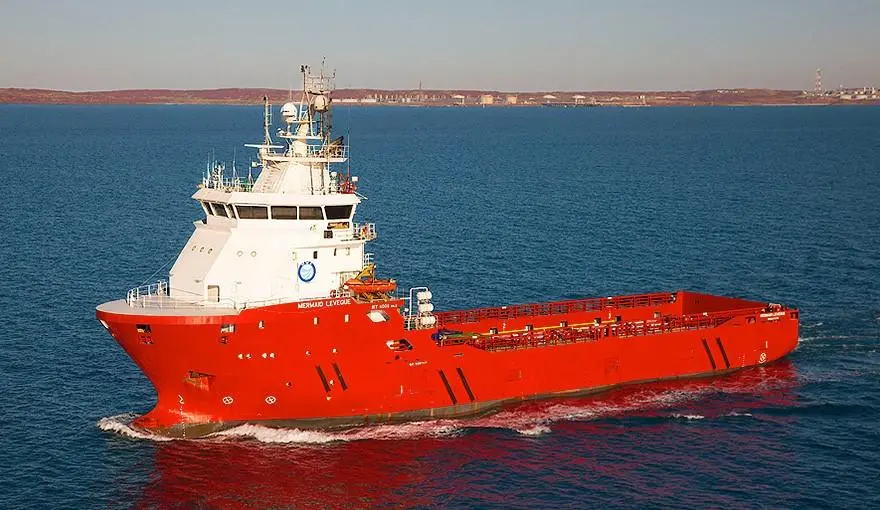
How to store and ship the fuel will be the subject of further studies. Ammonia seems a likely choice. The Motorship has previously reported on the FFI’s interest in converting a 75 metre offshore support vessel MMA Leveque to run on green ammonia, in collaboration with MMA Offshore. The project is part of Fortescue Metal Group’s broader move to transition its fleet of trucks, locomotives and ships to operate on green fuels.
FFI wants green hydrogen to be the most globally traded seaborne energy commodity and is currently building an ammonia supply chain to satisfy UK demand. Late last year, the company signed a multi-billion-pound deal with construction giant J C Bamford Excavators (JCB) and Ryze Hydrogen that will see it become the largest supplier of green hydrogen to the UK. Under a memorandum of understanding, signed prior to COP26, JCB and Ryze Hydrogen will purchase 10% of FFI’s global green hydrogen production which is anticipated to grow to 15 million tonnes per year by 2030 and reaching 50 million tonnes per year in the following decade. FFI is planning to ship the hydrogen to the UK in the form of ammonia, and the goal is to also use ammonia as fuel for the ships that will transport it.
“We are rapidly establishing the building blocks across Australia and globally that will allow us to develop and fully integrate our world leading green technologies, manufacturing capabilities and green energy generation and distribution. From the beginning of FFI our philosophy was to drive performance across the entire new renewable green hydrogen value chain. Today’s important announcement in Europe is not just signalling to the global marketplace that now is the time to make renewable green hydrogen. It is also a decisive step forward in FFI’s journey to become one of the world’s largest green energy producers,” said Elizabeth Gaines, CEO of Fortescue Metals Group, the parent company of FFI.
“Two major international companies are joining forces to build a “hydrogen bridge” from Australia to Germany and the Netherlands, based on shared values and the joint capability of realising the scale of such a project. Two together make decarbonisation possible for many, which is an encouraging message, especially in these days,” said Leo Birnbaum, CEO of E.ON.
Nascent hydrogen fronthaul route
If Australia’s current pipeline of clean hydrogen projects is completed on time, the country could be one of the world’s largest hydrogen suppliers by 2030. In 2021 the Australian Government announced five new international partnerships:
- Australia and Germany will work together under a new Hydrogen Accord. The accord includes several new initiatives to accelerate the development of a hydrogen industry. Australia will contribute $50 million and Germany €50 million.
- Australia and Singapore will establish a $30 million partnership to accelerate deployment of low emissions fuels and technologies (like clean hydrogen) in maritime and port operations.
- The Japan–Australia Partnership on Decarbonisation through Technology will increase the countries’ shared focus on priority low emissions technologies, including clean fuel ammonia and clean hydrogen.
- The Republic of Korea and Australia will work together to drive increased adoption of low and zero emissions technologies.
- Australia and the United Kingdom have agreed to collaborate on research and development across technologies crucial to decarbonising the global economy, including clean hydrogen.
State and territory governments are also building international partnerships to support projects in their regions:
- The South Australian Government signed a memorandum of understanding to investigate clean hydrogen exports with the Port of Rotterdam in the Netherlands.
- Tasmania is exploring ways to collaborate and cooperate with international partners.
- The Victorian Government is a partnering with the Australian Government, the Japanese Government and Australian and Japanese industry to develop the $500 million Hydrogen Energy Supply Chain project in the Latrobe Valley.
Related Articles
 ALTERNATIVE FUELS & LUBRICANTS
 ALTERNATIVE FUELS & LUBRICANTS
 ALTERNATIVE FUELS & LUBRICANTS