



Whitepaper proposes MASS levels of autonomy
The whitepaper Autonomous Ships: Terms of Reference for Rule Development calls for urgency in developing common terms of reference covering autonomous and highly automated ship operations that can be used across the maritime industry. It examines definitions of ship autonomy and levels of automation, and explores how they can be applied progressively to ship operations.
The whitepaper presents a proposal for a scale for determining automation in shipping, by describing six levels which can be applied to various ship operations or an entire ship. It also suggests that levels of autonomy should be defined on a scale based on the need for human attention/attendance rather than mixing the definition with manning levels on board a ship.
Levels of autonomy
Level 0: Basic operation / human controls the vessel.
Level 1: Assisted operations / hands-on, eyes-on, mind-on.
Level 2: Partial automation / hands-off (sometimes), eyes-on, mind-on.
Level 3: Conditional automation / hands-off, eyes-off (sometimes), mind-on.
Level 4: High automation / hands-off, eyes-off, mind-off (sometimes).
Level 5. Autonomous / hands-off, eyes-off, mind-off = human-off.
The main difference between level 4 and level 5 is that, in fully autonomous mode, the system will be capable of coping with exceptions, unforeseen situations, anomalies, faults, etc., without needing human oversight.
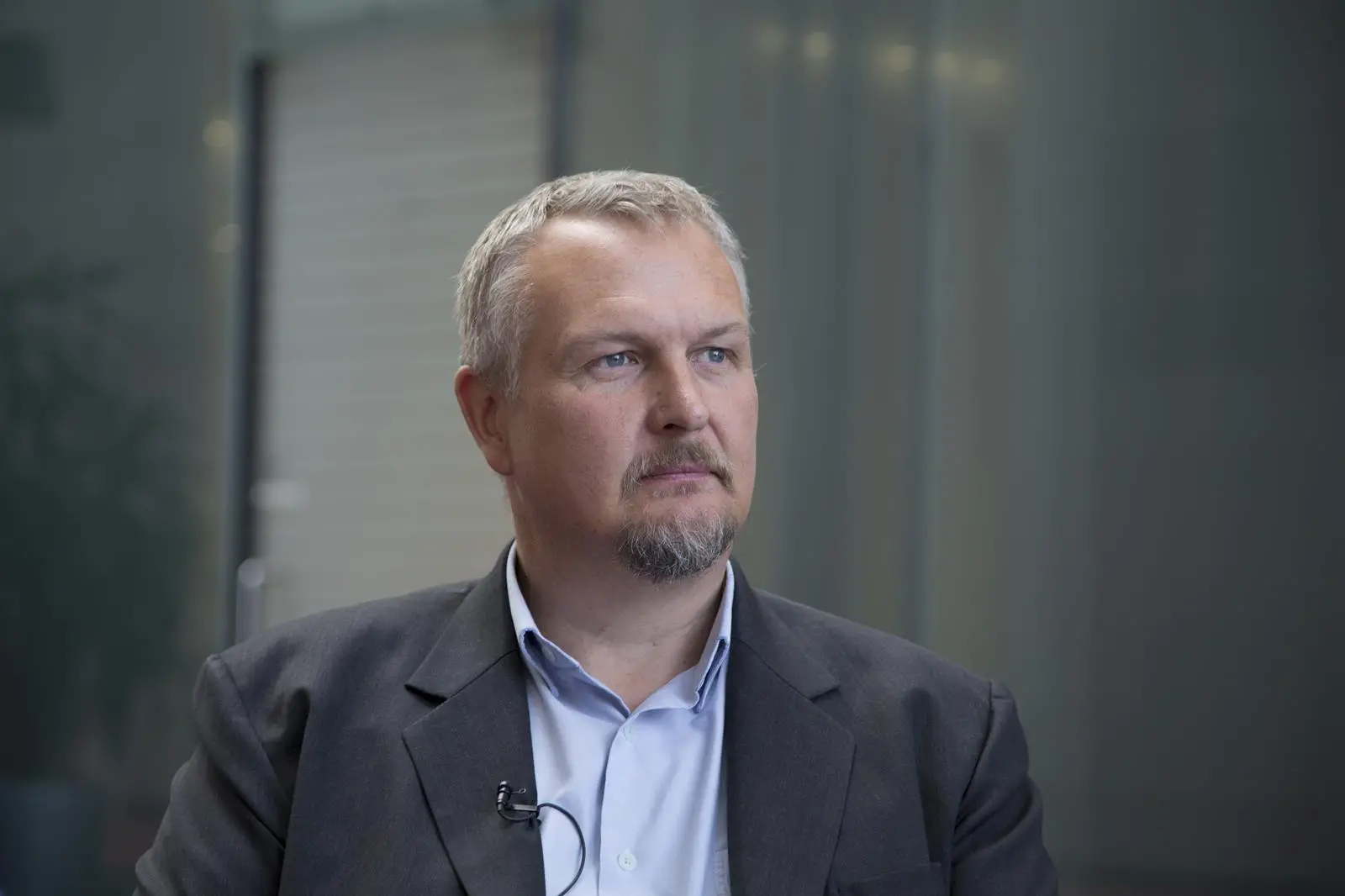
One Sea Senior Ecosystem Lead, Päivi Haikkola, said: “Currently, there is no common language for MASS, and terms or technology types are used interchangeably, when they have very different meanings in reality. For example, remote control and monitoring should not be confused with automation, as remote operations can be performed on ships of various levels of automation. Also, the term autonomy should only be used for the highest level of automation.
“The development of international regulations for MASS is the top priority for One Sea, and discrepancies in terminology being used is one of the main obstacles that must be overcome. The purpose of the whitepaper is to provide clarity and assist rule development and standard definitions which can be easily applied across the industry going forward. Regulations cannot be successfully developed if different definitions and interpretations of how to categorise levels of automation persist.”
In May 2021, an IMO intersessional working group submitted its MASS regulatory scoping exercise report to the Maritime Safety Committee. The report outlined the scale of the task and highlighted how much the maritime safety regulations are based on the human presence onboard. It also pointed out that the definitions for the levels of autonomous ship operation have not been agreed, causing trouble for the development of new safety rules.
In his foreword, Captain Eero Lehtovaara, Chairman of One Sea, writes: “The IMO Conventions which provide the safe operating framework for the entire shipping industry have been developed over many years and amendments to accommodate autonomous ship operations demand painstaking work. Experts in digital technologies and seafarer welfare groups suggest that shipping should therefore establish not only priorities but a series of waypoints on its voyage towards autonomy, to support efficient and safe ship operation in the near-term.”
Without the level 0 defined in the whitepaper, the IMO’s scale for the regulatory scoping exercise is given as:
1. Degree one: ship with automated processes and decision support: Seafarers are on board to operate and control shipboard systems and functions. Some operations may be automated and at times be unsupervised but with seafarers on board ready to take control.
2. Degree two: remotely controlled ship with seafarers on board: The ship is controlled and operated from another location. Seafarers are available on board to take control and to operate the shipboard systems and functions.
3. Degree three: remotely controlled ship without seafarers on board: The ship is controlled and operated from another location. There are no seafarers on board.
4. Degree four: fully autonomous ship: The operating system of the ship is able to make decisions and determine actions by itself.
The whitepaper is available here.
Related Articles
 ENERGY SAVING DEVICES
 LNG
LNG
 ALTERNATIVE FUELS & LUBRICANTS