



Alewijnse and SEAFAR join forces on autonomous shipping
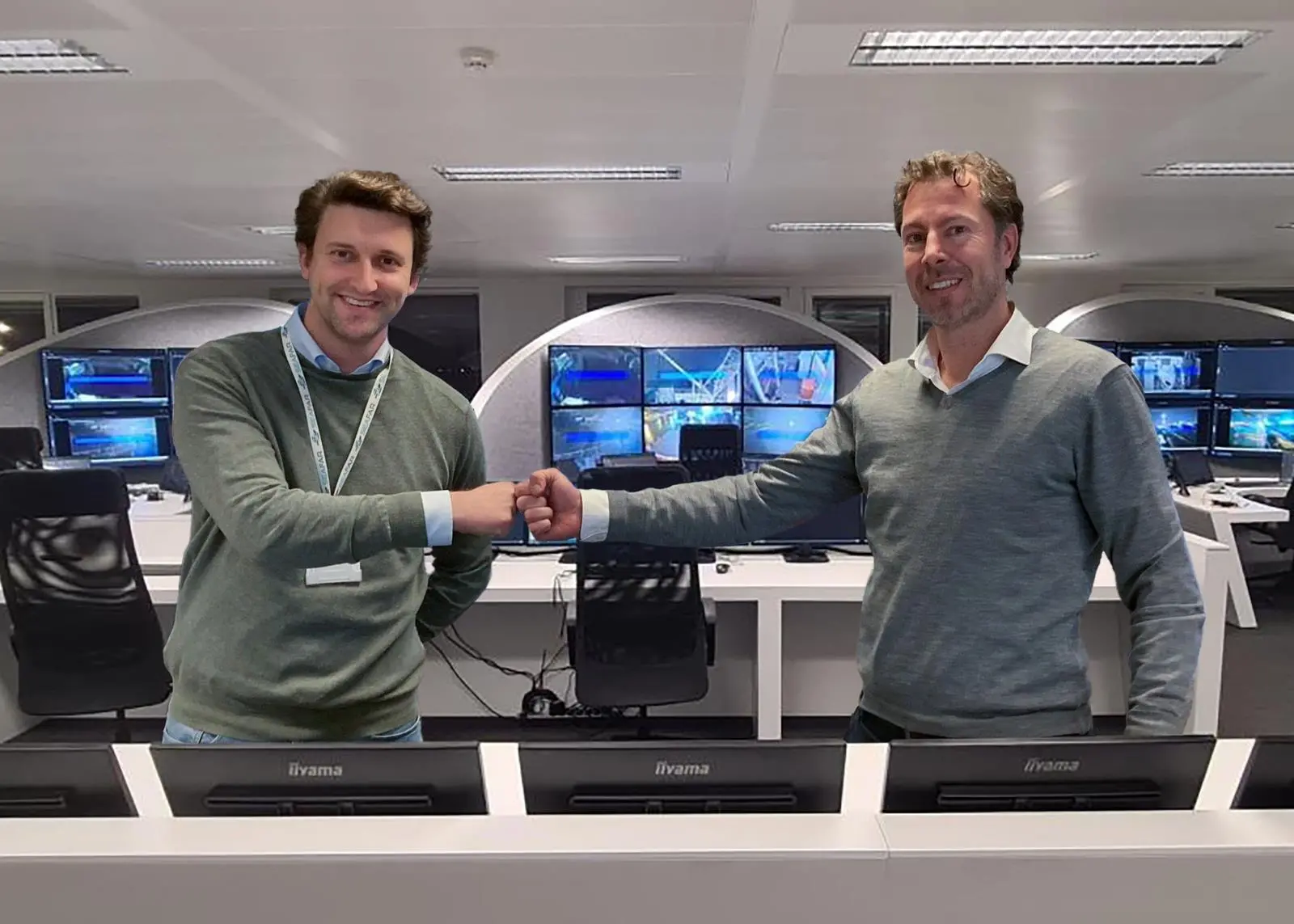
The companies will develop systems that will connect with electrical equipment on board to enable remote maintenance and other interventions direct from control centres on shore. Alewijnse offers a comprehensive package of technical solutions that includes full electrical installations, systems for energy distribution, generation and propulsion, process automation, audio, video & ICT and systems for safety, navigation and communication.
The companies envisage a future where captains will work ashore instead of on board the vessels they command. From a control centre, each captain will direct several ships at once, which may be sailing on different canals and rivers. Only a few sailors will be on board, for maintenance, docking, loading and unloading. Should an emergency arise, a helmsman on the bridge can take temporary control of the ship.
SEAFAR has already made this semi-autonomous sailing a reality by controlling 10 ships from a control room in Antwerp, and it is planning similar facilities in Namur and Dordrecht. The company aims to have 30 new and existing ships operational, in both inland and coastal shipping, by the end of the year.
SEAFAR CEO and founder Louis-Robert Cool said: “The captain can do his job in eight hours, and then another captain takes over his shift, and so on. Also, the navigation and manoeuvring can be done in a very efficient way through the application of innovative techniques such as artificial intelligence, which can predict behaviour using algorithms, and machine learning, which can identify objects and the surrounding environment using sensors, in order to optimise sailing behaviour. These are unique techniques for inland navigation that, by combining different elements, form an efficient whole.”
Cool continues: “Together we would like to expand our network and enter into partnerships in the Dutch market. We are keen to link up on new projects with Alewijnse, to take on several at the same time and to optimise the service we provide to our customers, in order to make more vessels #SEAFARReady! for the future.”
According to Cool, semi-autonomous sailing is the answer to the current problems in inland navigation. “On the one hand, the road to obtaining a license is not an easy one, but on the other hand there is a huge shortage of crew. By 2030 it is estimated that the sector will be short of around 6000 people. By implementing new technologies, it is possible to change the working practices and make the job of captain not only more attractive, but also increase the resources available because sailing has become more efficient. There is also a business case for boosting inland navigation, because it frees up more capital for investments into sustainable technology.”
Tom Milder, COO at Alewijnse, adds: “We would like to be a future-oriented company. Through our partnership with SEAFAR, we will demonstrate just how well equipped our systems are for emerging technologies like semi-autonomous sailing. We are already experienced with this technology and the specialist equipment needed for it such as remote systems, onboard cameras to provide real-time situational awareness, GPS equipment programmed with emergency scenarios such as holding position, and image and voice communication equipment.
“The major advantages of unmanned sailing are saving costs, the possibility of 24/7 sailing while observing the work and rest time regulations, and increasing safety. It also improves the working conditions of the captains, who can now do their job in a comfortable, dry and warm environment, with screens in front of them and seated in comfort, and with attractive working hours and travel distances. In addition, the local regulations are favourable. In Belgium they are already well advanced in developing permits, especially in Flanders, and in the Netherlands things are starting to move as well.”
Related Articles
 ENERGY SAVING DEVICES
 LNG
LNG
 ALTERNATIVE FUELS & LUBRICANTS