



International team to test CCS on LNG-fuelled ships
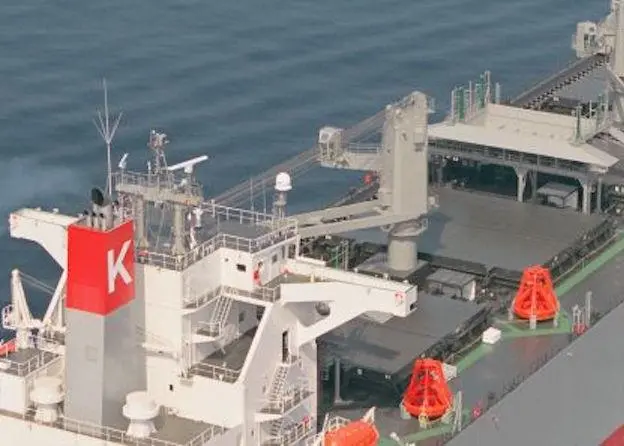
The EverLoNG project will demonstrate ship-based carbon capture on board two LNG-fuelled ships, owned and operated by project partners TotalEnergies and Heerema Marine Contractors, with results aimed at moving the technology closer to market readiness.
The project partners aim to advanced ship-based carbon capture as a cost-competitive decarbonisation option on the market by 2025, with a marginal abatement cost – the cost of reducing environmental impact – of between €75 and €100 per tonne of CO2 equivalent and a CO2 capture rate of up to 90%.
The 16 project partners from five countries – Germany, the Netherlands, Norway, the UK, and the USA – will conduct studies to support the development of full-chain carbon capture, utilisation and storage (CCUS) networks, connecting ship-based carbon capture with CO2 transport links, geological CO2 storage and markets for CO2 use. These studies will identify and help solve any technical barriers to the implementation of ship-based carbon capture as well as lower the costs associated with the technology.
The project consortium includes Lloyd’s Register, Bureau Veritas and DNV. These class societies will evaluate how ship-based carbon capture fits within existing regulatory frameworks for shipping.
EverLoNG project coordinator Marco Linders of TNO said: “Funding from the ACT3 program will enable us to conduct studies aimed at making commercial ship-based carbon capture a reality. Our demonstration campaigns will optimise ship-based carbon capture technology and we will also consider how best to integrate it into existing ship and port infrastructure. We’ll also carry out detailed life cycle assessments and techno-economic analysis, which will be essential information for maritime sector companies. International collaboration is a big part of EverLoNG and our consortium is fully committed to supporting the shipping industry’s decarbonization goals.”
Heerema’s Sustainability Project Manager, Cees Dijkhuizen, said: “At Heerema, we believe that a responsible company is a sustainable company. This belief is why we became carbon neutral in 2020 and have committed to reducing our footprint by up to 80% by the end of 2026. Taking part in the EverLoNG Project and testing the use of a carbon capture and storage system onboard our vessel Sleipnir is an important step towards reaching our goals.”
Philip Llewellyn, Carbon Capture, Utilisation and Storage Program Manager, TotalEnergies, said: “TotalEnergies is pleased to be part of the EverLoNG project, which aims to demonstrate the feasibility of CO2 capture onboard ships. As part of our climate ambition to achieve net-zero emissions by 2050, together with society, the decarbonization of our maritime activity is an important challenge. Ship-based carbon capture is a promising short-term solution as it could be installed on the current fleet of ships. In addition, the potential application of such a technology onboard future CO2 carriers, as in the Northern Lights project, in which TotalEnergies is a partner, could bring high-potential synergies.”
Related Articles
 CARBON CAPTURE
 CARBON CAPTURE
 ALTERNATIVE FUELS & LUBRICANTS