



Ammonia bunkering network emerging
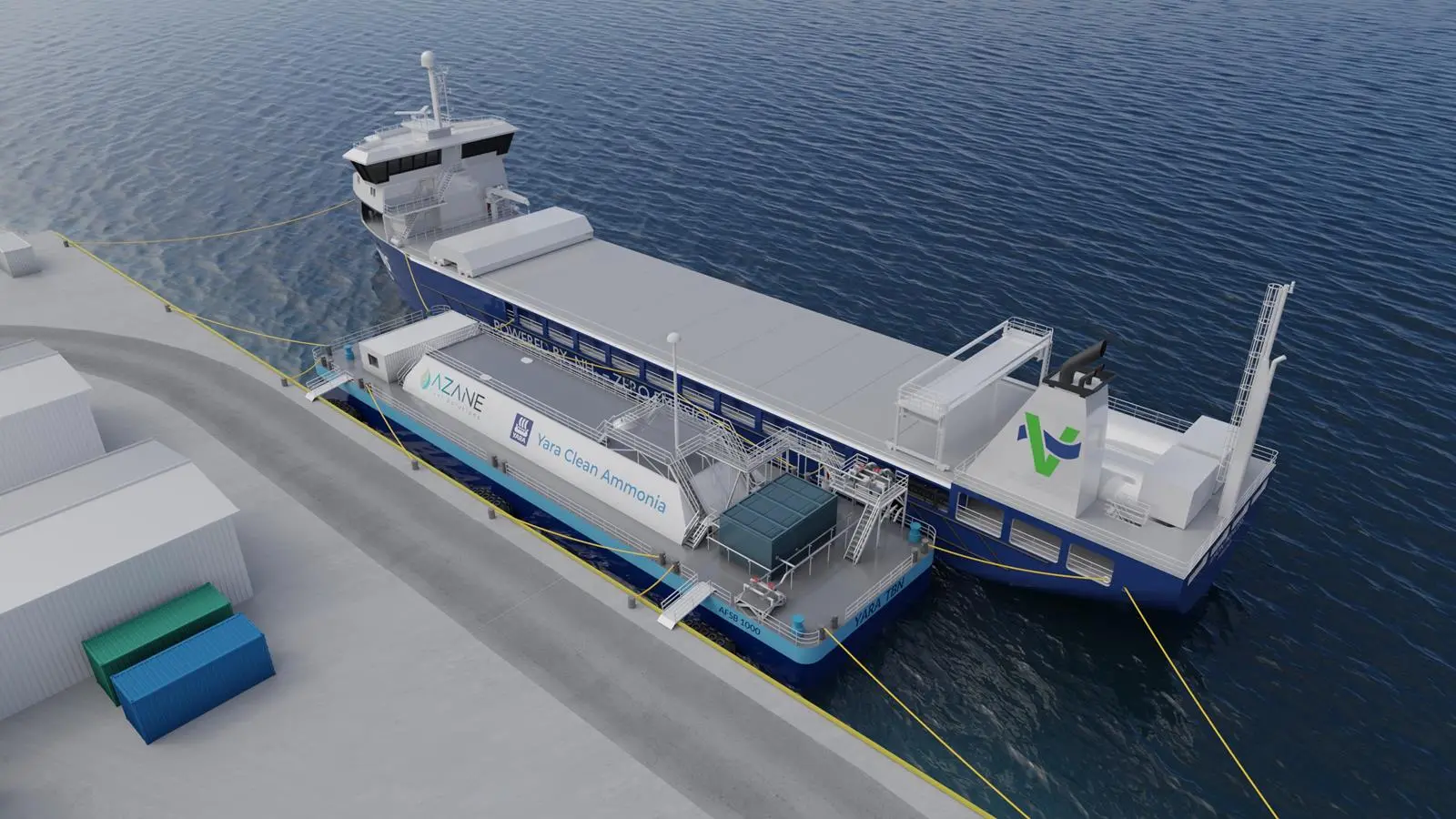
Yara, which has traditionally produced ammonia for fertiliser production, has set up a Clean Ammonia unit that is working together with industry players including class society DNV, shipowners and engine manufacturers to boost the availability of ammonia as a shipping fuel.
Yara now produces 8.5 million tonnes of ammonia annually at 17 plants. The company has an existing end-to-end value chain comprising production infrastructure, shipping and storage facilities.
It is now developing fuel terminals and ship-to-ship bunkering options, and Yara Clean Ammonia’s director for bunkering market development Christian Berg challenges the idea that availability is one of the biggest barriers to adoption of ammonia as an alternative fuel to meet IMO emissions targets.
“There are today 130 ports globally that have ammonia infrastructure, so grey ammonia is already being traded as a cargo and using it as fuel is only a question of certification. We are well on the way to making it available as a fuel,” he said.
Berg sees the first ammonia-fuelled vessels being on the water in 2024 or 2025 given current tests that are ongoing by engine manufacturers.
Yara has mainly produced grey ammonia made from natural gas in recent years but is now pursuing several projects for production of blue ammonia – in which CO2 is captured and stored – and green ammonia – that is produced with water using electrolysis.
First terminal
Yara Clean Ammonia is part of a consortium that is developing a first ammonia terminal in Norway set to be operational in 2024, and Berg says it has a global perspective on the development of a wider bunkering network.
The bunkering infrastructure technology is being developed by Azane Fuel Solutions, a joint venture between Amon Maritime and Econnect Energy, both partners in the Ammonia Fuel Bunkering Network project.
Yara is also set to deliver green ammonia for the ShipFC project involving the world’s first vessel to use ammonia fuel cells and for another with Viridis Bulk Carriers that involves a partnership between seven cargo owners.
Collaboration factor
DNV’s regional business development manager Anders Mikkelsen says the fuel landscape is highly uncertain as key future fuel technologies will not be available for another four to eight years – so shipowners need to be prepared for several fuel alternatives given the IMO’s demand for increasing reductions in emissions over the coming years.
“Basic preparation at the ship design and newbuild stages is therefore important to buy time to allow for flexibility down the line when there is more clarity on price, availability, quality and capacity of future fuels.
“The key is to correctly assess the technology, fuel production and supply infrastructure to stay under the carbon reduction trajectory. And in the context of fuel flexibility, collaboration is vital both between shipowners and manufacturers as well as fuel suppliers, which enables more confident decision-making. Those who choose the path of collaboration are farthest along on their decarbonisation journey.”
Design-ready
Höegh Autoliners recently ordered an initial four of what will be the world’s largest pure car and truck carriers (PCTC), with options for eight similar vessels, at China Merchants Heavy Industry. The Deltamarin-designed Aurora-class vessels with capacity of 9100-ceu, set for delivery in 2024 and 2025, will be capable of running on liquid fuels, LNG and biofuels, and will also be the first newbuilds with DNV’s ammonia- and methanol-ready class notations.
The company envisages these vessels could be converted to ammonia or other net-zero fuels in the 2025-to-2030 timeframe. Höegh chief executive Andreas Enger characterised these as a definitive step towards the company’s goal of reaching net zero emissions from its fleet of deepsea car carriers by 2040.
“We have put a lot of effort into the design of these vessels to build strong conventional economics, with high capacity and strengthened decks for heavier electric vehicles, as well as fuel flexibility. Given the age profile of these vessels, this is well-fitted to where the world is going,” he said.
Decarbonisation payback
Deltamarin’s sales and marketing director Esa Jokioinen says the days when shipowners could choose a simple commoditised fuel solution for their vessels are apparently long gone. “There is no silver bullet, though everyone is still hoping for it,” he said.
Related Articles
 ALTERNATIVE FUELS & LUBRICANTS
 ALTERNATIVE FUELS & LUBRICANTS
 ALTERNATIVE FUELS & LUBRICANTS