



Fuel Flexibility Strategy Underpins Engine Launch Plans: Stefan Nysjö
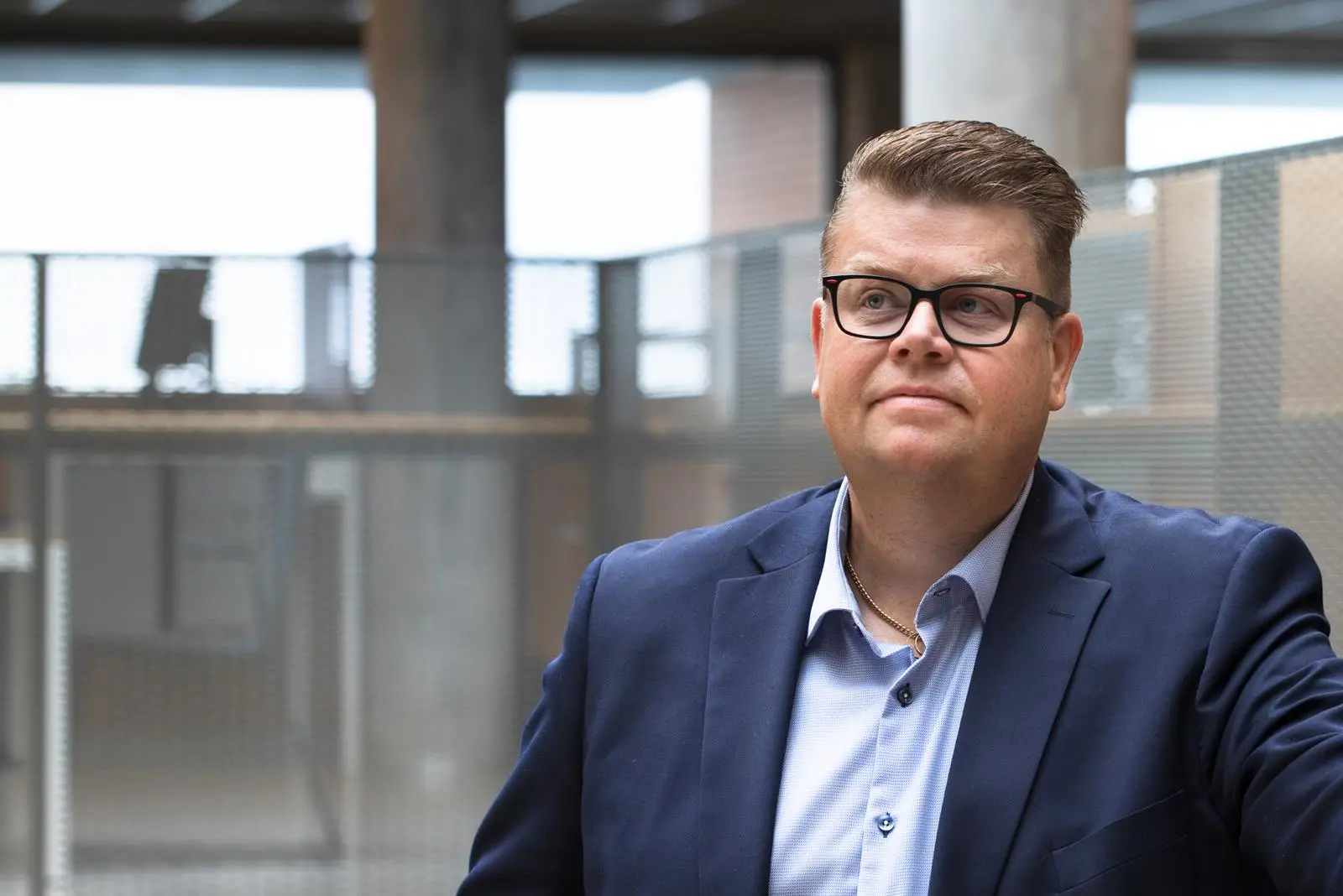
In his previous interview with The Motorship in March 2020, Mr Nysjö discussed the role that combustion technology could play in the decarbonisation of the maritime sector.
In the intervening period, the focus of discussions has moved on from the technological aspects of decarbonisation and increasingly begun to centre on questions around potential future fuel choices. “The discussions I’ve been having with customers and other stakeholders in the industry [over the last 18 months] … are now about what will be the right fuel.”
It is a measure of how the conversation has progressed since 2020, when “you were writing about whether the technology would be available”. Practical issues relating to the cost of the fuel, and availability issues are becoming increasingly discussed.
Mr. Nysjö reiterated that Wärtsilä does not expect the market to consolidate around a single fuel or solution but will rather enter a multi-fuel period.
A flexible engine platform
This strategic positioning has underpinned a number of technology choices. “We are focusing on the development of fuel agnostic, and fuel flexible [engine technologies]. So, this is where we are driving things.”
This strategic thinking has informed the development of the 31, Wärtsilä’s first engine, and more recently in the 46. Both the engines have been developed with a the two-stage turbocharged engine that has been designed to be both fuel-agnostic and flexible.
Mr. Nysjö notes that Wärtsilä had not neglected the small-bore market during its recent development of products for the medium-bore and large-bore markets. “We plan to launch a new product for the small-bore market later this year,” Mr. Nysjö said, adding that it would also be developed with a high focus on efficiency and the same modular design platform used by the recent 31 and 46 engine launches.
Mr. Nysjö noted that the modular aspect of the new engine development programme meant that refinements in certain components could be readily integrated into existing engine platforms.
Looking forward, this was likely to mean that the engine portfolio was likely to be streamlined in future to enable the adoption of future fuel variants. The conversion of existing engines to operate on alternative fuels is likely to become an increasingly important solution in the future to meet decarbonisation goals. “The benefit of working with modularised products, is that it enables flexibility [by swapping modules], which should ease conversions and upgrades at a later stage.”
Modular approaches
The new alternative fuels are expected to be more expensive than existing fuels, at least during the initial period, which is expected to drive an increased focus on fuel efficiency.
Wärtsilä engineers were continuing to conduct research into optimising the operation of some of the new fuels. “Hydrogen is a completely different kind of animal,” Mr. Nysjö comments. Over time, it was likely that further refinements will be developed. Because of the pace of the technological development, both in terms of engine control systems, as well as in other units, it was also possible that technological developments in certain areas, such as turbochargers, could have knock on effects on other parts of the engine platform.
In fact, Mr. Nysjö noted that greater technological advances were likely to come from increasing focus on maximising the overall performance of the vessel as an integrated system, rather than improvements in engine efficiency alone. “Our engines are increasingly approaching the technological limit of efficiency,” Mr. Nysjö said simply.
Such holistic approaches towards efficiency would focus on maximising the efficiency of the vessel over the operating range of the vessel. “Then you come to very much into various types of hybrid setups, where the engine itself becomes the control system. This is where I think there is a probably a lot more to be gained, particularly from a decarbonisation perspective, by elevating the efficiency across the operational band of the vessel.”
Retrofit packages for older engines
However, the rapid rollout of new product developments, and the concurrent development of improvements for the new 32 and 46 engines, was not likely to lead to the neglect of previous engines. “We are continuing to develop [alternative fuel] retrofit packages for older product typest. It is an important area for us, as reducing emissions from older vessels is critical for the maritime transition, which is why we are investing heavily in technology development.”
The challenge of converting an older engine type to dual-fuel operation is that the vessel itself was not necessarily planned for an alternative fuel. Wärtsilä was able to offer shipowners direct consultation around potential solutions, and discussions with interested parties were ongoing. But it is quite a different business line, Mr. Nysjö concluded.
Related Articles
 2-STROKE & 4-STROKE
 2-STROKE & 4-STROKE
 2-STROKE & 4-STROKE