



DNV’s connectivity standards applied to digital projects
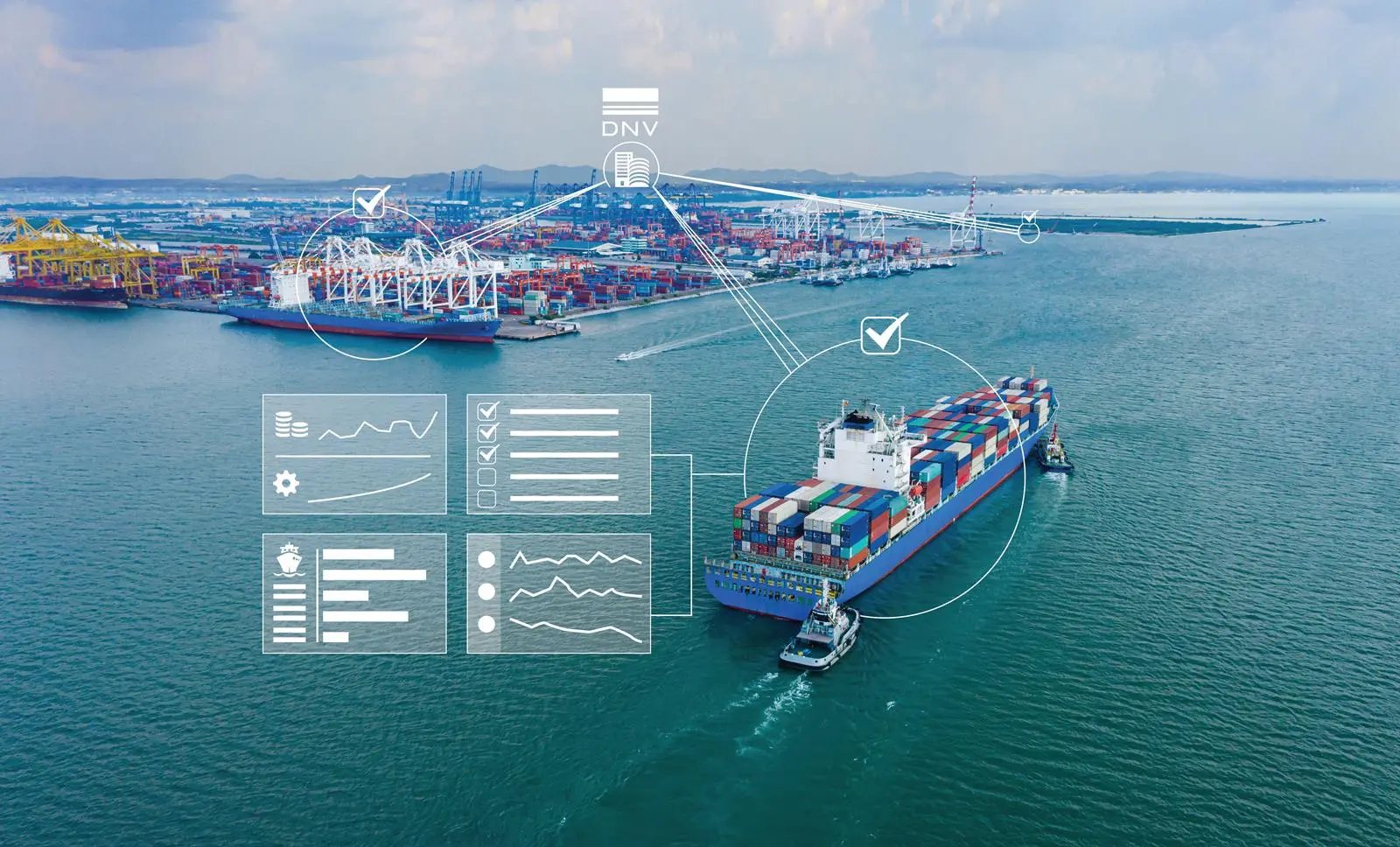
As ships get smarter and increasingly packed with sensors, the central onboard servers gather data from components and systems that typically feature different types of data infrastructure. Lack of standardization means data cannot be combined in a uniform way, leading to a lack of trust in protocols for data transfer and security.
DNV’s D-INF notation addresses this challenge by setting out the requirements for the complete data collection infrastructure, including onboard data servers, data relay components and remote data servers, covering the full ship-to-shore communication framework.
The COSCO Shipping pilot formed part of a wider project with DNV to develop an onshore smart ship data management centre to aggregate data from a large range of vessels across its fleet. The project with SHI focused on the infrastructure and data stream of its SVESSEL BIG system, while the Kongsberg pilot confirmed its Vessel Insight solution providing value-adding digital services for customers.
DNV is offering D-INF as a key enabler of efficiency for digital class customers worldwide. The convenience of digital verification services will depend on the ability to transmit trusted data. It also means owners can buy a vessel knowing that all the digital elements communicate to each other from delivery.
The notation can be obtained both as a proprietary D-INF(P) and standardized D-INF (S) solution, providing added flexibility for customers also to assure existing ship-to-shore solutions.
“As an operator, it is crucial for our operational efficiency and safety to get up-to-date information about individual vessels and systems, as well as fleet. Such data is a valuable and cautious asset which can be used to improve logistical efficiency of the whole supply chain. We believe our COSCO Shipping operational centre, which has been developed under close cooperation with DNV since 2019, will be key in realising this, however we need access to standardised data to make this happen,” said Dong Guoxiang, Deputy Chief Engineer of SSSRI from COSCO Shipping.
“With D-INF we are curating trust that the data gathered from the ship is the actual data that has been confirmed through a verified pipeline. This is vital for owners to build trust among value-chain stakeholders ranging from class and reporting authorities to insurance providers, financiers, cargo owners and charterers,” said Jarle Coll Blomhoff, Group leader Cyber Safety & Security at DNV.
Blomhoff added: “D-INF is the first step in moving the industry towards best practice in data exchange. Piloting the notation from three complementary angles – shipbuilder, ship operator and technology vendor – is unique and sets the standard for digital transformation in shipping.”
Collecting data in a common infrastructure is a major step forward, especially in the case of large fleets, he says. In addition, the infrastructure only has to be verified once for many different uses, allowing data from multiple sources to be shared with stakeholders and systems across all operations. “It is also a powerful enabler of data analytics for enhanced vessel and fleet management and performance,” he said.
Related Articles
 ENERGY SAVING DEVICES
 LNG
LNG
 ALTERNATIVE FUELS & LUBRICANTS