



ABS introduces design for large liquid hydrogen carrier
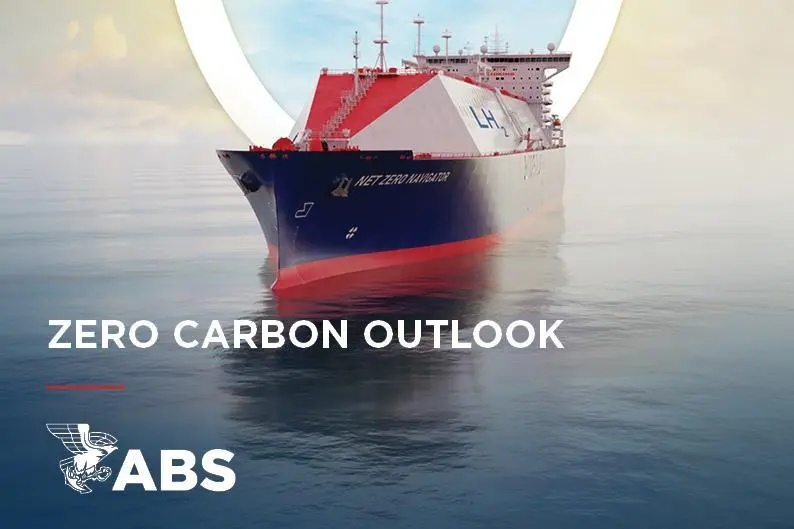
The design’s large spherical hydrogen storage tanks were developed by NASA, along with its hydrogen fuel cells and batteries, which were used for power generation on the space shuttle.
This vessel requires special spherical tanks because hydrogen gas is notoriously difficult to store safely at significant quantities. The typical solution is to store the hydrogen in a liquid form at -253° C. These temperatures are achieved with a complicated refrigeration system and highly sophisticated insulation, which is why the design features such prominent metal sheathing.
The design is the result of a project between ABS and Herbert Engineering Corp. to develop conceptual ship designs related to the transport of liquid CO2 as well as explore the challenges of carbon capture and storage on board conventional fossil-fuelled cargo ships.
The design comes with Setting the Course to Low Carbon Shipping: Zero Carbon Outlook, the fourth in a series of outlook documents published by ABS to showcase the latest decarbonisation research and thinking. Each has focused on a different aspect of the sustainability challenge, including the impact of energy and commodity trends on the global fleet and a detailed life-cycle, or value-chain, analysis of the greenhouse gas (GHG) footprint of the leading alternative marine fuels.
The impact of the emerging hydrogen and carbon value chains is explored in-depth in the latest report, which states that hydrogen should not be seen just as a molecule of the periodic table or only as a single marine fuel. “It is a medium which could be converted into different forms as an energy carrier. Renewable energy via electrolysis can be converted into hydrogen, an energy carrier which could be stored and transported by sea. It can also serve as a medium which can be the building block for green and e-fuels, minimizing the use of fossil fuels.”
Furthermore, the role of hydrogen as a marine fuel is expected to have a significant effect on the emerging energy transition. Developments related to hydrogen’s transportation, production, safety, standards and regulation are going to be in the spotlight for the years to come.
“We are in the early innings of a decade of change for our industry and this latest outlook shows just how extensive and rapid that change is going to have to be if we are to meet 2050 objectives. We will need both hydrogen and carbon value chains to mature and scale up rapidly and, as this report also makes clear, shipping, in all its forms, is going to be a critical enabler of that transition. Now, we need governments to step in with policies to accelerate development of low-carbon solutions and secure the proper infrastructure for their distribution,” said Christopher J. Wiernicki, ABS Chairman, President and CEO.
The document is available here.
Related Articles
 ALTERNATIVE FUELS & LUBRICANTS
 ALTERNATIVE FUELS & LUBRICANTS
 ALTERNATIVE FUELS & LUBRICANTS