



GCMD-led consortium commits US$18 million to biofuels
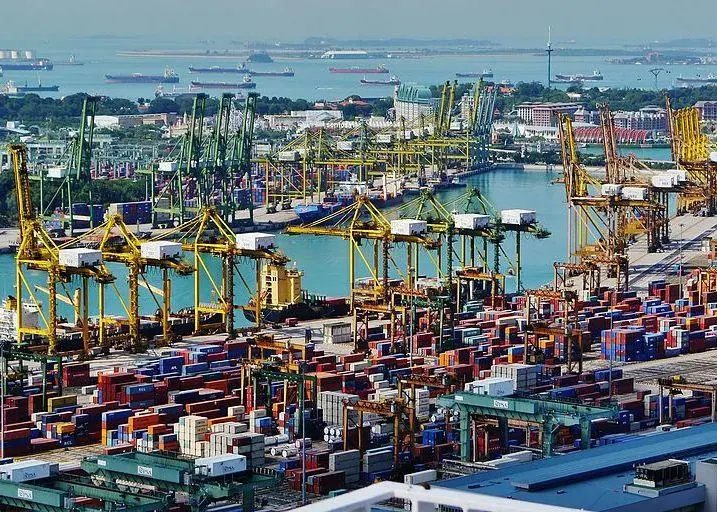
The US$18 million project will establish an assurance framework for ensuring the supply chain integrity of current and future green marine fuels.
GCMD says biofuels can be a near-term measure to reduce GHG emissions as they are available today and they can be deployed in the same way as marine fuels with minimal changes to the existing distribution infrastructure, shipboard technologies, and operational norms of ships. However, there is no industry-wide assurance framework that addresses concerns on the quantity, quality and GHG emissions abatement of biofuels, nor one that safeguards their premium and value.
To address this gap, the GCMD-led pilot aims to establish an assurance framework that ensures supply chain transparency of drop-in biofuels, whose applicability can be extended to future drop-in fuels, such as bio-LNG, bio- methanol and green ammonia, when they become available in meaningful quantities.
Recent IMO decisions to eliminate the need to apply for waivers for using fuel blends with up to 30% biofuels (B30) for propulsion, and to allow the use of B30 in accordance with MARPOL Annex VI, have lowered regulatory hurdles for adopting biofuels. To this end, the assurance framework developed will increase stakeholder confidence in the full value of the premium paid for such green fuels, and further lower the barrier to wider adoption of biofuels in the maritime industry by addressing concerns on the integrity of the biofuels supply chain.
The pilot project will commence on 1 August 2022 and is expected to take 12 to 18 months to complete. The ship owners, charterers and operators participating represent approximately 2,300 vessels across the container, tanker and bulker segments, and are responsible for transporting 8.4 million TEUs or 80.6 million dwt globally. The vessels involved are all equipped with MAN ES’s two-stroke engines.
With 12 vessels bunkering at three ports across three continents, the learnings from the route-based pilots will support the green corridors framework that was put forth by the Clydebank Declaration at COP26 in October 2021, of which 24 states are signatories including Singapore, the Netherlands and the US where bunkering ports will participate.
A first-of-its-kind in extent and complexity, the pilot aims to optimise the entire supply chain of bunker fuels by building on the learnings of past shipboard trials involving biofuels. Participants will start with fuel blends involving existing biofuels, such as hydrotreated vegetable oil (HVO) and fatty acid methyl esters (FAME) blended with either very low sulphur fuel oil (VLSFO), high-sulphur fuel oil (HSFO) or marine gas oil (MGO) in blends up to 30% biofuels (B30).
Using BunkerTrace’s digital and synthetic DNA tracing products to track marine fuels from production to vessel propulsion, the pilot will validate the authenticity of sustainable biofuels through molecular verification tests conducted on fuel samples that are collected at numerous identified points along the supply chain. Hence, the pilot will address traceability of drop-in biofuels from production, distribution, transportation, storage, and bunkering to shipboard application, providing end-to-end supply chain transparency.
“A variety of biofuels and biofuel blends have already been successfully tested, but this comprehensive pilot can help address remaining uncertainties about how these fuels work in practice by getting extensive end-user operational experiences,” said Unni Einemo, Director of the International Bunker Industry Association (IBIA). “Biofuels have the potential to help the existing fleet meet IMO’s GHG reduction targets by taking lifecycle emissions into account, but one of the challenges will be certification of product origin as the sustainability of biofuels can vary significantly depending on production pathways.
“Biofuels can be blends coming from feedstock with different sustainability profiles, so it will be interesting to see if the DNA tracing will show mainly single-source origin products or biofuels of multiple origins. This could give us some really useful insights into the complexities of documenting the full supply chain of fuels, which will become increasingly important.”
Testing laboratories will play a crucial role in evaluating the biofuels and biofuel blends. GCMD also participates in the work of the Singapore Standards Council’s Chemical Standards Committee (CSC) in developing national standards for the bunkering industry.
Capt. Rahul Choudhuri, Chairman of the CSC’s Technical Committee for Bunkering (Ambient Liquid Fuels), said: “GCMD’s project scope involves a detailed quality assessment of biofuels, including ascertaining their shelf life and long-term stability. As such, the involvement of global laboratory services companies in this project will provide such information that will strengthen the efforts of the Technical Committee’s Working Group on Marine Fuel Specifications and contribute to developing acceptable industry standards and practices for the use of biofuels in Singapore and eventually elsewhere.”
Adding to the pilot’s complexity is coordinating the sailing schedules of participating vessels. The aggregation of demand for biofuels at ports will result in cost savings for shipowners and fuel purchases through optimised use of land-side storage facilities and bunkering vessels and facilitate assessments of GHG emissions abatement on a well-to-wake basis of individual vessels and across fleets.
Furthermore, testing these fuel blends across the container, tanker and bulker segments travelling on fixed and tramp routes and bunkering at the ports of Singapore, Rotterdam, and Houston under business-as-usual conditions will demonstrate the compatibility and stability of these biofuels in actual operating environments, thereby strengthening the overall robustness of the assurance framework.
In an effort to further accelerate biofuels adoption as a near-term measure to reduce GHG emissions, GCMD will be leveraging this project to be the first in trialling and assessing the use of crude algae oil (CAO) as a marine fuel. CAO is a third-generation biofuel that promises substantially reduced carbon footprint, but unlike HVO and FAME, its utility has not been tested nor its supply chain established.
GCMD has assembled fuel purchasers who are committed to trialling CAO, and is inviting CAO producers with existing commercial production capacities to participate by reaching out to projects@gcformd.org by 22 August. GCMD will link up CAO fuel producers with pre-identified fuel suppliers to test and provide CAO for this pilot on a commercial basis.
GCMD was formed on 1 August 2021 with funding from the Maritime and Port Authority of Singapore (MPA), and six founding partners, namely BHP, BW, DNV Foundation, Eastern Pacific Shipping, Ocean Network Express and Sembcorp Marine. GCMD was set up as a non-profit organisation to support decarbonisation of the maritime industry to meet or exceed the IMO’s goals for 2030 and 2050.
Related Articles
 ALTERNATIVE FUELS & LUBRICANTS
 ALTERNATIVE FUELS & LUBRICANTS
 ALTERNATIVE FUELS & LUBRICANTS