



MAN in deal to convert engines to dual-fuel methanol
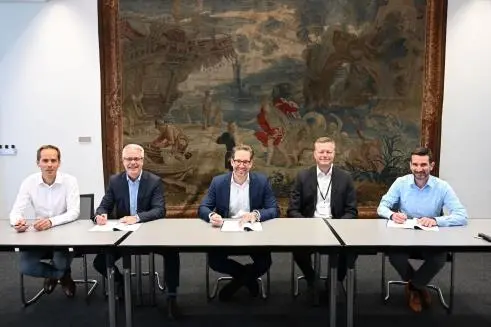
Stena and Proman, the world’s second largest methanol producer, announced their partnership to develop a methanol (MeOH) retrofit and fuel-supply solution last year.
The project aims to investigate methanol combustion according to the Otto combustion principle with MeOH port fuel injection due to the inherent advantages for legacy installations. Developments on MeOH direct injection technology for newbuilds and the potential for later retrofits may also be considered.
A second phase of the project would involve the retrofit of the engine(s), commissioning and field testing. The third and final phase would then involve the completion of field testing, and engine handover for commercial operation.
Stefan Eefting, Head of PrimeServ Germany, said: “MAN Energy Solutions is happy to work with industry partners on decarbonising the marine segment, a sentiment that Stena and Proman happily share. Methanol has great potential as a future-fuel and is clean, efficient and safe to work with. It offers significant greenhouse-gas reductions, and is even net-zero when produced from renewable energy sources. I’m certain that many interested parties will be watching this retrofit’s progress.”
MAN PrimeServ announced in July that it is now offering its customers the opportunity to retrofit older MAN 48/60 marine and power-plant engines to state-of-the-art MAN 51/60 types as part of its new ‘lifecycle upgrade’ offering. The upgrade enables customers to prepare older engines already in service for future, climate-neutral operation. Converted engines will effectively be equivalent technically to newly built MAN 51/60 units and, as a result, achieve significant savings in fuel consumption, CO2 and pollutant emissions, and increase reliability. As a further option, newly converted engines can be upgraded for operation on synthetic fuels for a low premium.
Related Articles
 2-STROKE & 4-STROKE
 2-STROKE & 4-STROKE
 2-STROKE & 4-STROKE