



Getting to 2050 on e-LNG

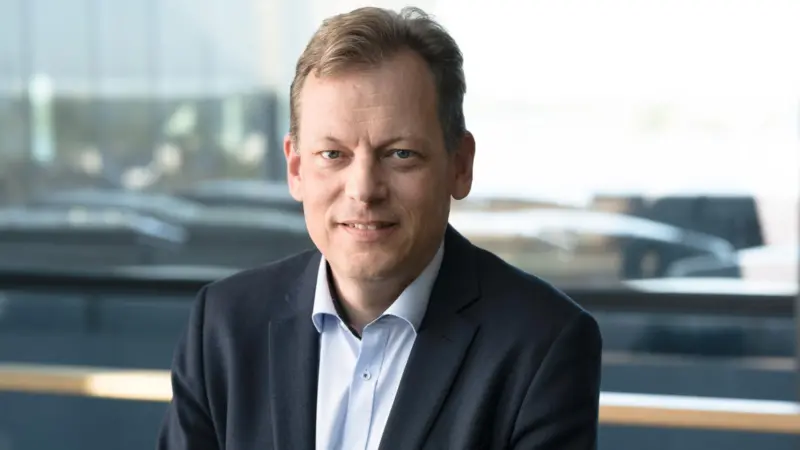
Transitioning between fuel pathways is not straightforward as a multitude of variables come into play, says Adi Aggarwal, General Manager, SEA-LNG. Each fuel option requires unique bunkering and onboard safety considerations that will impact vessel design and operation. Ships’ crew and office staff would also require unique experience and training.
Factors such as safety, cost, fuel availability, existing infrastructure, and energy density are also key when analysing each alternative fuel pathway. “While some hydrogen-derived fuels are zero-carbon and others contain carbon, they share a common destination – net-zero emissions. Based on the available technology and infrastructure, the LNG pathway offers the most pragmatic course to carbon neutrality by 2050 through the use of drop-in variants bioLNG and e-LNG,” he says. “Although e-hydrogen appears to be a strong future fuel for shipping, it alone would not be a feasible option for the industry due to its low energy density, unique properties and safety considerations. We expect that a basket of future fuels will be in use.”
Ultimately, all alternative fuels share a common pathway, starting at fossil-based versions and ending at low and zero-emission hydrogen-based, synthetic fuels, says Aggarwal. These synthetic fuels will only become widely available when sufficient renewable electricity and electrolysis capacity comes online to produce them. This is likely to occur incrementally as fuels are gradually decarbonised by blending with increasing amounts of low and zero-emission drop-ins.
Natural gas, and sometimes coal, is the feedstock for almost all methanol, ammonia and hydrogen production. While LNG offers significant greenhouse gas emissions reduction when used as a marine fuel compared with VLSFO, fossil methanol, ammonia and liquid hydrogen have far higher emissions on a well-to-wake basis because of the large amounts of energy needed for their production. This will delay their adoption until a synthetic or biogenic version is available.
Committing to solutions which rely on alternative fuels that will not be available at commercial scale in a renewable form for the foreseeable future, means owners locking in higher-emission and higher-cost decarbonisation pathways.
Currently, the LNG pathway to 2050 has the significant advantage of existing infrastructure and operational experience, Aggarwal says. That will be key to compliance with the IMO’s 2030 goals in the first instance and 2050 goals further out, with efficiency benefits as well. “The fuels containing carbon, such as LNG, are better energy carriers than ammonia and hydrogen. Hence, ships require lower volume of e-LNG because it is a more energy-dense fuel than, for example, e-hydrogen. This means improved efficiency by increasing cargo carrying capacity.”
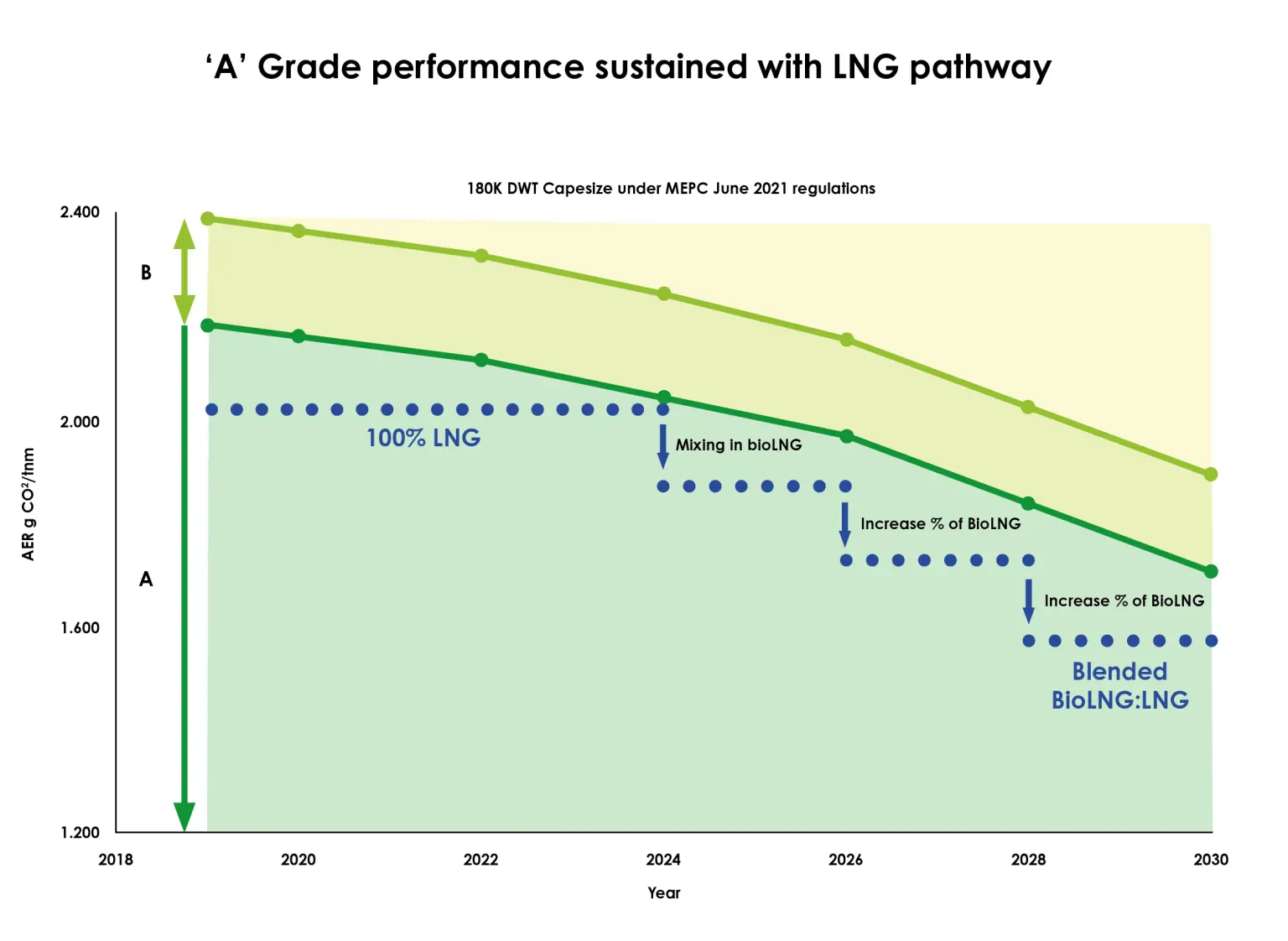
SEA-LNG urges shipowners to make like-for-like comparisons when discussing alternative marine fuels. Discussion of alternative fuels too often compares the green versions of ammonia and methanol with fossil, or grey, LNG. These green versions of ammonia and methanol are still some years away from commercial readiness, and should rightly be compared with green versions of methane, such as bio-LNG or e-LNG. BioLNG is already commercially available in Europe as a marine bunker fuel today and has penetrated the heavy-duty vehicle road transportation sector in both Europe and North America.
A SEA-LNG analysis comparing emissions for two identical 180,000dwt Capesize vessels, one using conventional, oil-based marine fuels and the other using LNG showed that the LNG-fuelled vessel immediately rated two CII grades higher than the conventionally fuelled vessel. And for every 10% increase in the content of bio-LNG in a blend with traditional LNG, the vessel gains two years of additional compliance.
SEA-LNG has evaluated the case of a dual-fuel 14,000 TEU container ship, operating from 2025, with a 25-year lifespan. Over its operating life the different fuel pathways are compared against a VLSFO baseline, assuming increasing levels of drop-in renewable fuels as they become available at increasing scale from about 2030 onwards.
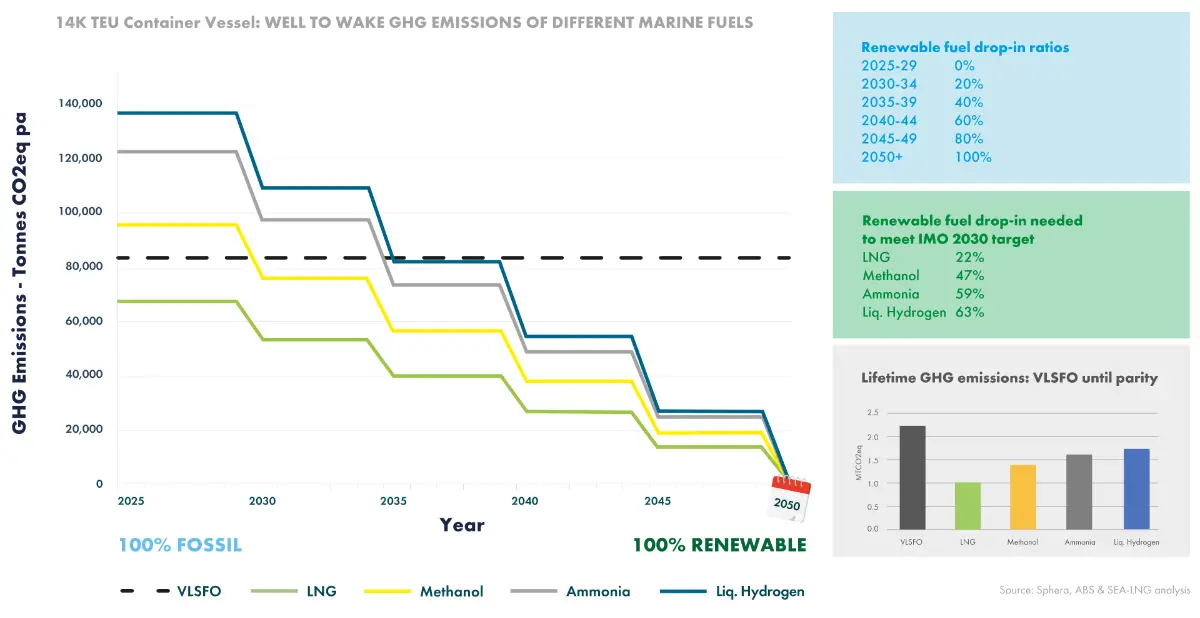
Aggarwal says the methanol and ammonia pathways start from a worse place than LNG, because emissions are, respectively, 14% and 47% higher than VLSFO. Owners and operators choosing methanol and ammonia pathways will be forced to continue using VLSFO, which offers lower emissions initially than their chosen fuels. This will postpone emissions reduction for several years. For methanol and ammonia to achieve emissions parity with fossil LNG they will require blends of approximately 30% renewable methanol and 50% renewable ammonia.
The industry needs to consider the pathway to decarbonisation, not just the destination, he says.
Related Articles
 INTERVIEWS
 CONVENTIONAL FUELS & OILS
 GENERAL NEWS