



DNV calls for collaboration on future fuels
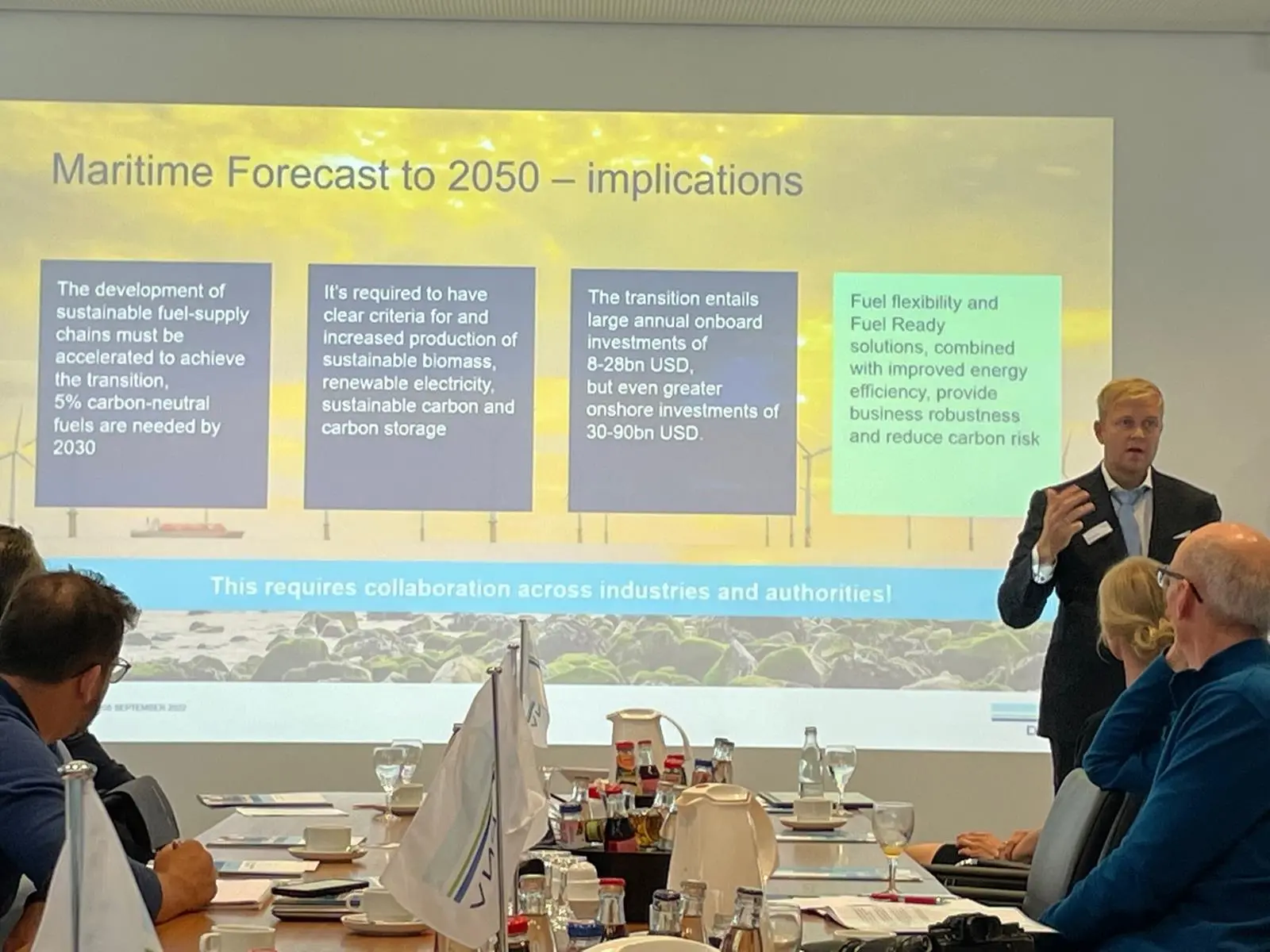
Another in DNV’s Energy Transition Outlook suite of reports, this year’s publication considers the production, distribution and bunkering infrastructure required to enable the maritime industry’s shift to carbon-neutral fuels.
The report also presents an updated outlook on regulations, drivers, future technologies, and costs for decarbonizing shipping. It models two different decarbonization pathways: ‘Current IMO ambitions to 2050’ and ‘Full Decarbonization by 2050’. DNV’s modelling points to a diverse future energy-mix comprising both fossil and carbon-neutral fuels, with fossil fuels gradually phased out by 2050.
Coordinated plans by all stakeholders, including major energy and fuel providers and ports, are crucial while public incentives are needed to encourage first movers to participate in a global network of green shipping corridors.
“The search for the best alternative carbon-neutral fuel options and technologies is underway as the entire world seeks to decarbonize,” said DNV Maritime CEO Knut Ørbeck-Nilssen. “No industry can decarbonize in isolation so global industries need to make the right choices together, and sustainable energy should be directed to where it has the biggest impact on reducing GHG emissions. The ultimate hurdle is fuel availability and to overcome it, supply chains must be built through cross-industry alliances.
“Carbon-neutral fuels must be made available for ships already within this decade, in decarbonisation pathways assessed. By no later than 2030, 5% of the energy for shipping should come from carbon-neutral fuels. This will require substantial investments in both onboard technologies and onshore infrastructure,” he continued.
Uncertainties around future price and availability means that a clear winner among the many fuel options – ammonia, methanol, diesel or methane, produced from sustainable biomass, renewable electricity or fossil fuels with carbon capture and storage – cannot be identified yet or in the near future. The report outlines under what conditions each option will proliferate.
Eirik Ovrum, DNV Maritime Principal Consultant and Maritime Forecast to 2050 lead author, said: “We probe variations on three fuel families in which we simulate the availability of sustainable biomass to produce biofuels, renewable electricity to produce e-fuels, and fossil fuels in combination with carbon capture and storage (CCS) to produce blue fuels. We also explore variations for specific fuel types, in which key input factors impacting the relative cost differences between fuels within each family are scrutinised. In total we explore 24 decarbonisation scenarios.”
The fuel transition has already started, with 5.5% of ships (gross tonnage) in operation and 33% of gross tonnage on order today able to operate on alternative fuel, most often LNG.
DNV forecasts that onboard technology investments required for the ‘Decarbonization by 2050’ pathway scenarios will range from USD 8 to 28 billion per year (depending on which fuel type has the largest uptake) between 2022 and 2050. Investments of between USD30 and 90 billion per year to 2050 are needed for the onshore fuel supply chains.
In perhaps the most eye-catching of the comments made during a press conference before the report’s release, both Ovrum and Ørbeck-Nilssen noted that the cost of increasing the IMO’s ambition to net zero by 2050 would increase costs by around 2.5 times.
Two thousand ships are expected to be ordered annually to 2030 but there is still no silver-bullet fuel solution available.
The report is available here.
Related Articles
 ALTERNATIVE FUELS & LUBRICANTS
 ALTERNATIVE FUELS & LUBRICANTS
 ALTERNATIVE FUELS & LUBRICANTS