



Rotterdam acts on green hydrogen corridor
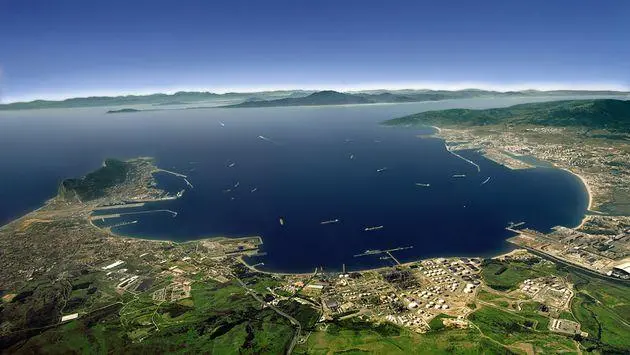
The idea is to ensure a green hydrogen supply chain Rotterdam and Algeciras in Spain. The deal strengthens Cepsa’s ambition to become a key player in green hydrogen production in Europe and the leader in Spain and Portugal. It is also part of Rotterdam’s ambition to supply Northwest Europe with 4.6 million tonnes of green hydrogen by 2030.
Cepsa plans to export hydrogen produced at its San Roque Energy Park near the Bay of Algeciras, through hydrogen carriers such as ammonia or methanol, to the Port of Rotterdam. Rotterdam is the most important energy port in Europe, handling 13% of European energy demand, while the Port of Algeciras is first in Spain, fourth in Europe, and an important trade route between Europe and Asia.
The trade lane is expected to be operational by 2027, and Cepsa also intends to develop a similar supply chain from its La Rabida Energy Park in Huelva.
With the Dutch Government’s support, and as part of Rotterdam’s Energy Transition plans, the Port Authority and many private companies active in the port area are developing the necessary infrastructure and facilities for the import of green hydrogen and its distribution into Northwest Europe connecting large industrial centres in the Netherlands, Belgium and Germany by means of hydrogen pipelines.
This supply of green fuels will help to decarbonise industry and maritime transport in the Bay of Algeciras and Rotterdam and to support the European Union’s RePower EU strategy, which seeks to guarantee Europe’s energy independence and security and stimulate the production of clean energy.
Cepsa aspires to lead green hydrogen production in Spain and Portugal by 2030 with a production capacity of 2GW, half the current target set by the Spanish Government, and to become a major player in Europe.
Maarten Wetselaar, CEO of Cepsa, said: “Spain is ideally placed to become a world leader in the production and export of green hydrogen, given its strategic location, abundant generation of renewable energies, and its robust energy infrastructures and key ports, such as Algeciras and Huelva. Cepsa, the main energy company in Andalusia, intends to play a leading role in realizing this vision.”
Allard Castelein, CEO Port of Rotterdam Authority: “Northwest Europe uses far more energy than it can produce in a sustainable way. We are therefore setting up multiple trade lanes for green hydrogen, together with exporting countries and private businesses all over the world. We expect that in 2050 some 20 million tons of hydrogen will flow through the port, of which only two million tons will be produced locally.”
Hydrogen is one of the priorities in Rotterdam’s Energy Transition plans with Port of Rotterdam working on setting up the infrastructure and facilities for facilitating hydrogen flows by co-developing a number of large projects with its port community members and connected industrial areas in northwest Europe. In collaboration with exporting countries and the cluster of companies operating at the port, it can supply north-western Europe with 4.6 million tonnes annually by 2030, yielding 46 million tonnes of CO2 reduction.
Related Articles
 AMMONIA
 HYDROGEN
 HYDROGEN