



Partners ready for dual-fuel hydrogen engine projects
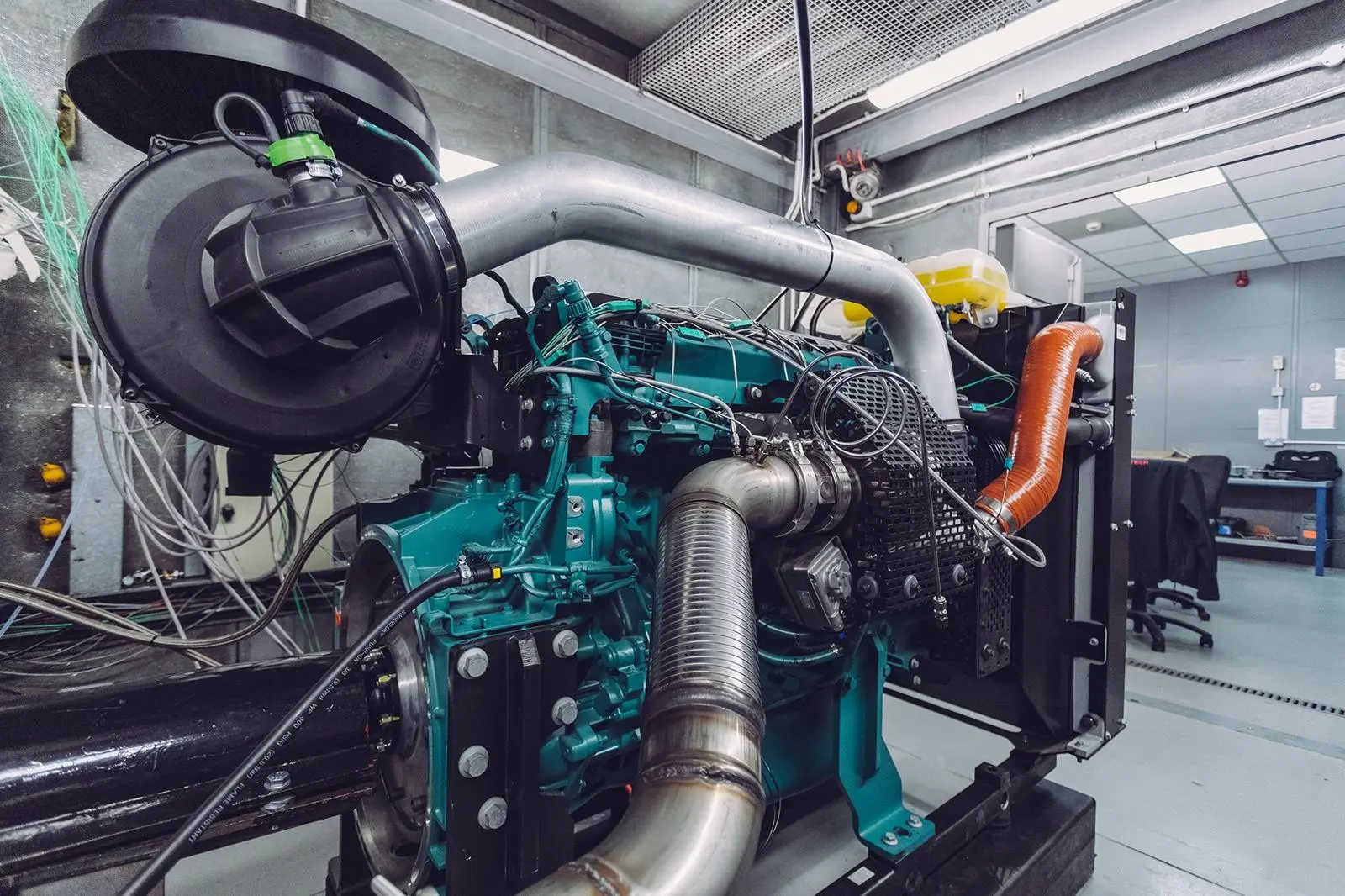
The companies have worked together in pilot projects since 2017, successfully adapting Volvo Penta engines to run as a dual-fuel hydrogen and diesel solution via a conversion kit provided by CMB.TECH. Now, says Jakob Ursby, Director of Business Development at Volvo Penta, they are ready to start the dialogue with the market related to this increased cooperation on a project-to-project basis, with the aim of moving into small-scale industrialisation.
The aim is to establish dual-fuel hydrogen technology as a low-carbon interim solution before suitable zero-emissions alternatives become viable. It is an important step in Volvo Penta’s and CMB.TECH’s joint ambition to help accelerate their customers’ transition to net-zero emissions.
“From the initial dual-fuel technology projects we have seen reductions of CO2 emissions of up to 80%,” says Roy Campe, Chief Technology Officer at CMB.TECH. “It is clear that the energy transition is a major challenge in many types of applications. With the dual-fuel technology we have been developing over the last few years, we can provide a cost-effective and robust solution for a variety of applications. We think there is huge potential in this solution for customers, both on land and at sea.”
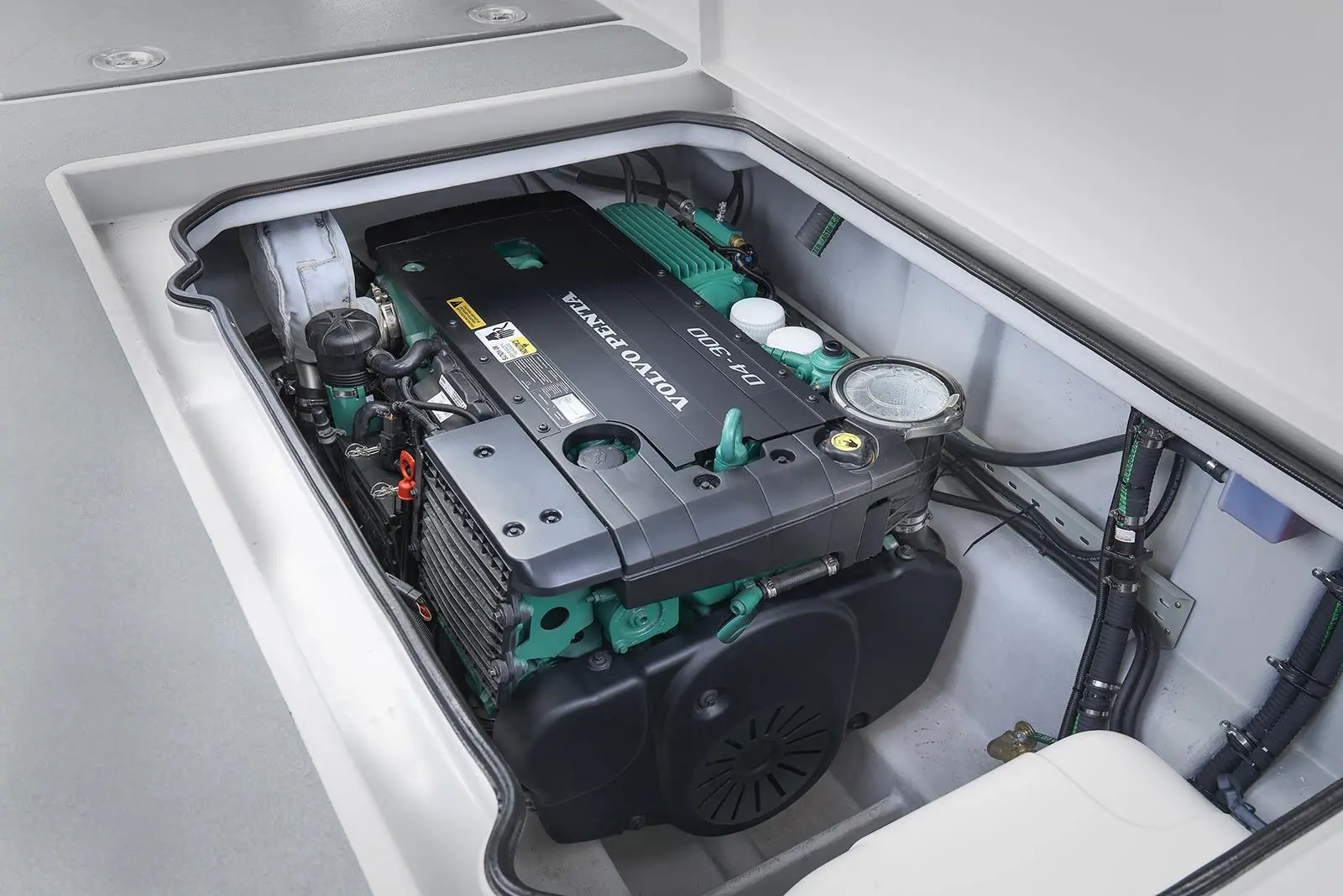
The solution is expected to appeal to many shipowners due to its ease of installation, maintenance, and use. For the marine portfolio, the partners aim to start with pilots within the Volvo Penta commercial marine engine range. “Our dual fuel technology can be implemented on any diesel engine. The modification is minor and entails mainly the installation of a hydrogen injection manifold onto the air inlet collector. Also, the engine controller needs to be flashed with new software which allows for a switch over to the dual fuel mode,” says Campe.
The co-combustion process involves hydrogen being injected and aspirated in the cylinder during the intake stroke. It mixes further to create a homogeneous mixture during the compression stroke, then a small amount of pilot diesel is injected into the chamber before top dead centre. The diesel auto-ignites due to the high temperature and pressure and co-combusts with the hydrogen, forcing the piston down during the power stroke. The cylinder is cleaned during the exhaust stroke with lower NOx and CO2 emissions in the exhaust gas.
CMB.TECH has its own passenger vessel, the Hydroville (in operation as from 2017), working on the dual-fuel technology implemented on the Volvo Penta engine. The 14-metre catamaran is a pilot project to test hydrogen technology for large commercial sea going vessels. It uses two dual fuel combustion engines (H2ICED) with a total capacity of 441kW.
“The simplicity of the dual fuel technology allows a quick introduction into many applications. The potential to decarbonise with green hydrogen is huge, but many applications require a fallback scenario of traditional fuel to maintain a viable business. With the dual fuel technology, your asset is future proof, even without a full coverage of a reliable hydrogen infrastructure today,” says Campe.
He says: “The dual fuel technology is ideally suited to solve the chicken and egg story which is applicable if one wants to introduce a new fuel. It is a cost-effective and robust solution for emission reduction without compromising the operational performance. The transition can start today, even without a full coverage of a reliable hydrogen infrastructure. Using dual fuel engines, today’s production capacity, experience and the widely spread service network can be applied to support energy transition, while getting acquainted with hydrogen as an alternative fuel.”
Ursby says that a range of vessels across the commercial marine market are suitable for the dual-fuel solution. “Applications will go hand-in-hand with infrastructure development. For example, with the development of the ecosystem of vessels in the harbors, then we can imagine tugs and pilot boats as key targets. Another great potential is the crew transfer vessel market serving the offshore windfarms.
“This is a way to bridge over the gap to fully greenhouse gas free solutions which are under way. The dual-fuel solution will heavily reduce the emissions of greenhouse gases while at the same time provide a robust and reliable solution and thereby high productivity.”
Volvo Penta is investing heavily in exploring a wide range of sustainable and bridging technologies – such as hybridisation, electric drivelines, fuel cells and alternative fuels for combustion engines – giving customers the opportunity to find the technology that works best for their application.
Related Articles
 2-STROKE & 4-STROKE
 2-STROKE & 4-STROKE
 2-STROKE & 4-STROKE