



Mono fuel hydrogen engine project wins UK funding
The Department allocated over £14m to 31 projects supported by 121 organisations from across the UK to deliver feasibility studies and collaborative R&D projects in clean maritime solutions.
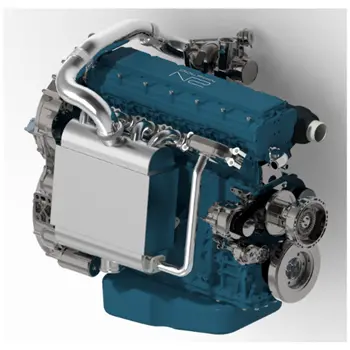
HydroMAR-E, a collaboration between Dolphin N2, Brighton University and Hiflux, supported by BMT, is developing a mono-fuel hydrogen version of the recuperated split cycle engine can be used in a range of heavy-duty applications for land and sea. It offers very high efficiency (competitive with a PEM fuel cell) very low emissions, and moderate capital cost increases compared to existing internal combustion engine manufacture.
Uniquely, and unlike a standard internal combustion engine, the new engine has demonstrated ability to use diesel, methane and hydrogen in the same core engine (and has potential for the same with ammonia or methanol) with the same high efficiency and low emissions, enabling a rapid transition as future fuels become more widely available.
The engine concept is covered by eight international patent families. A single cylinder proof of concept engine has been running at Brighton University since 2017.
Dolphin N2 says the recuperated split cycle is an internal combustion engine, with all that implies in terms of low cost and ease of manufacture, that aims to compete with zero emission drivetrains. It targets long haul trucks, 0.5-50MW distributed power generation, mixed-mode rail and marine applications. It can potentially do this with the efficiency of the largest power stations, and air quality somewhere between the toughest Californian passenger vehicle standard, and zero-impact (meaning emissions can’t be detected or are cleaner than the surrounding air).
There are two versions of the technology: ThermoPower® is a simplified system offering most of the air quality benefits and efficiency advantage versus advanced diesel engines and CryoPower® which delivers ultimate efficiency and air quality by the addition of liquid nitrogen or air to its internal processes.
“Split-cycle engines are known technology, and recuperation is commonplace in industrial gas turbines. It is the specific combination of these, plus the use of water or liquid nitrogen, that is innovative,” says Dolphin N2 on explaining the technology:
The distinctive feature of the engine is that the “cold” and “hot” parts of the traditional internal combustion engine are separated. A first set of cylinders draw in air and compress it – in the CryoPower® version, Liquid Nitrogen is injected to keep this process cool for maximum efficiency; the simpler ThermoPower® injects water. Then the compressed air passes through a recuperator, where the engine’s exhaust heats it up – saving fuel which normally has to do this. The air now passes to the second, hot cylinder set, which are thoroughly insulated – something that is not feasible in a normal internal combustion engine where the same cylinder handles hot and cold processes. These cylinders host the combustion and expansion events, which produce power; they are bigger than the compressor cylinders (again impossible in a standard engine) because that is most efficient. The hot air passing into these combustion cylinders does so at the speed of sound, leading to extraordinary mixing with the fuel, and a unique “cool combustion” regime. The very low level of emissions, especially NOx and particulates, can be reduced using urea-based selective catalytic reduction after-treatment.
The cost for the ThermoPower® engine is estimated at around +20% compared to conventional diesel, with a fuel saving of 10-18% offering an accelerated payback period. For CryoPower®, capital cost is estimated at around +50% of the cost of a commercial diesel engine, with fuel cost savings of up to 20-25% per year giving a rapid payback on the extra cost.
HydroMAR-E will use a laboratory single cylinder engine, which has already demonstrated starting and running, to develop this spark-guided system to TRL4, then a multi-cylinder prototype to demonstrate TRL5 in readiness for future application demonstration in marine environments. Supporting work will develop an improved recuperator system, and review marinisation, installation, vessel systems and regulatory aspects.
Commenting on the award of the grant, Jake Rigby, Research and Development Lead at BMT said: “The UK is one of the global leaders in clean shipping, and, in an industry that is strongly focused on sustainability and zero emissions, it makes sense that the supply chain is also as decarbonised as practically possible, with retrofit and newbuild power generating solutions being considered for maritime applications. We look forward to moving this project forward, using the best in innovative green technology, complex engineering, and a partnership mindset to contribute to a more diversified and resilient energy economy.”
Related Articles
 2-STROKE & 4-STROKE
 2-STROKE & 4-STROKE
 2-STROKE & 4-STROKE