



Digital technology for remote verification of DP systems
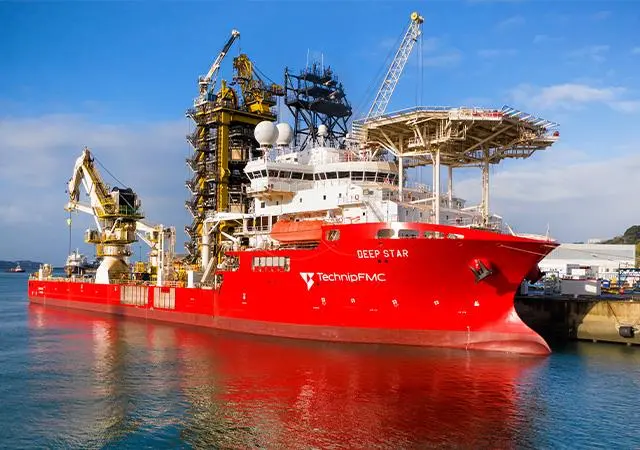
This debut project has also seen TechnipFMC receive the first award of DNV’s Data Driven Verification class notation.
“We have implemented the system fleet-wide as part of our Digital Vessel project as we aim to digitalise our offshore fleet in line with the onshore environment,” he points out,” said Pawel Panka, senior manager of innovation for OneFleet, TechnipFMC.
“The biggest difference to traditional trials is that the tests are completed incrementally and that verification has moved from offshore to onshore.”
Remote access
Mr Panka said that data-driven verification (DDV) automatically gathers test data generated by the DP system to provide an accurate body of evidence for verification that can then be analysed and assessed remotely by a surveyor working onshore.
The energy technology provider has implemented the Dynamic Positioning Digital Survey (DPDS) system, developed by Kongsberg Maritime, for annual trials on board its construction support vessel Deep Star.
These trials are required to verify the integrity of the dynamic positioning (DP) system, which is used by the vessel for accurate manoeuvring, station- and track-keeping in pipe-laying and installation of subsea structures.
The trial for the Deep Star entailed a wide-ranging test programme comprising around 95 tests of multiple mechanical systems associated with dynamic positioning – including propellers, thrusters and power distribution systems – to comply with stringent regulatory requirements for operations.
“As well as gaining competence in test execution, the crew is given more flexibility as tests can be performed during vessel standby periods across a wider time frame, rather than being scheduled within a fixed period of around three days under the traditional method,” Mr Panka said.
This contributes to reduced vessel downtime and thus enhances the cost-efficiency of operations for the client, while also cutting fuel consumption from trials. Furthermore, there is no need to transport a surveyor to and from the vessel, which minimises associated costs and has a further positive impact on TechnipFMC’s carbon footprint, according to Mr Panka.
The DPDS has already been implemented on another three vessels in the TechnipFMC fleet pending class approval, with a further four vessels due for acceptance testing early next year.
TechnipFMC now aims to have all of its own vessels DDV compliant by mid 2023.
Related Articles
 ENERGY SAVING DEVICES
 LNG
LNG
 ALTERNATIVE FUELS & LUBRICANTS