



ClassNK joint study reveals voyage optimisation benefits
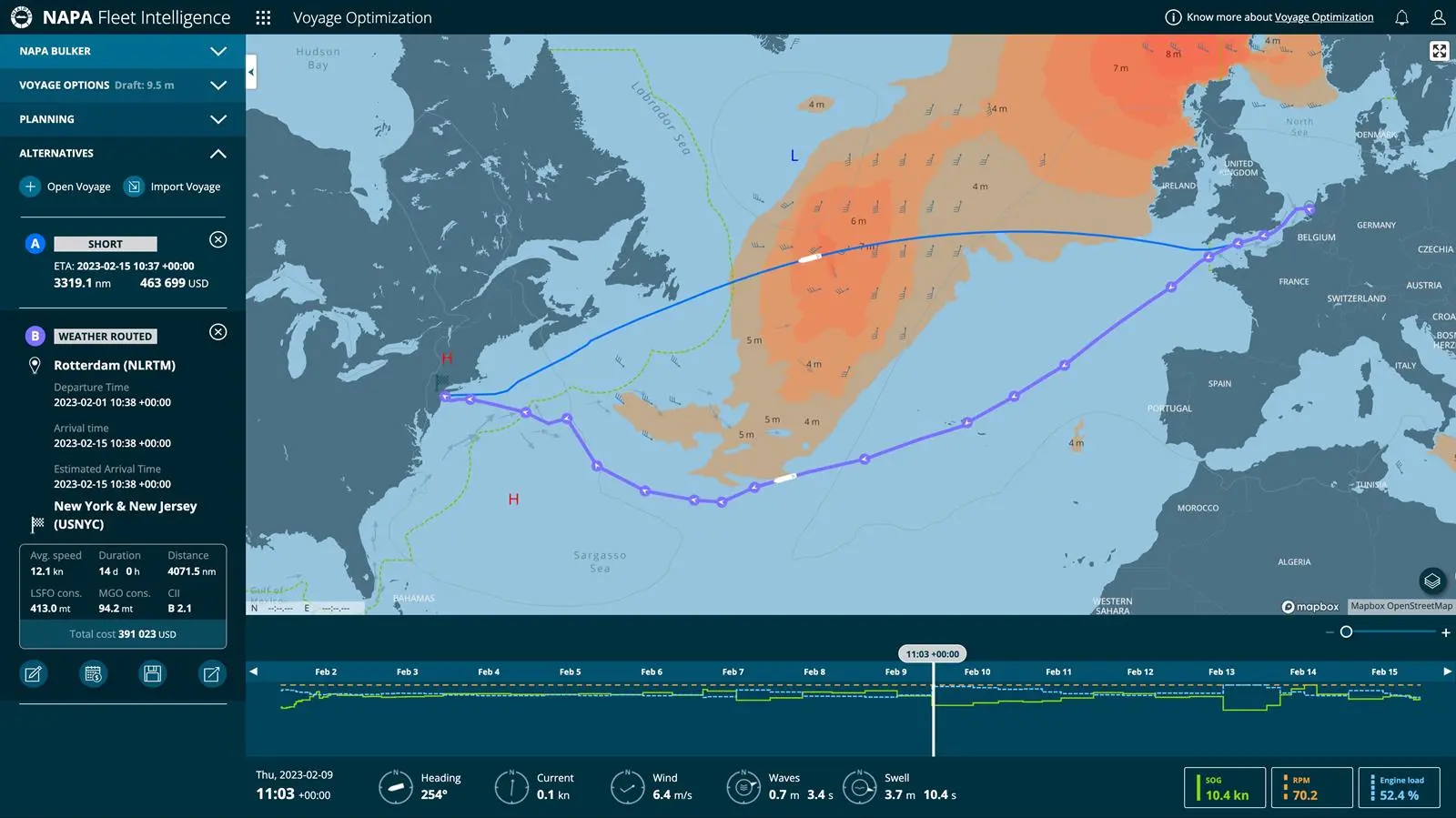
The research found that a vessel’s fuel consumption and CO2 emissions can be reduced by up to 7.3% by using NAPA Voyage Optimization. The research suggests that the implementation of voyage optimisation can improve a vessel’s CII by an average of 5-6%, enabling ships to maintain their ratings for an additional two to three years.
The joint research was carried out using NAPA’s ship performance model and voyage simulation tools. It used data on all voyages, weather and ocean conditions in 2021 for a group of bulk carriers owned and operated by Marubeni. The potential reductions in fuel consumption and CO2 emissions were measured by “retro-optimizing” each voyage to incorporate weather routing, using the data on weather and sea conditions that was available at the time and maintaining the same departure and arrival times.
ClassNK provided advice on the simulations, verified the calculated values and confirmed the results, while Marubeni provided the vessels for the demonstration tests, as well as its experience and expertise on operational aspects.
The joint study highlights the importance of optimizing voyages to improve a vessel’s rating under the International Maritime Organization’s CII regulation, which rates the carbon intensity of each vessel on a scale from A to E. It found that using NAPA Voyage Optimization can boost a vessel’s CII rating by 5-6%, which in many cases enables it to move up one rank (from B to A, for example). It also enables vessels to remain in the same category for two to three years longer as the requirements for each CII category gradually become stricter, forcing ships to reduce their emissions over time. Crucially, these improvements do not require any additional installation or equipment on board.
Related Articles
 ENERGY SAVING DEVICES
 LNG
LNG
 ALTERNATIVE FUELS & LUBRICANTS