



Onboard Comfort Pivotal To Propeller Series
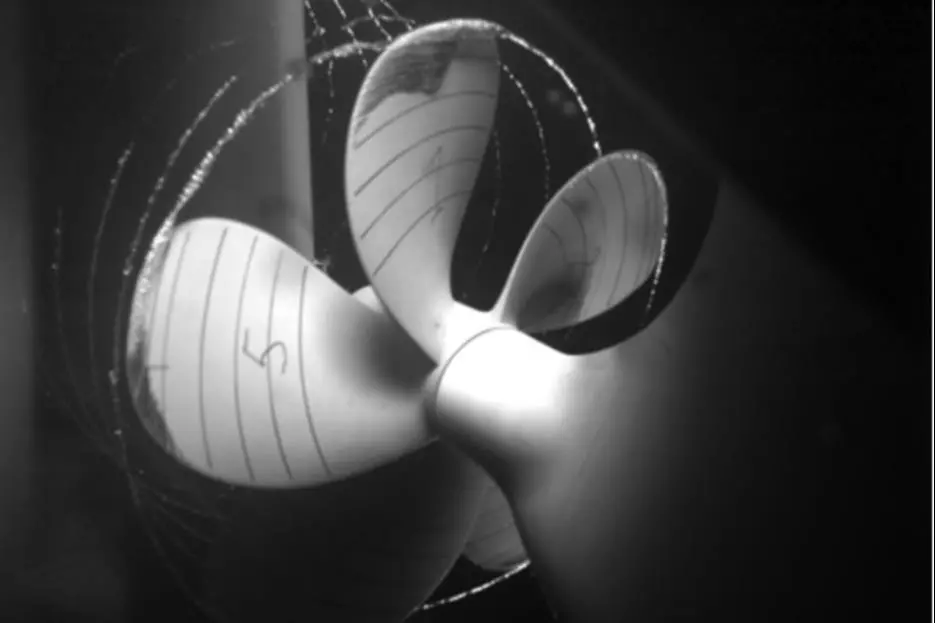
Initiated by research body MARIN, the Wageningen FC research endeavour is the follow-up to the F-Series JIP, which realised a systematic range of 150 fixed-pitch propellers for merchant vessels using the latest technological tools. The R&D work showed that the geometric characteristics of propellers for cruise ships and other vessels such as large motor yachts, which impose especially high demands as to onboard comfort levels, differ from the requirements of the gamut of mercantile traders covered by the F-Series.
The objective of the collaboration partners in the Wageningen FC-series project is thereby to design and test 18 additional, fixed-pitch propellers to suit those applications where passenger comfort is of the highest order, married with exacting energy saving criteria. Only five- and six-bladed screws with a pitch ratio equal to, or higher than, 1.0 are being considered.
The F-series programme, which involved a multiplicity of companies and institutes, had followed successive JIPs realising the Wageningen CD-series open and ducted controllable pitch propellers, and Wageningen TT controllable and fixed pitch tunnel thruster propellers, including rim-driven units. The latest initiative underscores the fact that propeller design has become a continuous drive for refinement and advance, to achieve the best balance between propulsive efficiency, hull vibration levels, and onboard and radiated underwater noise levels.
The FC project is undertaken through recourse to multi-objective optimisation tools, in combination with both boundary element methods (BEM) and Reynolds-averaged Navier-Stokes (RANS) CFD techniques at the design stage.
All propeller models will be manufactured on a new, five-axis milling machine, and tested in open water conditions using the quasi-steady measurement technique, which was deployed for the earlier CD-series propellers. The dataset of the FC-series will be included in the software of the F-Series JIP as a subset, so as to enable comparison of results.
At its outset, the budget for the FC programme was estimated at EUR280,000 ($299,500), and it was envisaged that some EUR 190,000 ($200,500) would be covered by the study partners. The contribution fee per participant was set at a modest EUR 10,000 ($10,550).
All MARIN JIPs are open to applicants worldwide, and not only those based in Europe. Results and costs are shared between participating organisations, with progress meetings typically held twice per year.
Related Articles
 LNG
LNG
 LNG
LNG
 SHAFTS AND PROPELLERS