



R&D Commitment By Italian Engine Builder
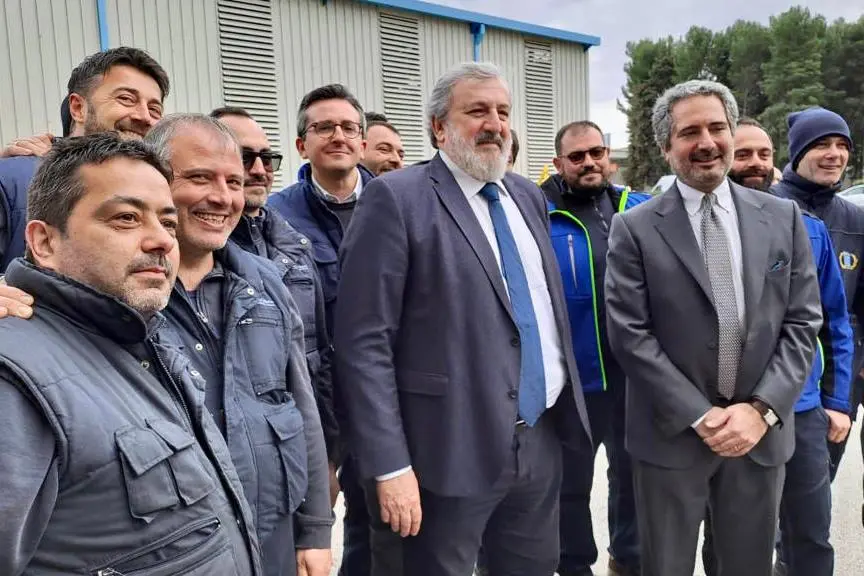
The investment is in keeping with Fincantieri’s strategy to re-align wholly-owned subsidiary Isotta Fraschini more closely with the parent group’s naval and merchant ship divisions.
CIS is pivotal to plans to augment the portfolio attuned to the energy transition in shipping. The company’s current range is based on the 1300- and 1700-series of four-stroke engines, covering applications up to about 2,200kW, serving the marine market and also the rail traction and industrial sectors. Recent enhancements to the production plant have included a new area to complete and test gensets with prime movers of up to 3,000kW output.
The inauguration of the CIS complex will enable Isotta Fraschini to realise the IFuture project, a multi-faceted engineering plan that has received funding through the European Regional Development Fund in the context of the Puglia region.
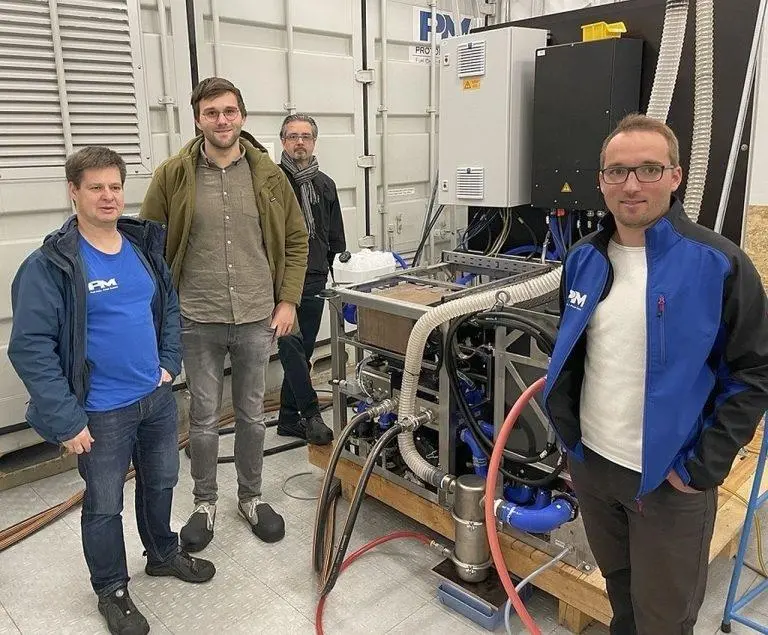
The CIS remit under IFuture includes continuing research into the improvement of reliability of the engine models already available, the adaptation of designs used in gensets to extend the market reach to landside industrial applications, and studies into new power management systems that integrate different energy sources, including fuel cells, batteries and photovoltaic arrays as well as internal combustion engines, into complex equipment.
A further key task under IFuture is the preparation of a new engine design focused on technology that will contribute to the move towards low-carbon and zero-carbon solutions, with the accent on future use of hydrogen.
Isotta Fraschini has already made advances in this direction through the IFuture Hydrogen initiative, supported by Italian finance and the European Important Project of Common Interest (IPCEI) Hy2Tech fund. This programme is intended to result in two distinct marine products powered by hydrogen, namely a family of internal combustion engines and a modular fuel cell platform. Both will involve a power range between 500kW and 4,000kW, and will reduce CO2 emissions to values close to zero.
The company is part of the Italian cross-industry collaboration which has created the 26m ZEUS (zero emission ultimate ship) experimental prototype, equipped with a 130kW fuel cell system. Classed by RINA last October, and built by Fincantieri, ZEUS will act as a floating laboratory to investigate fuel cell behaviour in operational settings, with a view to use of the technology in cruise ships, ferries and other vessels.
The fuel cell installation is powered by hydrogen, stored in metal hydride cylinders. The 170t experimental vessel also incorporates a conventional propulsion arrangement, comprising two diesel generators and two electric motors. In addition, a limited operating range is conferred by a bank of batteries.
Related Articles
 2-STROKE & 4-STROKE
 2-STROKE & 4-STROKE
 2-STROKE & 4-STROKE