



Methanol Building Favour In Bulker Sector
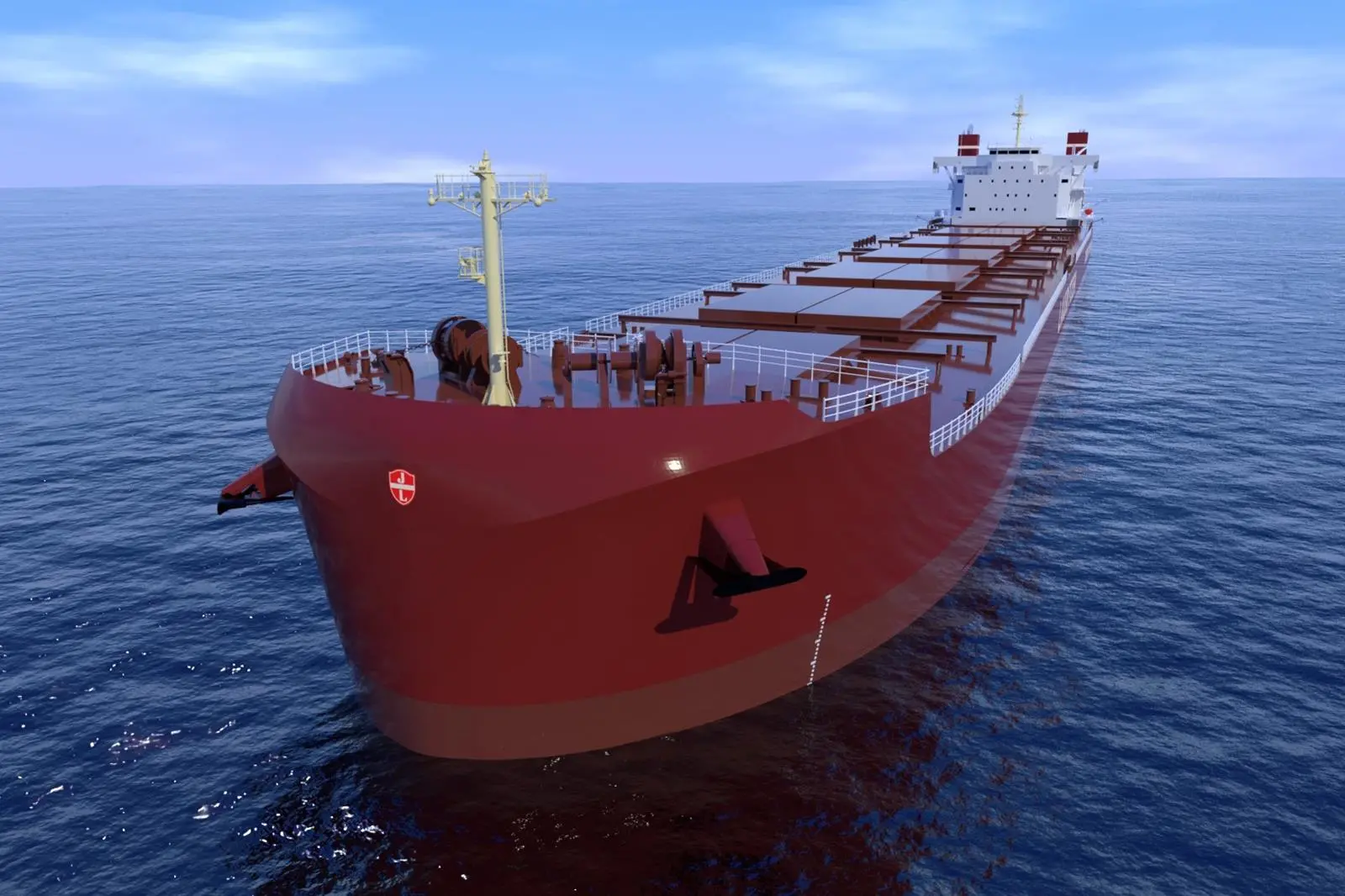
The contract award to Tsuneishi Shipbuilding entails two 81,200dwt vessels that will be deployed by Cargill Ocean Transportation for a minimum period of seven years. Through the dual-fuel engines to be adopted, the bulkers will be capable of trading without producing carbon emissions when running on ‘green’ methanol or potentially bio-diesel.
Due for handover from the second half of 2026 onwards, the gearless tonnage will be wholly-owned by a newly-established entity named Lauritzen NextGen Shipping, which J.Lauritzen and Lauritzen Bulkers will use as a platform for further investments in zero-carbon emission and future-proof assets.
“We are very happy with this transaction, as it is important for J.Lauritzen and Lauritzen Bulkers to participate actively in the decarbonisation of the shipping industry, and we are proud to be able to do so in a visionary partnership with Cargill, who are sharing our ambition to truly drive change in our industry,” said J.Lauritzen CEO Kristian Morch. The partnership is facilitated by Copenhagen Commercial Platform(CCP), which will also be involved in its operation and ongoing development.
The Danish contract comes hard on the heels of a deal for the same type of Kamsarmax design, incorporating methanol-capable powering, encompassing two newbuilds to be constructed by Tsuneishi to the account of Japanese trading house Mitsui & Co. As in the Lauritzen project, the ships will be employed by Cargill, and are expected during the second half of 2025 and early 2026, respectively.
Tsuneishi is a world leader in bulker production, and its Kamsarmax series alone has attracted more than 350 sales worldwide to date. The new, dual-fuel version features a high-capacity methanol fuel tank, ensuring the requisite range in deep-sea transportation, and located on the stern so as to maintain the high cubic volume that is one of the defining characteristics of Tsuneishi Kamsarmax vessels. Unlike the existing range, the newbuilds booked by Lauritzen and Mitsui & Co each have twin funnel casings.
In relation to the conventionally powered Kamsarmax type, the latest offering promises improved efficiency due to an improved, optimised hull shape and the application of the proprietary Aeroline wind resistance reduction technology in its upgraded, Aeroline 2 form. Aeroline has proven performance in the shipbuilder’s populous TESS 64/66 bulker series.
Tsuneishi recently also landed a contract from undisclosed interests for an Ultramax bulker to be fitted with MAN methanol dual-fuel two-stroke engine.
The Japanese shipbuilding group has stated that it will continue to accelerate R&D for next-generation ships, fuelled not only by methanol but also ammonia, hydrogen, and other alternatives.
Related Articles
 METHANOL
 METHANOL
 2-STROKE & 4-STROKE