



Norwegian project to develop ammonia reforming technology for NH3 carriers
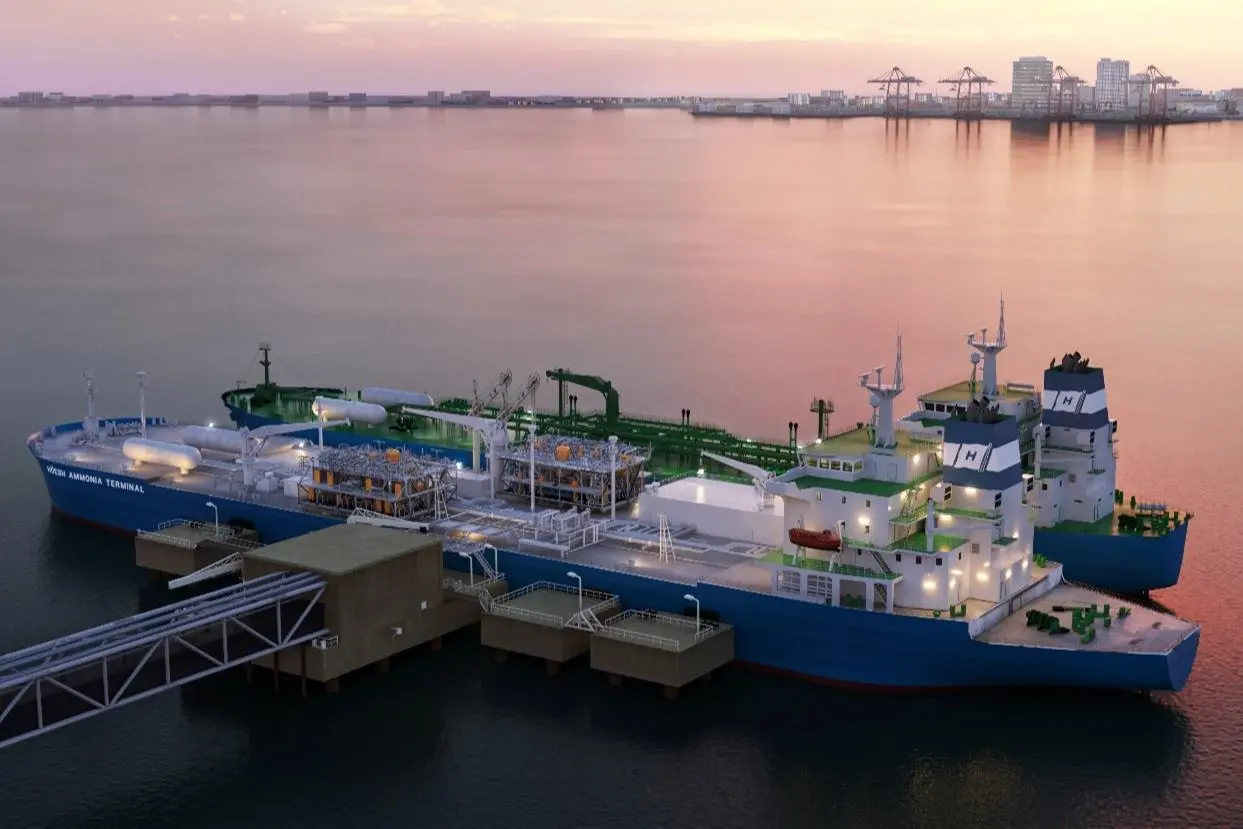
The Motorship notes that the development of efficient highly integrated catalytic reforming reactors has been idenfitied as a key dependency for the establishment of ammonia supply chains as a net zero carbon hydrogen carrier.
The project is designed to enhance the availability of large-scale storage and transportation capabilities of clean energy. Hydrogen is emerging as a viable future fuel for addressing the move away from fossil fuels. However, it is difficult to store and transport due to its low volumetric energy density and with potential large vaporisation losses. Ammonia is significantly better suited than hydrogen for this purpose, since it can be stored in liquid form at moderate pressures and temperatures. The objective of the project is to enable ammonia to be converted back to hydrogen at the receiving destination.
As a carbon-neutral renewable energy carrier, ‘green’ ammonia is produced from hydrogen, via electrolysis of water, and nitrogen from the air. The significant emission reduction impact will reflect this green approach when the energy is consumed. Green ammonia acts as a liquid battery with a high energy density compared to alternative solutions for the storage and transport of renewable power. The infrastructure for the large-scale transport of ammonia at sea already exists via a fleet of gas tankers having ammonia on the cargo list.
“This important project is a natural extension of the investments and efforts made by Wärtsilä to accelerate the use of decarbonised energy. Hydrogen will play a considerable role in future renewable fuel consumption, and there is a clear need for the development of ammonia as a storage and transportation carrier for hydrogen. We are grateful to the Norwegian government for its support and funding, and we appreciate also the cooperation of Höegh LNG and our other partners in making this project possible,” said Walter Reggente, Vice President of Wärtsilä Gas Solutions.
“As a world leading provider of fast-track floating LNG terminals, we are well-positioned to support the transition to clean, carbon-free energy. New and innovative solutions will need to be developed and we look forward to working together to ensure we remain at the forefront of the energy transition,” said Erik Nyheim, CEO and President of Höegh LNG.
The project aims to develop a system to convert ammonia back to hydrogen, which will then be installed onboard a Höegh LNG vessel. This will provide a floating receiving terminal capable of being relocated as needed, requiring minimal use of coastal land and a solution resulting in lower overall cost, improved safety and competitive hydrogen prices.
Related Articles
 AMMONIA
 AMMONIA
 AMMONIA