



Wärtsilä develops engine de-rating solution for 96-bore powered boxships
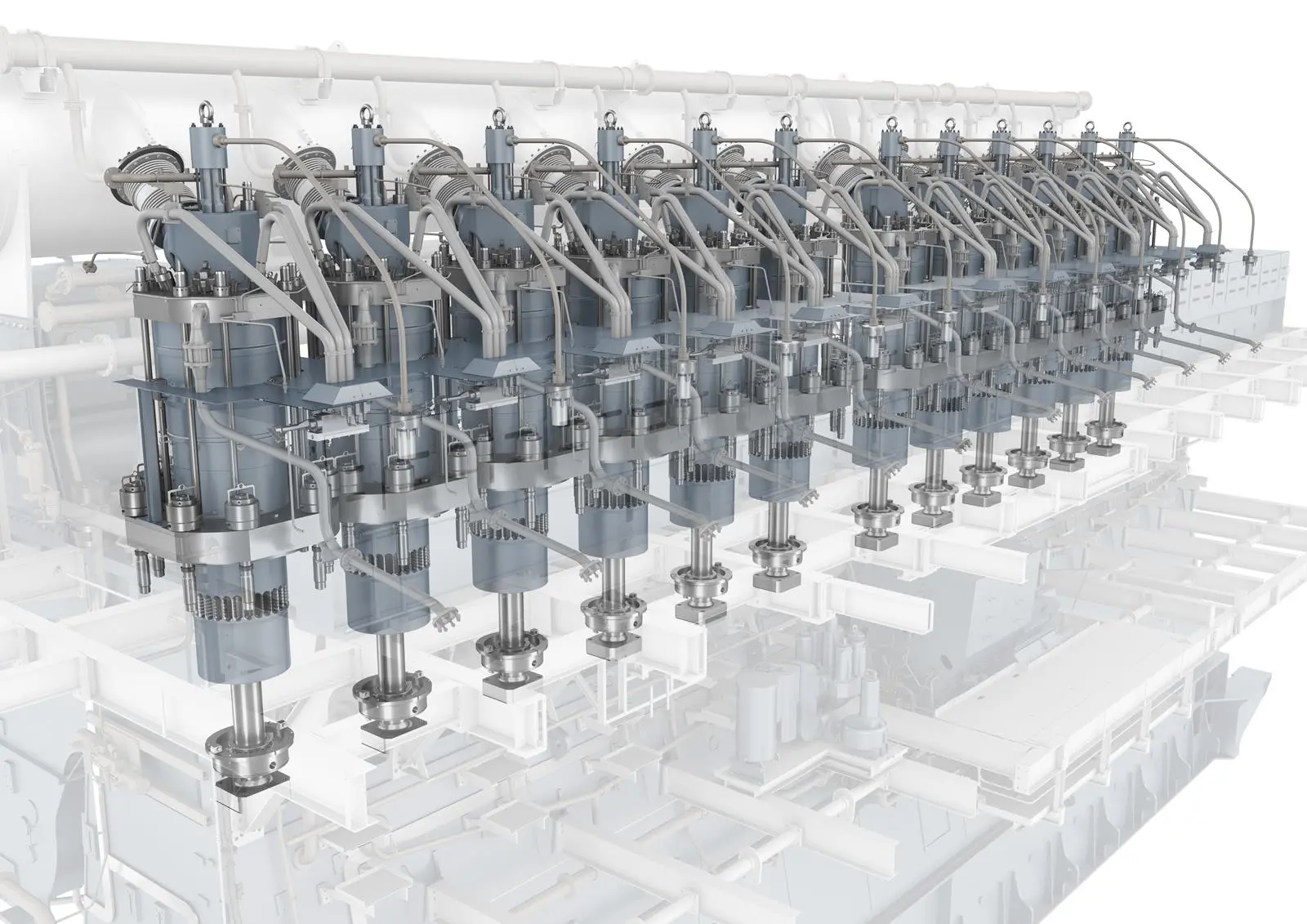
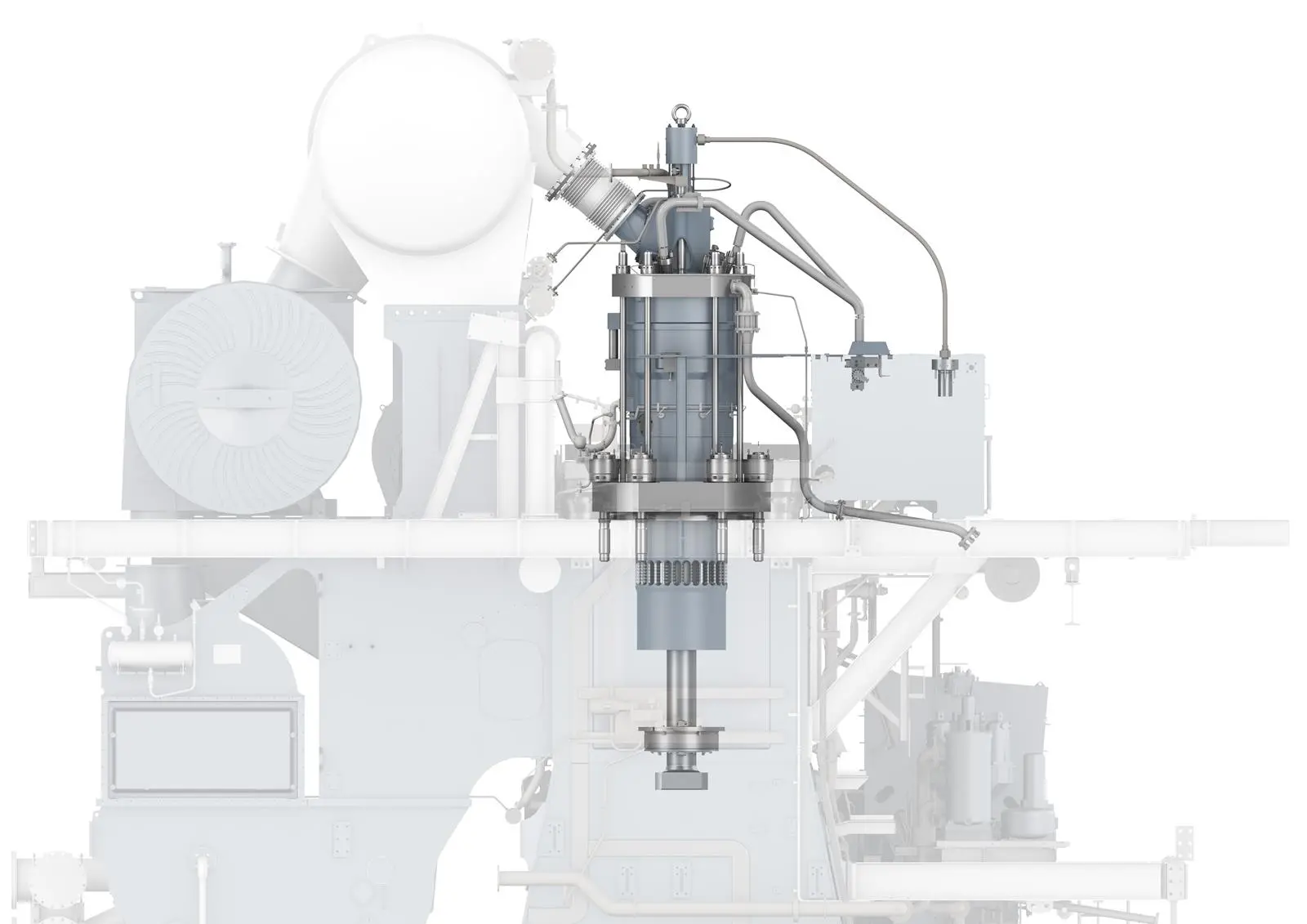
The solution has initially been developed for RT-flex96C-B engines, and will see the engine converted to a 72-bore engine.
Sangram Nanda, General Manager of Technology Development at Wärtsilä 2-Stroke Services in Switzerland, explained that the Fit4Power solution had been developed in record time in response to specific customer requests to improve the CII profile of larger container vessels.
The solution had been pioneered for vessels powered by RT-flex96C-B main movers, which were installed on large container vessels between 2004 and 2012 or so. “The majority of the vessels were ordered before container vessel operating speeds slowed around 2010 or so, and have oversized engines for their current operating speeds,” Nanda explained.
Groundbreaking floating FAT
Nanda also explained that the project was noteworthy as it resulted in the world’s first factory acceptance test (FAT) at sea.
“We had to discuss how to carry out the FAT with class and the flag state because the rulebook is based on engines being tested on a test bed, rather than out at sea.”
In this case, the engine also required a product design assessment at sea. Wärtsilä Fit4Power received a certificate of product design assessment from ABS in 2022.
Nanda noted that the Wärtsilä Fit4Power project was also the world’s first 22 Bar MEP two stroke engine.
While improving the efficiency of the engines is an important objective, most of the vessels are approaching mid-life and maintaining CII ratings for the vessels is an equally important objective for ship owners and operators.
The Motorship notes that rebuilding the engine with a 45% smaller engine capacity was likely to boost a vessel’s annual CII rating.
By improving efficiency in line with CII requirements, radical derating extends the CII compliant lifetime of the vessel by three to five years.
“It would be realistic to target fuel efficiency savings of between 10-15%,” Nanda told The Motorship, adding that there were opportunities to gain a few additional percentage points of fuel savings If you took the opportunity to upgrade and economise on the number of turbochargers.
Interestingly, Nanda noted that there were particular opex costs connected with maintaining engines approaching midlife that would partially offset some of the costs of rebuilding the RT-flex72R engines.
“Typically an engine requires significant scheduled maintenance once it approaches midlife, on the pistons, on the rings, on the liners and so on. A proportion of the cost of the Fit4Power upgrade simply replaces scheduled maintenance costs that you are saving. When you look at it from an upgrade perspective, you are partially offsetting maintenance costs that you would spend anyway.”
From an ongoing opex perspective, Nanda noted that the radical derating solution reduces ongoing maintenance costs, particular if the components are downsized and might even lead to reduced feed-in rates for lube oil, for example.
Higher compression ratio
During the engine conversion process, the engine design team increased the firing pressure from 145 to 200 bar, while the layout of the engine was also optimised.
The combustion chamber was also replaced with an optimised chamber design, which was expected to result in more efficient combustion than in the original RT-flex96C-B design. As a result of the enhancements, Nanda reiterated that he expected the derated engine to achieve a 10-15% improvement in SFOC rates.

“Finally, towards the end of the process, we agree with the customer about the optimal tuning for the engine. The interesting thing is that this decision is the result of an active discussion with the customer, which allows us to offer the spec based on their operational requirements, and how they plan to operate the vessel.”
Alt fuel conversion compatibility
For shipowners concerned about ensuring CII compliance beyond the end of the decade, the upgrade solution is intended to be compatible with future conversions to operate on alternative fuels. It is designed to be compatible with Wärtsilä Fit4Fuels future fuels conversion platform, which will enable vessels to use LNG, methanol and ammonia fuels.
“When we are modifying the engine for the Wärtsilä Fit4Power solution, we prepare the engine for a potential future Wärtsilä Fit4Fuels conversion… rather than requiring unnecessary replacement of engine parts. For example, when we replace the cylinder cover we include two additional unused sealed holes, which can be simply used for the installation of two alternative fuel injectors by changing the plugs in a future methanol retrofit.”
Maiden project concluded in October 2022
Sangram Nanda explained that the Wärtsilä Fit4Power solution had been developed rapidly in response to specific customer requests to improve the CII profile of larger container vessels.
The project had been developed and delivered by Wärtsilä 2-Stroke’s service engineers within a highly compressed timeframe. The project was launched in January 2022, and the first engine conversion project on board a container ship was concluded in October 2022.
The Wärtsilä Fit4Power engine conversion solution was launched commercially at the end of March 2023, following the analysis of the operational results of the of a first engine conversion project on board a container ship in October 2022.
Careful study of the operational results of the first vessel after a few thousand running hours have revealed that the conversion was a success, and the vessel was operating on the converted engine.
The results proved that a conversion project can save 2,000 tonnes of fuel and reduce at least 6,400 tonnes of CO2 emissions annually thanks to this retrofit solution.
A second conversion project is currently being carried out on another vessel.
Commercial opportunities
The Wärtsilä Fit4Power radical de-rating solution has been focused on delivering solutions for larger container vessels, and a number of ship owners have placed orders for the engine conversion solution.
“We have a full order book for our engineers for the remainder of 2023,” Nanda told The Motorship. Because of the number of container vessels that are approaching midlife, Nanda noted that Wärtsilä 2-Stroke Services engineers could be busy for the next 4 years carrying out engine conversions simply on these vessels at a rate of 1-2 vessels per month.
At present Wärtsilä 2-Stroke Services are collaborating with customers before carrying out the engine conversion work themselves. Nanda noted that Wärtsilä planned to carry out the first few engine conversion projects before considering collaborating with other partners. At present, the initial conversion projects were being carried out in a handful of yards, selected by the customer, to ensure that the conversions are carried out efficiently.
Looking further ahead, Nanda noted that similar retrofit projects might be commercially viable for vessels in other vessel classes, running on smaller RT-flex engines. This would depend upon the establishment of a viable business case, but “we have already shown that we can work at pace to deliver a first pilot with the RT-flex96C-B project”.
As many of the engine component level changes are common to all the RT-flex72R conversion projects, project specific design work is not excessive, Nanda noted. Some projects might require a little design work relating to engine-specific changes if they want to upgrade or replace the turbocharger or carry out additional engineering work.
Related Articles
 2-STROKE & 4-STROKE
 2-STROKE & 4-STROKE
 2-STROKE & 4-STROKE