



Joint UK-EU project to develop retrofit emissions reduction technologies
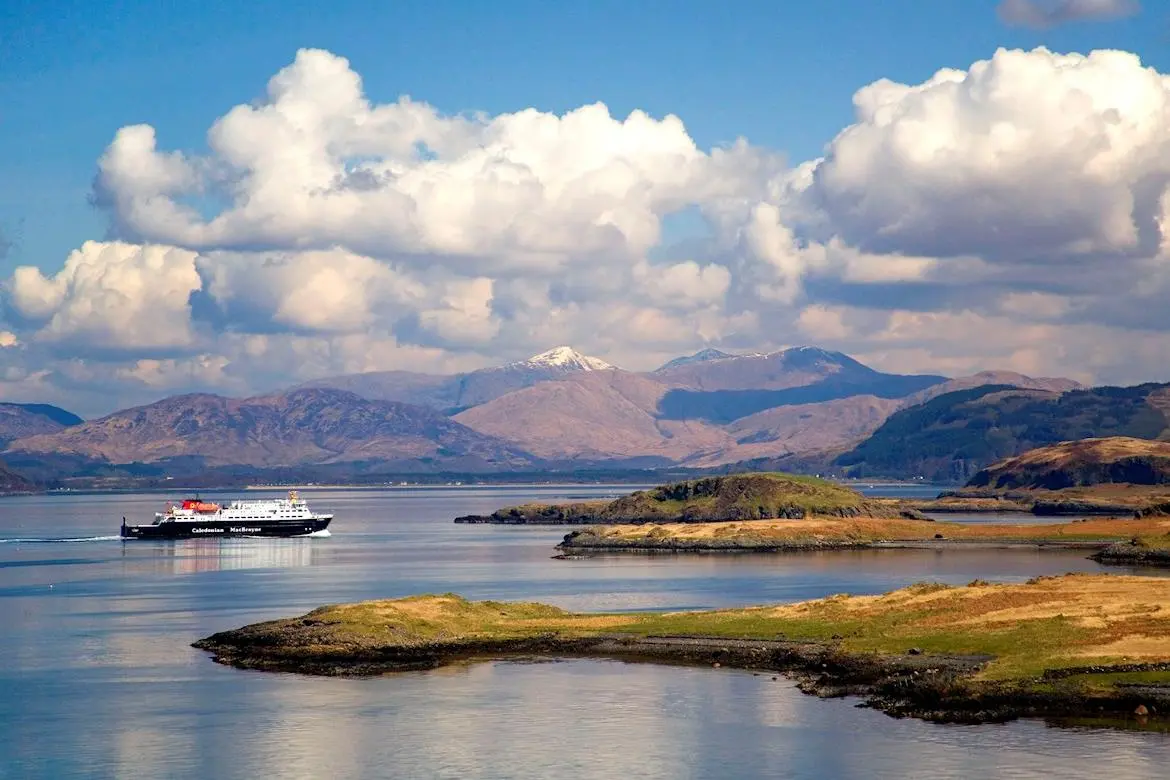
The Green Marine project brings together three Scotland-based partners (the University of Strathclyde’s Department of Naval Architecture, Ocean and Marine Engineering; Caledonian MacBrayne (CalMac) Ferries and Aberdeen-based carbon capture developer Carbon Capture Machine) as well as seven partners from the EU. The European partners include Cyprus Marine & Maritime Institute, Smart Material Printing, Wind plus Sonne GmbH, University Polytechnic of Marche, BlueXPRT, SINTEF, and PDM.
The consortium intends to develop effective and efficient ways of onboard retrofitting solutions leading to the decarbonisation of the maritime industry, and bring to the point of commercial development.
The project will run until January 2027 with an EU/UK funding of almost EUR5 million.
The project includes a range of retrofit solutions, including:
- A (nano)particle and virus removal solution suitable for gaseous steams.
- Commercially available gas-gas separating membranes for CO2 and water capture.
- Developing and implementing a carbon capture solution based on an alkaline solution with Ca- and Mg from sea water.
To aid the different stakeholders in their decision making, a software tool catalogue will be made that gathers knowledge on these and other solutions. The project will demonstrate these tools and the innovative solutions onboard CalMac vessel/s.
The Motorship notes that Carbon Capture Machine’s Ca/Mg alkali solvent capture process is capable of removing 75% of the CO2 from flue gases by dissolving the CO2 in dilute alkali, converting it into carbonate ions. The carbonate solution is then reacted with either calcium or magnesium brines to produce Precipitated Calcium Carbonate (PCC) or Precipitated Magnesium Carbonate (PMC).
Dr Iraklis Lazakis and Professor Evangelos Boulougouris will lead this effort from the University of Strathclyde, contributing to all technical work packages, especially in the demonstration of retrofitting existing fleets of ships and the exploitation and dissemination activities of the project.
The project objectives are as follows:
- Develop and validate retrofitting protocol tools suitable for adapting engines, flue gas carbon capture and utilisation, and integrated energy saving solutions for ships worldwide.
- Develop and validate a software tool containing an up-to-date catalogue of suitable solutions for a wide variety of ship types and operation scenarios.
- Replicate project learnings to all stakeholders; Stimulate software tool use and further enrich its data; Cooperate with global marine community of ship owners, operators, shipyards and equipment providers.
- Firmly position the retrofitting, software tools as a sustainable solution, offering a realistic and competitive new alternative in the Carbon Capture Utilisation and Storage (CCUS) market.
Dr Lazakis said: “Shipping contributes a small extent to carbon emissions globally therefore if we can develop solutions that can capture these emissions, we can accelerate the climate neutrality of existing fleets.
“As part of Green Marine project, the different technologies will be tested and verified onshore first for their marine application and, based on the results, a demonstration of the technology will be performed onboard one or more CalMac vessels.
“This will take place towards the end of the project including a full process and consultation period with Classification Societies on the feasibility and risk assessment and qualification of the application of these technologies onboard the vessel/s.”
Related Articles
 CARBON CAPTURE
 CARBON CAPTURE
 ALTERNATIVE FUELS & LUBRICANTS