



Drafting A Zero-Emission Coastal Cruise Ship
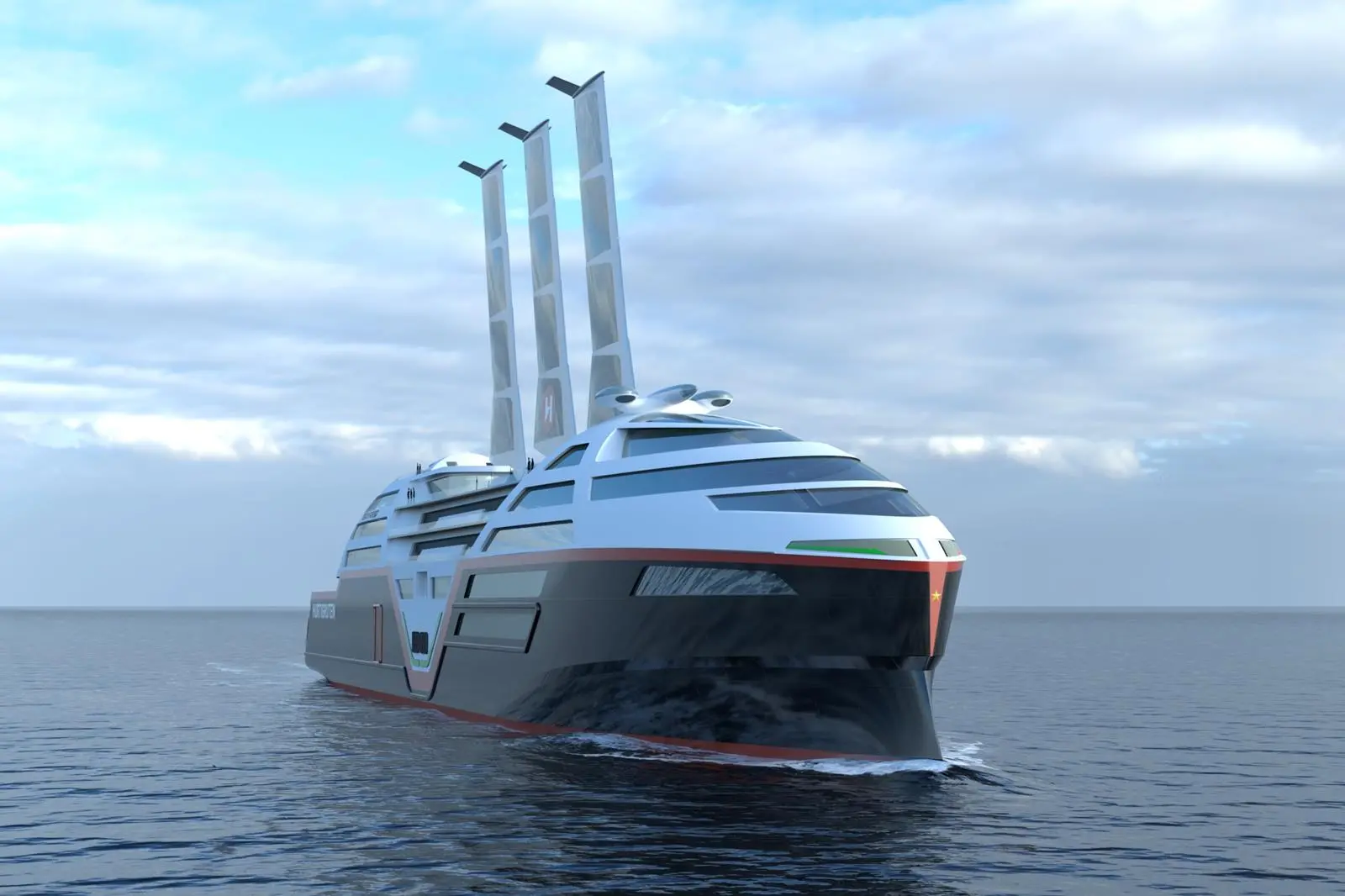
Following a rigorous feasibility study conducted by the company with partners in the first phase of the Sea Zero project, the most promising technologies and innovations were pinpointed for future vessels. Those elements will now be tested and developed over a two-year, second phase so as to create the next-generation ship and prepare the ground for a construction contract.
In line with a focus on ‘sustainable’ operations throughout the country’s long, rugged and heavily-indented coastline, Hurtigruten Norway has laid ambitious plans for a new fleet composed of smaller, custom-built ships designed to have no deleterious impact on the environment. The initial representative of the zero-emission, electrically-powered class now being formulated is due to be ready for service in 2030, as a template for the eventual transformation of the entire fleet.
The concept vessel is modelled at 135m length, incorporating 270 cabins for 500 guests, and having a complement of 99. While achieving robust growth in the cruise segment, the company’s traditional role as a key component of the coastal transportation infrastructure has ensured that the new ship type will have a cargo hold and provision for carrying cars.
Combining 60MWh battery solutions with wind-assisted propulsion technology, the vessel is expected to feature numerous innovative and improved solutions, including retractable sails with solar panels, artificial intelligence (AI) manoeuvring, contra-rotating propellers, and retractable thrusters, under-hull air lubrication and proactive hull cleaning.
Hurtigruten’s Norwegian Coastal Express is a scheduled service running the length of the west coast from Bergen to Kirkenes, connecting 34 ports and communities, carrying local passengers and tourists, and also goods. The line will use AI to collect data and ‘learn’ the most efficient docking and undocking procedures in each port, and under adverse weather or otherwise challenging conditions.
The exceptionally high capacity energy storage system, made up of cobalt-free, nickel-minimised batteries, will be charged from the shore, and from the solar arrays embedded in the three retractable, autonomous wing rigs. When fully extended, the sails will reach a height of 50m, and will enhance the aerodynamics of the ship.
With the vessel incorporating dozens of exterior sensors and cameras, and manoeuvring aided by AI, the size of the bridge can be slimmed down and a setup employed akin to that of an airliner cockpit. This arrangement facilitates the forming of a more aerodynamic foreship section, and also creates more living space and viewing areas for passengers on the upper decks.
Heating and cooling throughout the ship will be under the aegis of intelligent heat exchange pumps and a network of insulated distribution systems. The data-driven network will enable passengers to monitor and control cabin ventilation, energy usage and water consumption through an interactive mobile phone app.
The newly implemented second phase of R&D under Sea Zero will focus on state-of-the-art battery solutions, propulsion technology, hull design, and sustainable practices aimed at minimising energy usage. Devising new methods and technologies for hotel operations, which can account for up to 50% of the ship’s total energy consumption, is viewed as vital to the project’s success. The goal is a 50% energy reduction compared to Hurtigruten Norway’s existing ships.
Within Sea Zero, the shipping company has 13 partners, including the design and shipbuilding group VARD, research institute SINTEF, thruster maker Brunvoll, battery specialist Corvus Energy, and classification body DNV. The project has been awarded EUR7m ($7.6m) in public funding, and has a total budget of EUR13m ($14.2m) going into the next two years’ R&D work.
Hurtigruten Norway has also implemented an extensive environmental upgrade programme for its current Coastal Express fleet.
Related Articles
 BATTERIES, SUPERCAPACITORS, FUEL CELLS AND OTHER ENERGY STORAGE TECHNOLOGY
 BATTERY HYBRIDS & FULL-ELECTRIC VESSELS
 BATTERY HYBRIDS & FULL-ELECTRIC VESSELS