



Industrialisation of e-fuels is accelerating
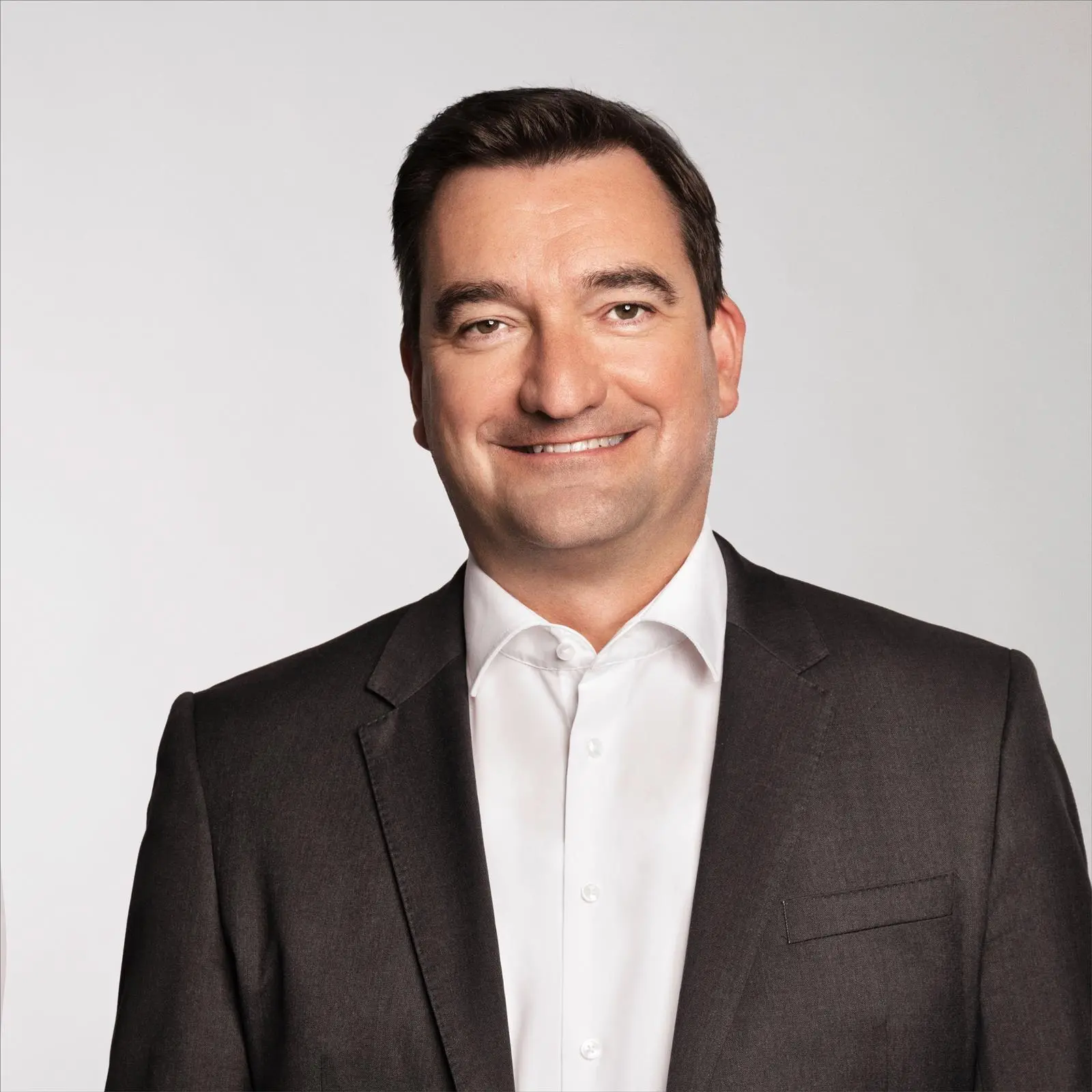
We are on the brink of industrialised production of e-fuels, says Ralf Diemer, Managing Director of the eFuel Alliance. “The technology is there. It’s doable. It’s feasible, but now the big investments have to be made.” The eFuel Alliance is an interest group committed to promoting political and social acceptance of e-fuels and to securing their regulatory approval. It represents over 170 companies along the value chain of e-fuels.
Diemer expects to see a lot more production globally at least by 2025. Regulation in the EU and the US, even Australia, is creating the right environment, but the big projects need offtakers to trigger FID. e-fuel refineries have the advantage that, like their fossil fuel equivalent, their production systems can be flexible, shift from one use case to another to meet changing demand, he says.
“Cost effectiveness will come through scale effects,” says Diemer. “It’s difficult to predict exactly when, but our members believe that around 2030-35, we will be able to produce e-fuels at costs comparable to fossil fuels – not cheaper, perhaps just slightly more expensive. CO2 neutrality comes with a price tag.”
Commodities specialist Trafigura recently published research estimating that the Global South (Africa, Australasia, South America) could produce almost 4,000 exajoules per year of competitively priced green hydrogen, against projected annual demand for the shipping industry of 20 to 40 exajoules. At US$2.00 per kilogram of green hydrogen, the estimated production costs of e-fuels in these nations is expected to be approximately US$750 per tonne, whereas in Europe, with higher electricity prices, it would be closer to US$1,200 to US$1,500 per tonne.
The authors call for the introduction of a carbon levy by 2025, saying the IMO could accelerate the development of these fuels by implementing demanding science-based decarbonisation targets in its revised GHG Strategy at MEPC 80 in July. “Delaying action will only add to the eventual cost of decarbonisation. The IMO needs to decisively move forward to tackle the shipping industry’s emissions and start the journey to a sustainable and resilient future,” says Rasmus Bach Nielsen, Global Head of Fuel Decarbonisation at Trafigura and co-author of the research whitepaper.
Move molecules not electrons
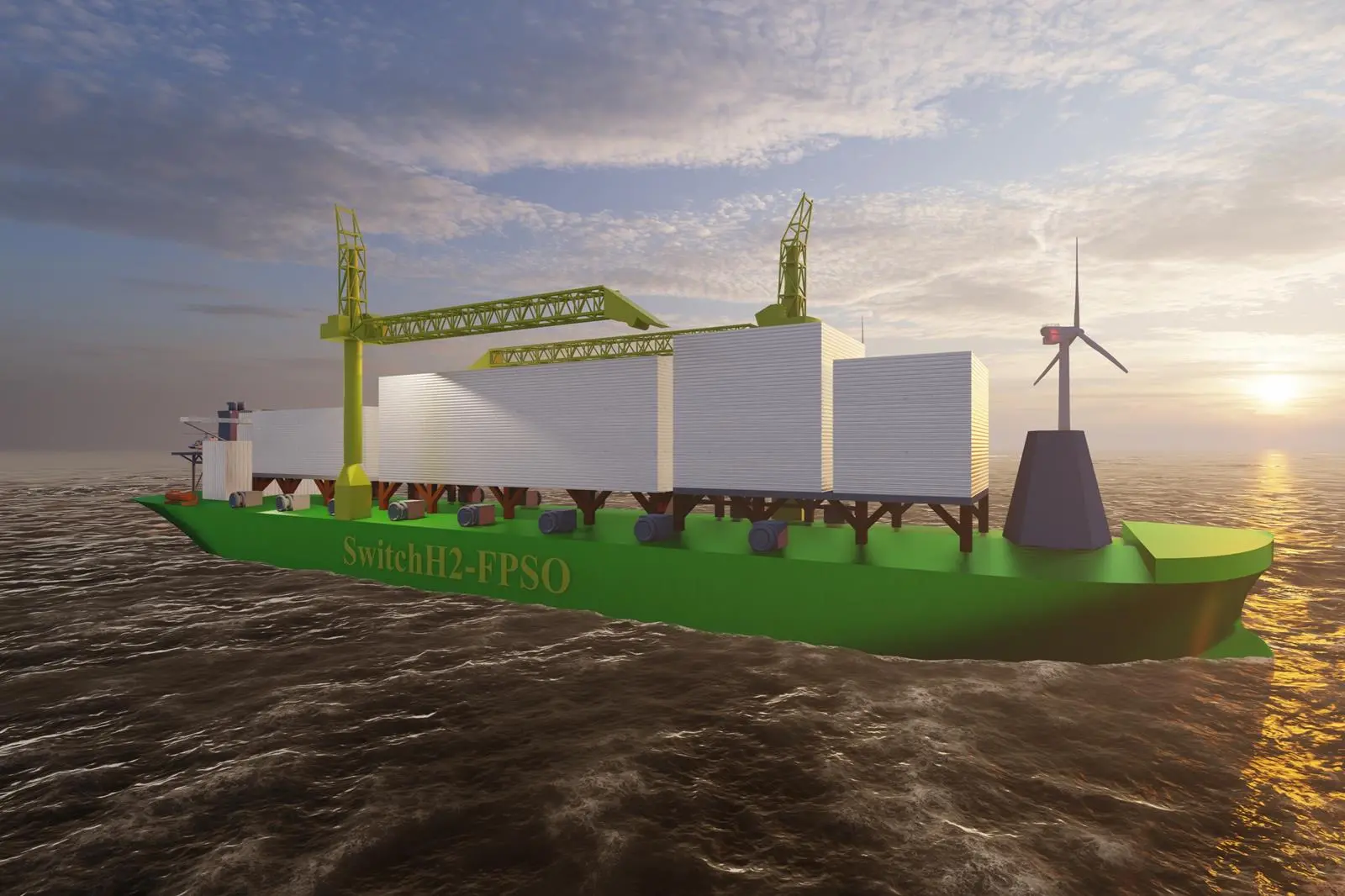
SwitcH2 has developed an H2-FPSO design which it says is a natural evolution from traditional FPSOs which have been the most cost-effective solutions for standalone production in oil and gas fields worldwide. SwitcH2 is leading the OFFSET project, which includes partners BW Offshore, MARIN, TU Delft, and Strohm. With funding from the Dutch government, the project aim is to create a floating hydrogen and/or ammonia FPSO which will be connected to a nearby wind farm by 2027 for production to start in 2028. The ammonia will be shipped to end consumers by shuttle tankers, and the produced hydrogen brought to shore by pipeline.
At 300 meters long and 64 meters wide, the FPSO was initially targeted to have a capacity of 200MW, the same as Shell is planning in the Port of Rotterdam in a separate project, but Dr Saskia Kunst, board member of SwitH2, says the partners expect to increase that to 300MW.
“We have made cost assessments in terms of overall capex, OPEX and maintainability, and believe that a single floater attached to a wind park is the way to reduce costs rather than having production take place at individual wind turbines,” she says.
“What we see developing currently is a 1GW standard for installed wind power, at least around Europe. It could be a single FPSO that takes part of that power, roughly a third. But what we increasingly see, and I believe that will also be visible in other parts of the world, is that wind parks will be set up solely to produce hydrogen offshore.”
The company’s goal is to send molecules to shore rather than electrons and bring them to shore. “Why? Because bringing electricity to shore is inherently less efficient than bringing molecules to shore, due to the power losses. And we are starting to see the limits of what the transformer stations offshore can absorb and how the grids onshore can deal with the fluctuations in power.”
She notes that a previously designated Dutch offshore wind farm location, Ten noorden van de Waddeneilanden, will now be used exclusively for the production of green hydrogen from offshore wind. And as part of Germany’s new plan to generate 30GW of offshore wind by 2030, an area of the North Sea has also been set aside exclusively for offshore green hydrogen production.
TU Delft is developing catalyst technology that will eventually enable the electrolysers on the H2-FPSO to use seawater as the source of the hydrogen. Currently, electrolysers need demineralised water, and the process results in a brine waste stream. TU Delft’s new membraneless technology is currently at TRL4, but the aim is to reach TRL7 in the next few years. It may not be fully commercialised by the expected time of operation of the first FPSO in 2028, but it is certainly the direction of travel for large scale offshore production, says Kunst.
New process developments boost efficiency
Experts from DNV expect to see catalyst and reactor design developments that will boost e-fuel production efficiency in parallel with the development of larger scale or modular mass-produced reactors. They also expect a lot of process optimisation in the production of e-fuels, including higher efficiency hydrogen electrolysers. Better heat integration with downstream processes is expected to bring costs down.
Topsoe is currently constructing the first industrial scale SOEC manufacturing facility. The factory will have an initial 500MW manufacturing capacity, and Topsoe says its SOEC technology is up to 35% more efficient than conventional technologies, enabling a more efficient green hydrogen production to help meet global decarbonisation targets.
To reach net zero on a global scale in 2050 an estimated 3670GW of installed electrolysis capacity is required by 2050. A prerequisite for having enough capacity, that enables industry producing green hydrogen, is to build up manufacturing capacity at speed, and this is what Topsoe is aiming for with the new factory.
“Our factory will take high-temperature electrolysis from the laboratory environment to industrial scale and provide the first industrial use case,” says Kim Hedegaard, CEO Power-to-X at Topsoe. The company is involved in several projects aimed at proving the viability of SOEC, including the NEOM project in Saudi Arabia, announced in July 2020, for which it will deliver the world’s largest green ammonia plant.
Topsoe’s ammonia technology will also enable Copenhagen Infrastructure Partners and Sustainable Fuels Group to produce blue ammonia from a planned facility on the US Gulf Coast, expected to be operational in 2027. The facility will use Topsoe’s SynCOR™ steam reforming technology to generate hydrogen from high-temperature steam and a methane source. Along with the capture and sequestration of the produced CO2, the process will reduce emissions by 90% (well-to-gate) compared to traditional ammonia production.
BASF Japan’s high-pressure regenerative CO2 capture technology HiPACT® will be used by INPEX in its Kashiwazaki Clean Hydrogen/Ammonia Project – Japan’s first demonstration project for the production of blue hydrogen/ammonia from domestically produced natural gas. By releasing the CO2 off gas above atmospheric pressure, the technology is expected to reduce CO2 capture and compression costs by up to 35% compared with conventional technologies due to its excellent high-temperature durability and CO2 absorption performance.
Methanol at scale
Methanol is also in the picture. In May, Ørsted broke ground on Europe’s largest e-methanol project, FlagshipONE. The project is claimed to signal in a new green era of shipping, where large-scale methanol production facilities will supply a constantly growing fleet of methanol-powered vessels. Currently, over 110 e-methanol vessels have been ordered or are in operation, up from 80 vessels at the end of 2022. At the same time, new regulation such as FuelEU Maritime is also increasing the demand for new, green maritime fuels. FlagshipONE will start production in 2025, when it will produce 50,000 tonnes of e-methanol annually. Partners include Siemens Energy, Carbon Clean, and Topsoe, which will deliver the electrolysers and control system, the carbon capture equipment, and the methanol synthesis equipment, respectively.

The Methanol Institute projects there will be up to 8 million mtpa of combined renewable or bio-methanol production capacity by 2030, in addition to the approximately 100 million mtpa produced from fossil-based feedstocks. IRENA forecasts production of 550 million mtpa by 2050, including 350 million mtpa of combined renewable and bio-methanol.
Chris Chatterton, Chief Operating Officer of the Methanol Institute, notes that electrolysis is the dominant technology platform being chosen for the production of green hydrogen globally, which requires large amounts of affordable, renewable power as the primary feedstock. This is true for both green ammonia and green methanol.
“Electrolysis is not a new technology although scaling it efficiently in order to meet the expected future demand for green hydrogen is. In this respect, scaling too fast may lead to inefficiently produced hydrogen which could potentially be rendered uncompetitive. Production costs are largely a factor of the costs for the renewable power together with the hydrogen production. Therefore, the only way to bring costs down to be able to offer a greener product at an affordable price will be to introduce effective policy to incentivise producers as well as consumers, so that both sides can maintain compliance and not sacrifice their competitive advantages.”
Speaking on the ability of methanol to support more ambitious targets that could be set by the IMO at MEPC 80, Chatterton says: “Methanol is ideally suited as a transition fuel today, in its conventional specification based on fossil fuel, as it is substantially lower in CO2 than conventional marine fuels when combusted, with significantly reduced PM, NOx and SOx, plus it is miscible in water, which is better for the environment in the event of a spill or salvage operation. Numerous pathways to allow for transitioning to lower carbon and carbon neutral methanol have been well studied and are incorporated across the almost 90 projects that the Methanol Institute tracks globally.
“So, we can confidently advise the IMO that methanol can contribute significantly to maritime decarbonisation and is already demonstrating this in the absence of any policy with over 20 vessels in service today and over 100 on order. By 2030, methanol will likely be seen as having contributed more towards maritime decarbonisation than all other alternative fuels combined, based on total emissions reduced, to include CO2, methane, PM, NOx and SOx.”
New emphasis on upstream emissions
Measurement and reporting of upstream emissions is developing along with the technologies, and in April, the International Energy Agency (IEA) released a report proposing new hydrogen definitions that replace the colour labels (green, blue and grey) with a taxonomy based on underlying production emissions. The report argues that an international emissions accounting framework for hydrogen is necessary to ensure much-needed transparency to facilitate adoption and scale-up.
The IEA is concerned by the significant divergence between emerging certification schemes, and says that terminologies that use colours or qualifiers such as “sustainable”, “low-carbon” etc. often mask a wide range of different emissions intensities, depending, for example, on the source of electricity, the CO2 capture rate or the emissions associated with upstream fossil fuel production.
Numerical values that reflect emissions intensities and that can be calculated directly for a specific production route are more transparent and allow project developers to assess regulatory compliance efficiently. The IEA therefore proposes nine technology-neutral levels. Beginning with level “A” (emissions intensities below zero), each subsequent level represents an increase in emissions intensity ending with level “I” (7 kg CO2-eq/kg H2). The cap at level “I” is intended to capture all known hydrogen production routes that can achieve lower emissions than unabated fossil-based routes.
It remains to be seen whether this will be taken up globally or nationally. Certainly, the IMO is working on how to incorporate well-to-wake emissions into its regulations. Meanwhile, some in the industry are anticipating regulatory or consumer demand. Earlier this year, for example, ONE launched an Eco Calculator which calculates CO2 emissions from ONE’s operating vessels on either a tank-to-wake or well-to-wake basis.
Related Articles
 AMMONIA
 AMMONIA
 OTHER ALTERNATIVE FUELS