



Ship automation speeds up to make the schedule
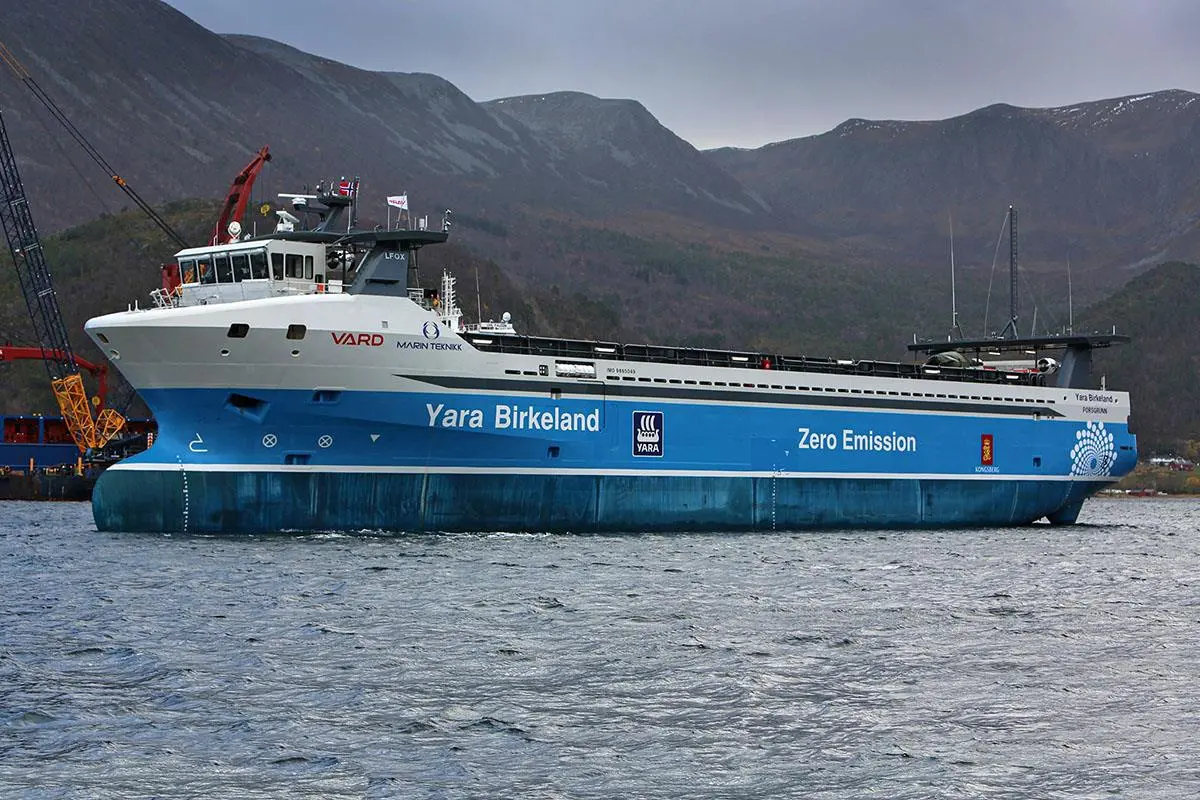
How the changing macro environment will impact expensive technology development in the slower paced maritime market remains to be seen. In the maritime realm, Yara Birkeland, which has been positioned since its delivery as the first autonomous vessel in shipping, still operates with a crew, and is likely to continue doing so at least until the end of this year. “While I can’t claim inside knowledge on this, like most things, once they got there, it is likely more issues were uncovered,” speculated Lloyd’s Register (LR) Principal Specialist Assurance of Autonomy Tony Boylen, in conversation with The Motorship. “I’m sure they are doing high levels of remote operation, it could be 98% hands off, with the only intervention taking place when they decide that they haven’t got some coding right.
“[Yara] are not early adopters; they’re at the demonstration phase… it is a prototype, and we shouldn’t be looking at it and demanding to know why it isn’t a shiny finished product.”
Of course, the end of free money is not the only factor bringing shipping’s tech segment crashing back to Earth; at the end of last year, Maersk’s TradeLens shut its doors, bringing an end to its promise of effortless communication between ship operators, crews, ports, and cargo owners, shipping goods as straightforwardly as ordering an Uber. A relic of a ‘blockchain’ moment when the merest mention in a company’s marketing materials was Pavlovian investment-bait, able to inflate share prices overnight – even if identifying an actual use case was optional – nothing as complicated and resource intensive as TradeLens’ blockchain was necessary for the task at hand; and while a deluge of Maersk’s competitors signed on as ‘foundation carriers’ and ‘trust anchors,’ essentially, pledging to act as digital co-signatories if the technology turned out to work, few were interested in becoming its customers.
But now there is a new golden goose to get the languishing tech industry back on track. According to data from Google, search interest in ‘AI’ in May 2023 was almost neck-and-neck with the feverish peaks of ‘Bitcoin’ hype in 2017. Much of this has to do with OpenAI’s decision to put ChatGPT’s impressive skills on public display. But as in the case of blockchain, its capabilities have been overstated. ChatGPT, GPT-4 – and Google’s answer in kind, BARD – are not in fact Artificial Intelligences but Large Language Models (LLMs). Though they may appear to think for themselves, they rely on a massive reservoir of human writing and data, referred to in the industry as ‘training data’.
Crucially, as with anything human, much of this input is erroneous. LLMs’ short history shows them to be very delicate, and poised on the brink of catastrophic error. With a rudimentary knowledge of how chatbots work, it was not long before internet denizens had Microsoft’s Tay AI responding to trivial questions with Nazi propaganda. Digital assistant and chatbot Replika was the next casualty; lauded for its lifelike conversations, until it began to deluge its user base with unwanted sexual advances.
In short, the ‘AI’ of today may be a voracious reader, and demonstrate considerable skill and eloquence in effectively disseminating information. But in a world where “data talks and BS walks”, unverified assertions better suited to undergraduate literature essays are unlikely to form the basis for a sustainable business model. To any veteran of the maritime industry, this will sound awfully familiar.
To err is human
As shipping’s own history demonstrates perhaps better than any other industry, one wrong answer hidden amid a cascade of correct ones, can be deadly. In minor cases, inconsistencies replicated from paper charts have led to issues with ECDIS, and even groundings. At the farthest end of this gamut is the tragedy of the El Faro, in which a captain of decades’ experience, beguiled by elegantly-presented – and wrong – weather information on his phone, steamed directly into the eye of a hurricane, declaiming “conflicting reports” until moments before his death.
As Jesse Vecchione, Weathernews Incorporated (WNI) head of sales and marketing and meteorologist by background, recently told The Motorship, early examples of this tendency are already emerging with the application of AI in voyage optimisation.
As Vecchione illustrated, ship operators and crews are being presented with routes which, if followed, would result in loss of vessels and crew. In one example, a path from Northern Europe to the US east coast through iceberg strewn waters, further north than the Titanic would have dared venture. “Operators will pass us examples of these… sent directly to captains. The ship would sink if it went on these routes.
“You would never take a vessel to the south coast of Greenland… it does not make any logistical sense to go through Belle Isle Strait, which was closed at the time,” he said. “It was a shock to the system to see this, especially from a company that I consider to be reputable.”
But new entrants in Vecchione’s field, boasting a pedigree in tech rather than in maritime or in predicting the weather, believe it is humans that make mistakes, and not AI. He told The Motorship that he fears the outcome of this. “The legacy weather companies [like WNI] want to sell themselves as having people involved. In the worst case scenario we have AIS data. It is better to know the Master’s terrible route, and help them along with that.
“The upstart companies have been saying they are so good, they do not need a person in dialogue with the captain. My fear is that in the next five years, there is going to be an event that happens because a company is offering an automated weather solution, but there is no actual trained person watching the routes. I really don’t want this to happen, but I think it will.”
Human-first
This could be why experts in maritime autonomous surface ships (MASS) so self-consciously distinguish between ‘automation’ and ‘autonomy’. “Autonomy is not just about crewless ships and does not imply that there are no persons onboard,” explains The One Sea Association in its June position paper. “In practice, this means saving fuel through optimised speed profiles, reducing associated emissions, as well as reducing maritime accidents or incidents by supporting crew tasks performance and therefore improving safety at sea.”
For One Sea, there is an explicit need to have a “human in the loop,” whether or not that takes the form of crew onboard the vessel. “From a safety, liability and a reasonably practicable low level of risk perspective, it is expected that the autonomous technologies in crewless and in some cases reduced crewed ships, will still require corresponding Remote Operation Services,” said the group’s position paper. “Ships operated by a Remote Operations Centre should be managed by a competent remote master and operated by competent remote operators.”
“I am very keen that people see autonomy as a full spectrum because a lot of people automatically jump to the fully autonomous vessel… [but] with autonomy, the soft squishy [human] should be at the centre of everything,” agreed Boylen. “What level of autonomy you go with depends on how human-centric you are.
This is an unusual stance in the context of AI discussion as a whole, which nearly always centres around replacing and displacing human labour. “People constantly pitch it as the fight between man and machine,” said Boylen. “But no, it’s about augmenting, taking the stress off, adding assistance and therefore making the job easier, and allowing those crew to do other tasks that can add perhaps more value to the owner-operator.”
Other maritime autonomy experts similarly advocate human-centred automation, which they say is integral to any such effort in shipping. “We need to ensure that [new technology] is effectively designed for use by seafarers, that they are trained to use it as intended to maximise fuel and voyage efficiencies, and that there are feedback mechanisms in place to ensure their understanding of its value,” Mikael Laurin, Head of Vessel Optimization at Yara Marine Technologies, told The Motorship.
Yara is one of several stakeholders in the Via Kaizen project, which concluded in June. Its aim has been to apply AI to the issue of reducing fuel consumption, recognising patterns and trends in vessel operation data which would be imperceptible for humans, and instigating performance optimisations based on these. However, one of the aims of the Via Kaizen project has been in seeking to develop systems that do not interfere with, but rather complement, human operation.
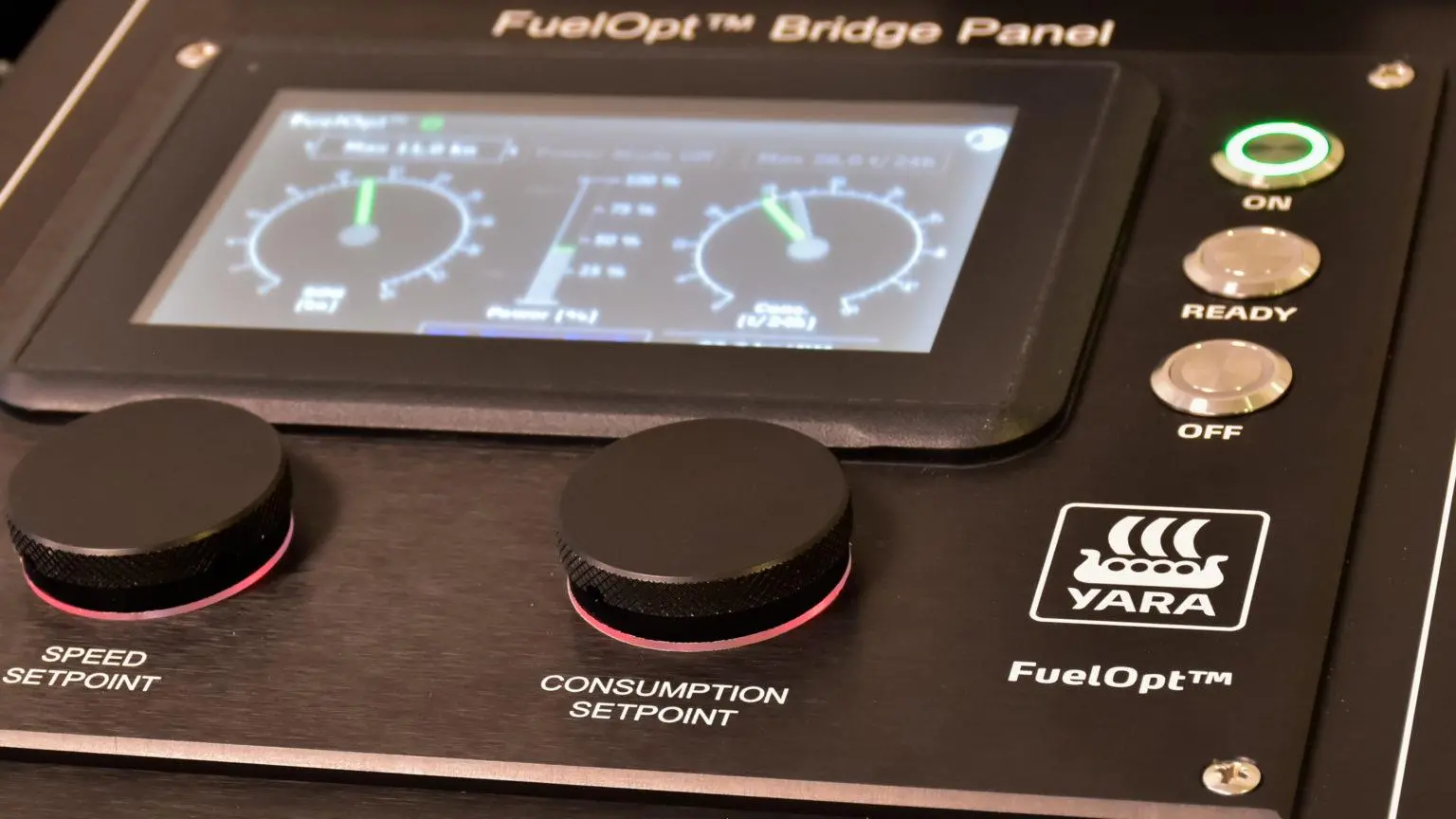
“Our success as an industry depends on integrating onboard optimisation systems with crew workflows, effectively supporting crew routines and responsibilities while minimizing obstacles to their uptake of supportive technologies,” Laurin said. “This is the best way for our industry to accelerate the adoption and effective use of AI-powered ship operation support technology by ship crew and management.”
In February, Korean Register (KR) granted an Approval in Principle (AiP) for an autonomous AI-based navigation system developed by HHI’s autonomous navigation division Avikus. HiNAS (“Hyundai Intelligent Navigation Assistant System”). In contrast to autonomy approaches which centre on remote-controlling vessels from shore, HiNAS would give a vessel its own in-situ decision-making capability based on sensor input, and would ‘enhance safety during navigation, improve fuel efficiency and ease the operational workload for bridge teams,” according HHI.
HiNAS has advanced to stage four of the KR’s new technology qualification (‘NTQ’) process, ‘operational assessment,’ having passed the ‘feasibility and concept verification,’ ‘prototype validation,’ and ‘system integration’ phases. KR chief executive and chairman Lee Hyung-chul pledged to “…continue to provide more substantial and active technical support for the commercialisation of autonomous ships as a future technology.”
Never tell me the odds
To say that major strides are necessary in cybersecurity before taking crew off vessels is to elide the fact that these are needed at any rate. Earlier this year, a ransomware on DNV’s ShipManager put some 70 companies and around 1,000 of their vessels in the firing line. DNV claims the damage to DNV’s customer base was minimal. Indeed, it could have been a lot worse, with 6200 vessels and 300 operators using ShipManager software.
ShipManager is nobody’s idea of a fully automated vessel. It performs various onboard functions, including hull integrity monitoring, crewing and technical management. But even that was enough to make it a target. “All ships could still use the onboard, offline functionalities of the ShipManager software, and no other systems onboard were impacted,” said DNV in the days after the attack.
Not lost on onlookers was the fact that the successful ransomware attack on ShipManager is hardly a glowing endorsement of DNV in its capacity as a cybersecurity consultant, or its own ‘Cyber Secure’ class notation. Even those on maritime’s cyber-threat frontline, then, are lagging behind, and clearly the sector as a whole will have to get significantly more resistant to cyberattack, whether it is taking crews off ships or not. But the fantasy of ‘switching to manual’ – the romantic notion that when all else fails a crew could turn off the computers and operate by skill and daring alone, like Han Solo might – fuels the most common misgiving around not having crews onboard.
On a modern ship, densely networked with interlinked operational technology (OT) systems continuously monitoring and retaining control over navigation, engine load, trim and ballast, this is largely fallacy. Software, cables and electrical signals, not chain and telegraph, connect the bridge controls with actuators that govern the ship’s heading and speed. The locking-up of OT systems by ransomware can today put a vessel entirely out of action, unable to, in aerospace parlance, ‘fly-by-wire’. “We’ve seen flaws in VSAT systems; vulnerabilities in cyber-technologies that are supposed to protect systems onboard vessels actually creating security flaws; and we’ve seen onboard engine control systems with security flaws as well,” Ken Munro, a cybersecurity consultant with PenTestPartners, told The Motorship.
On more advanced ships, there are even systems like Yara Marine’s FuelOpt, which tune the propulsion load from moment-to-moment to smooth out inefficiencies and reduce fuel costs – adding an extra layer of remove and making the navigator’s throttle adjustments even more a polite suggestion.
If a vessel’s OT systems are locked up by ransomware, explained LR’s Mr Boylen, “…there is still the ability to hydraulically control the vessel – so the hydraulics can take over and the human can intervene, even if the helm is inactive, there are other methods. But on a human vessel, especially a very large vessel, the lag in inputs is so significant that by the time the crew realises an attack is happening, it could already be too late – meaning there might not be a huge risk differential between [a crewed ship and a remotely-controlled ship].”
In fact, a ship in the deep ocean “might actually be safer,” Boylen claimed. “What’s the line of nodal attack into the vessel? You would have to use satellite – a car, a fuel truck or whatever driving to the petrol station could be steered off the road and do significant damage, whereas on a vessel how do you attack that?
“Cyber is no different to any other domain, in my opinion. It’s no more threatening to autonomy or remote operating centres than manned vessels – there are different threat vectors because you have the remoteness and stuff like that, but as long as these are addressed, I don’t think the threat level changes significantly.”
Heavy on the data
There is certainly an argument, then, that remote vessel operations might not be the leap they initially seem, and a crew could operate just as effectively from shore. The technological barriers to a remote setup like this one have less to do with a vessel’s autonomous decision-making capabilities, and much more to do with a stable VSAT connection. “If one had unlimited, reliable and ubiquitous communications capacity, one could envisage replicating all the information available on an on-board bridge to a remote bridge using sensors… however, even if ship connectivity is continuously improving, the quality required for safely navigating a ship by remote control has only been put to the test in areas with significant communications capacity,” DNV determines in its position paper.
In terms of replacing human eyes and ears, the data demand of the various shipboard sensors and inputs would be considerable, and the bandwidth capacity for exchanging this data with shore – “…as much as several tens of megabits per second depending on the sensors used” – would be costly, rivalling land-based wired connections.
“Although it is possible to handle such a capacity even through satellite communication, it is difficult to scale this to many ships, given the current state-of-the art communication systems,” said DNV, with the caveat that compression – akin to the WinRAR or 7zip archive files exchanged between desktop computers today – could lighten this load somewhat. “Post-processing of the information as well as augmentation to aid the situational awareness of the operator will likely take place at the location of the operator or by means of cloud-based solutions.”
“When we talk about [remote control] operation, it is about the cybersecurity, the comms resilience and robustness; you have to have processes in place if you have a dropout,” explained Boylen. “Which level of autonomy owners choose to operate on will be dynamic depending on where they are, and what type of operations they’ve got.
“A lot of the technologies are there, done. What we have to do is ensure that robust processes are put in place, and in essence, the assurance of what is done is there. It’s not necessarily that the capability is wrong. We just have not pushed through and matured the testing regime enough to demonstrate the safety levels. Once the confidence and evidence base is there, then the follow-on vessels will be more remote operation-focused, and the crew will be transient on the bridge – doing other tasks, or slightly reduced in number; all those benefits.”
Hurry up and wait
“In my opinion, assurance and regulation are the biggest challenges,” Boylen explained. “Class is providing the evidence base for the regulators and the regulators support them by providing the regulation, but they’re inextricably linked because they haven’t got the ability to regulate on their own. Regulators haven’t got the skill sets, or the evidence base to make the judgement to say ‘yes, do whatever you want,’ especially on larger vessel types.”
Even differences between cultures can be a factor, with attitudes to automation varying between countries. “For example, in Japan, they are eager to augment the human, because they have a real shortage of crew, are haemorrhaging personnel, and age profiles are going up a lot. So their need for autonomy is quite strong compared to other countries.
“There are lots of voices going on in the IMO – everyone has to have their say – so this bogs down the process, and blocks those who do wish to take on the technical challenges of development,” he added.
The human regulators who for the time being govern the shipping industry are no more immune to bias than the general population – making one of automation’s biggest hurdles not technological, but based on the decidedly human and nebulous factor of reputation, Boylen explained. “I see the level of risk as very similar between manned and unmanned vessels,” he said. “But because of the nature of autonomy, there will be a much more intense scrutiny. We are seeing this already – if an autonomous car kills somebody we hear about it on the news, but not about the people every year who die on the roads in the UK. In that sense, autonomy has to be seen to be an order of magnitude safer.”
Not that laissez-faire approaches to automation in other sectors are likely doing shipping any favours in this regard. “Tesla has a novel approach,” said Boylen, describing the ‘beta’ testing process of its full self driving (FSD) feature, which has been responsible for 736 crashes and 17 deaths according to recent reports.
“There are a lot of individuals volunteering to be a guinea pig. Elon Musk has managed to persuade a lot of people to pave his development pathway. Not a pathway I’d personally recommend… I wouldn’t be taking my hands off the wheel as often as he alludes to.”
But it is difficult to build up a regulatory framework for ship automation without vessels on the water, and shipping, developing comparatively slowly in contrast to automotive and particularly aerospace, will benefit from some of their experiences. “We just started the digitalisation pathway fairly recently. There’s a long way to go. The autonomy path and remote operation, would be a very quick and dynamic change to the sector compared to what has gone before.
“Is their knowledge any help to us? Yes. I’ve been involved with the Department for Transport funded work with the University of Warwick looking at cross-domain safety assurance, which we have been heavily committing to and supporting. There are distinct areas where there will have to be differentials, yes – but there’s opportunity for commonality in some approaches, and we should aspire to be common where we can.”
Related Articles
 ENERGY SAVING DEVICES
 LNG
LNG
 ALTERNATIVE FUELS & LUBRICANTS