



New fuel adaptions to turbochargers will include layout and material changes
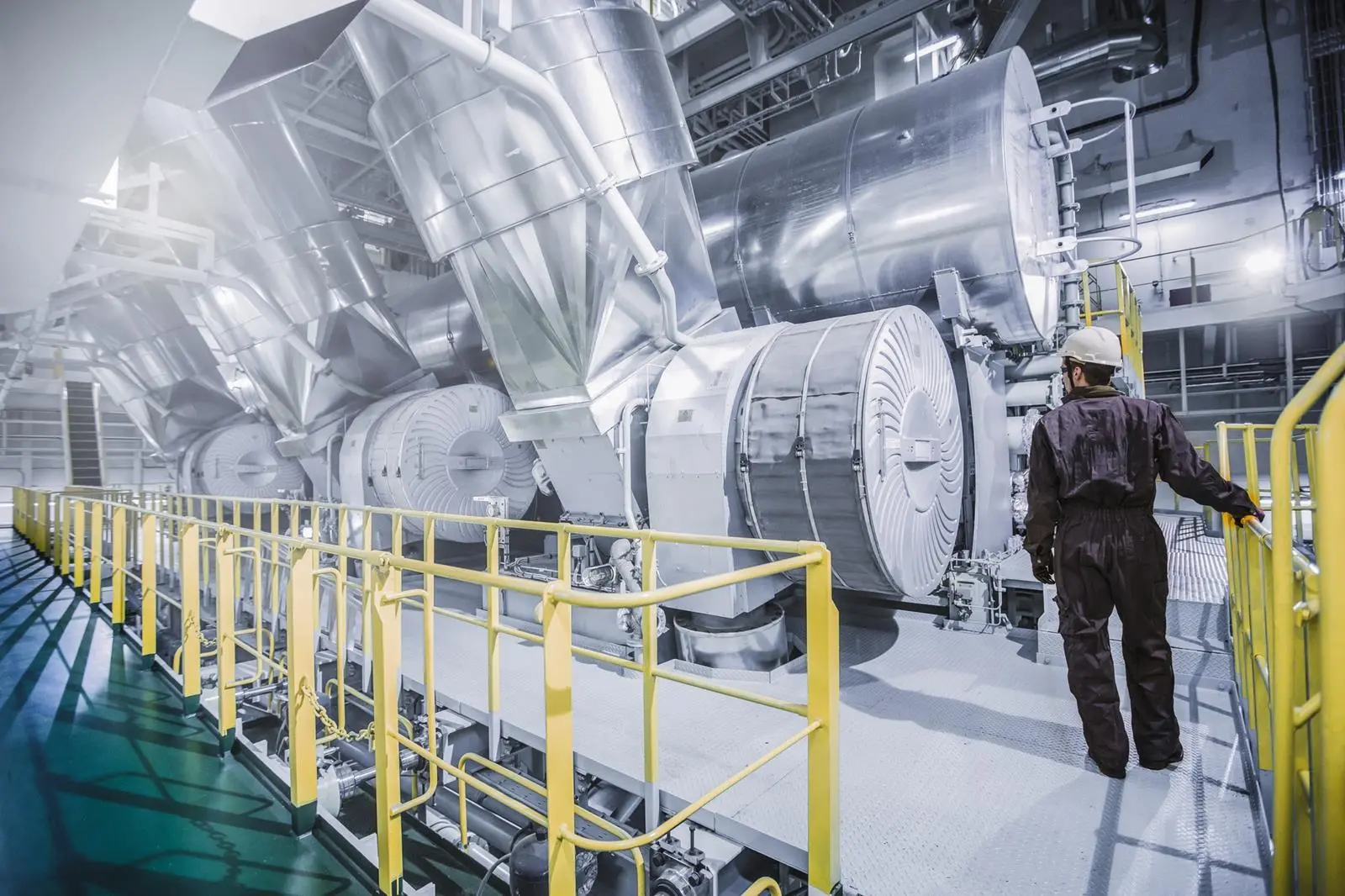
Together with researchers Hervé Martin, head of advanced technology development, and Dirk Bergmann, chief technology officer, Marcel Joho and Peter Sälzle, he highlighted that there are two areas to consider: the matching of the turbocharger and its components to the requirements of the engine and the compatibility of the currently used engineering materials with the fuel and its combustion products.
Ammonia, methanol, and hydrogen are the most promising zero/net-zero GHG emission fuels for large engines, says Ryser, and currently there is no technology in sight which can replace large engines in short- and mid-term.
The properties of new fuels vary, with the ignition and combustion properties of ammonia and hydrogen, for example, being significantly different from existing fossil fuels and methanol. Ammonia needs a lot of energy to ignite and burns slowly, whereas hydrogen is easily ignited and burns very rapidly. It has a very high laminar flame speed compared to other fuels. Ammonia also requires a very low excess air rate.
Both fuels, therefore, require specific combustion concepts that will impact turbocharger design. “The conclusion on this is that the combustion concept defines the required amount of air and not the fuel as such. The turbocharger therefore needs to be designed around the combustion concept,” says Ryser. “When you consider the chemically required minimum amount of air to burn fuel with a specific amount of energy (i.e. the energy required to attain the engine power), however, it is almost identical for all considered fuels. In reality, you don’t burn fuels at their required minimum amount of air (stoichiometric combustion) anyway.”
The changes required for the properties of the different fuels are not significant enough to change basic turbocharger designs. Mechanical limits will need to be met, but fuel-specific adaptations may only be necessary on the level of component layout, says Ryser. These will include consideration of stage loading and flow along with rotor dimension, the tip speed of blades and specific volume flow.
Accelleron has conducted several studies on different fuels, combustion concepts and applications. As the engines themselves are still in a relatively early stage of development, there is little information available that can be used for the specific changes needed for turbocharger component design.
Sensitivity studies have shown that especially in the case of ammonia, the switch of the fuel from diesel fuel or methane has the larger impact on the turbocharging requirements than the investigated level of uncertainty from engine tuning parameters and combustion characteristics.
For example, for Otto cycle engines, turbine area is likely to be needed to increase by 70% to ensure higher density at the turbine inlet. The higher air demand, if ammonia burnt at a very low rate and therefore deteriorated the thermal efficiency, would add another 20% to turbine area.
Dual-fuel applications are expected to be important due to the limited availability of sustainable fuel, but only some relatively simple control adaptions will be required for the turbocharging system for these engines. This includes the inclusion of an engine bypass for ammonia combustion mode to ensure a suitable match with diesel operating lines.
There are some material considerations associated with new fuels. Certain turbocharger materials are exposed to exhaust gases, some also to small amounts of fuel. Depending on the fuel and the composition of the exhaust gas, there might be incompatibilities with certain materials, but at the current stage of engine development this cannot yet be confirmed or excluded, says Ryser. “While both methanol and ammonia tend to attack currently applied sealing materials, methanol may harm certain materials with certain combustion concepts and ammonia may be corrosive to bearing parts. For hydrogen on the other hand embrittlement is an often-discussed risk, but the current level of knowledge does not indicate that any serious issues should be expected.”
Lubricating oil must be adapted to keep its function for methanol and hydrogen. Methanol potentially forms an emulsion with the oil, and hydrogen creates the risk of coking. However, ammonia is not expected to react with lubricating oils, although it could lead to a corrosion risk for turbocharger bearings. If ammonia can be released from the oil or be neutralized this risk does not exist, says Ryser.
He concludes that there will be a relatively small impact on the basic layout of turbochargers. Ammonia and hydrogen have significantly different properties to hydrocarbons, and the low excess air ratio for ammonia in Otto cycle requires a large turbine and small compressor maps. Engine bypass is a simple solution for the accommodation of the operating lines in the compressor map.
Related Articles
 AMMONIA
 AMMONIA
 AMMONIA