



PODCAST: Bergmann: decarbonisation requires regulatory as well as technical solutions
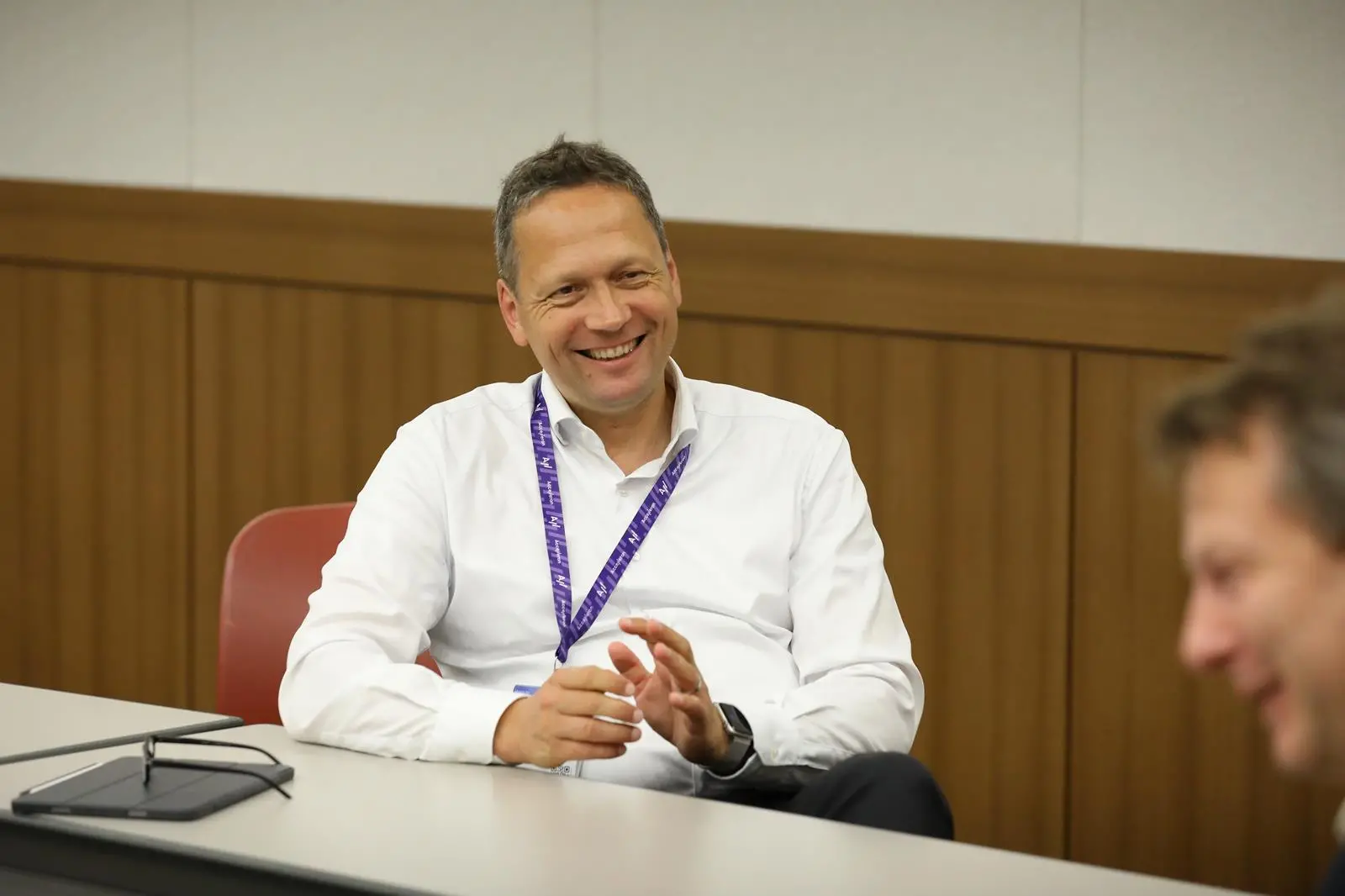
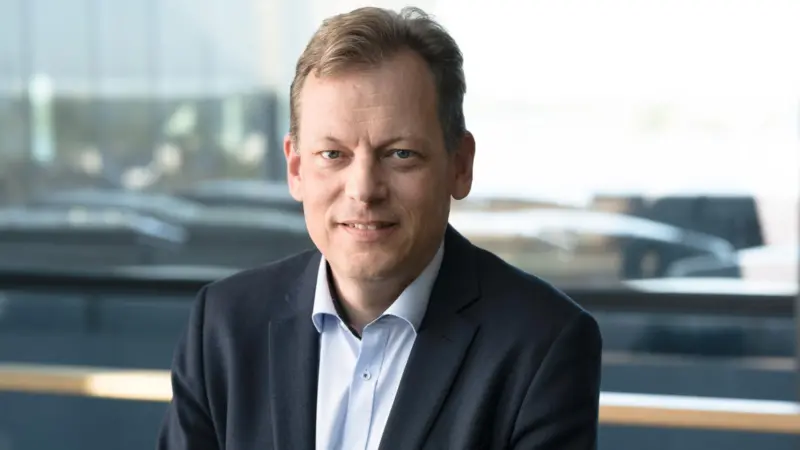
The Motorship: Dr Bergmann is CTO at Accelleron, and the chair of the Greenhouse Gases Strategy Group at CIMAC. Thank you so much for agreeing to this interview.
Dirk Bergmann: Thank you for having me.
The Motorship: Having introduced you or your role as the chair of the greenhouse gas Strategy Group, I guess it the right place to start would be to talk about to obtain your views on the wider decarbonisation environment. It’s obviously a complex time. So anything you can do to simplify it for our listeners, and readers will be gratefully accepted.
DB: It is a great challenge that we as a marine industry must take, and we have taken it. Looking at the presentations at the CIMAC conference, we are on our way to finding the technical solutions to bring the CO2 climate effective emissions of global shipping down to zero.
There are a lot of routes we can go. And my perspective is that we will all see them in global shipping, because there are a lot of regional or company-specific boundary conditions, which favour the one or the other way to decarbonize. So, to sum it up a bit, there’s a discussion about the possibility of decarbonising with hydrogen, but hydrogen cannot store sufficient energy [within volumetric constraints]. So, therefore, it will mainly be used for short distance travel, if you go for long distance travel, you need to have liquefied chemicals to carry the energy and now, there is a huge discussion in terms of methanol or ammonia, but also liquefied methane out of a carbon neutral pathway could also be the option.
If you look at these fuel types, they have their pros and cons… So, my favourite example is to think about a cruise ship. Everyone is sitting at the at the captain’s dinner and you have the smell of ammonia wafting in. Depending on the concentration, I think you would run the risk of panic. For passenger vessels, there might be better fuels to use.
For vessels with only a trained professional crew, you can deal with small leaks with special dedicated respiratory and safety equipment. And the ammonia route has one advantage because after hydrogen, it is the e-fuel which can be produced with the fewest [conversion] losses, and it does not contain any carbon. And having nitrogen in the air with a concentration of about 70% or more, it’s easy to get it out of the air. It is a very interesting fuel for international commercial shipping.
MS: Turning to regulation, how do you see the role of regulation driving the uptake of new fuels or shipowners to invest in energy efficiency solutions? Obviously, we’re speaking before MEPC80.
DB: As mentioned, I do expect that we will see all kinds of options in the global marine market, ranging from biofuels drop ins, as well as the already mentioned alternative fuels. We will need to have the regulations ready to use them on board a ship as a fuel… [with a] focus on the safety rules. But then the emissions legislation will have to adapt… to make it possible to run engines in vessels on these fuels. And then the major… outcome of this conference is that from a technical point of view, we as an industry can handle this and that there are already engines capable to running on these fuels. The major question is where the fuel is going to come from and how we will be able to set up this infrastructure. This is a huge investment.
From a legislative point of view, to make these financial impacts feasible, we need pathways that provide a reliable and long-term return for investors to establish the infrastructure.
MS: And I guess you could argue that that is one of the hopeful outcomes from regulation just to provide some certainty. I think that’s a real challenge for suppliers as well as industry decisionmakers. And I guess you’ve spoken about alternative fuels. And that leads us neatly on to how you see the specific role of alternative fuels. I mean, there are a wide range of different solutions being considered but it seems that it’s generally agreed that alternative fuels will play the leading part in in helping the industry achieve 2030 and 2050 targets.
DB: That’s correct. There is a discussion about carbon capture technologies on board vessels for example, then you can extend the use of fossil fuel. But you then need to have the kind of CO2 bunkering and logistics behind this because you must store the captured carbon or CO2 somewhere and then you must deal with this.
MS: Absolutely, and this leads us on to your own portfolio because there’s a wide range of solutions being offered in the market. You’re having to meet the demands of quite an interesting period of development.
DB: We’re already seeing the differences between diesel or heavy fuel oil where we have normally a lambda (air to fuel ratio) of about two times more air and oxygen inside the combustion chamber compared with a lambda of about 1:1.5 for methanol. When we talk about ammonia, it seems to be in the direction of lower lambda values.
From a turbocharging perspective, within our technology portfolio we have already had to look a bit more on the performance map of our compressors and we’ll need to make sure that the engine can safely run with it because ammonia is a fuel that does not really like burning.
So, there are some challenges. Addressing hydrogen, we expect to see it for power generation gas engines maybe also for short distance travel and vessels. And hydrogen is interesting because the turbocharging needs to go higher to a lambda of 2.5 up to 3. And this means the engine will need more air, the pressure needs to be increased and therefore we must do something with our turbochargers to make this happen. But again, it is within our thermodynamic knowledge to do so. Therefore, it will take some effort to adapt but I do not expect any major new research.
Another area I think will be interesting is how to deal with transient behaviour or transient operational behaviour. But even here, we are convinced that we can meet client expectations with our turbocharging portfolio and our knowledge with more than 180 R&D staff mainly located in our Swiss headquarters including our test centre.
MS: I guess you’re referring to some of the innovations seen in LNG engines 2-strokes, which looks like it is a very interesting space for squeezing a little bit more performance out and you’re having to you having to fit around, I guess.
DB: We are already gaining interesting experience with our customers.
MS: And I guess this leads on to the last question, about your recent product launch, in which you announced that you’re developing a new turbocharger family, which you will bring out next year. I also understand that you’re in the process of acquiring OMT in Italy. From a strategic point of view, it looks like you’re going to be a really relevant company with experience in all areas around the engine.
DB: We are already a very relevant company since we are currently involved in high-level discussions with our customers, both from an engineering as well as from a strategic decarbonisation perspective. Our new low-speed 2-stroke turbochargers, which we just introduced officially during this conference, are designed to fit perfectly into next generation engines dedicated for defossilisation. And yes, the acquisition of OMT will bring us into an even better position to plan injection systems in our portfolio and support our colleagues in Italy in their research and development efforts into all the new fuels… For new types of fuels, you cannot use standard diesel fuel injectors, so there will need to be some new developments there.
It is the best time to be an engineer, as so many things need to be changed now to meet the environmental challenge we have in the global society. This will require new technical solutions to be ready soon if we want to maintain our standard of living. And this is, again, the outcome for me from this conference.
Related Articles
 INTERVIEWS
 CONVENTIONAL FUELS & OILS
 GENERAL NEWS