



AiP For Floating CO2 Storage Unit Concept
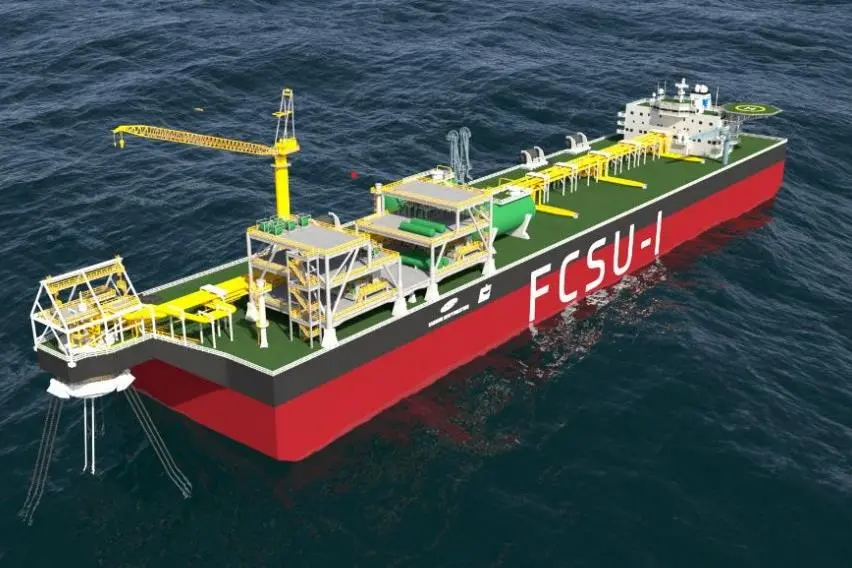
The FCSU concept represents the culmination of an joint development project between MISC and SHI that was initiated following the signature of a Memorandum of Understanding in January 2023. The design features a total storage capacity of 100,000 cubic metres and an injection capacity of 5 million metric tonnes per annum (MTPA).
The AiP from DNV confirms the technical feasibility of the concept as well as initial conformity to the applicable rules, industry codes, and standards.
The FCSU is intended to address a critical gap affecting diverse offshore-related CCS projects, particularly when CO2 emitters lack access to nearby sequestration sites, necessitating seamless maritime transportation and storage of CO2.
The FCSU concept can be deployed across multiple depleted oil and gas fields offshore that have been earmarked as potential CO2 storage sites.
The developers are seeking to extend the functionality of the design beyond an intermediate CO2 storage unit or FCSU-i for offshore CO2 reservoirs. The potential wider range of applications under consideration includes a CO2 liquefaction facility.
SHI’s Head of Engineering Management, Vice President GJ Yoon said, “SHI has various solutions in pipeline including CO2 Carriers to address era of low carbon. Whereas LCO2 Carriers focus on transportation, FCSU can act as Offshore Terminal and capable of injecting CO2 into subsea wells with Topside facility. SHI will continue to spearhead developing solutions to meet CCS market demands based on abundant experience and technical expertise.”
Cristina Saenz de Santa Maria, Regional Manager South East Asia, Pacific & India, Maritime at DNV, said, “We are pleased to be awarding the AiP for this landmark project to MISC and SHI, signifying the compliance of this innovative unit with our classification rules. This AiP is a testament to the confidence and trust that the industry holds in DNV’s expertise and capabilities. We hope to continue this excellent collaboration with both parties in the areas of decarbonization and new energy, with a focus to grow the regional CCS value chain towards a more sustainable future.”
Related Articles
 CARBON CAPTURE
 CARBON CAPTURE
 ALTERNATIVE FUELS & LUBRICANTS