



Ammonia introduces new technical and human element risks
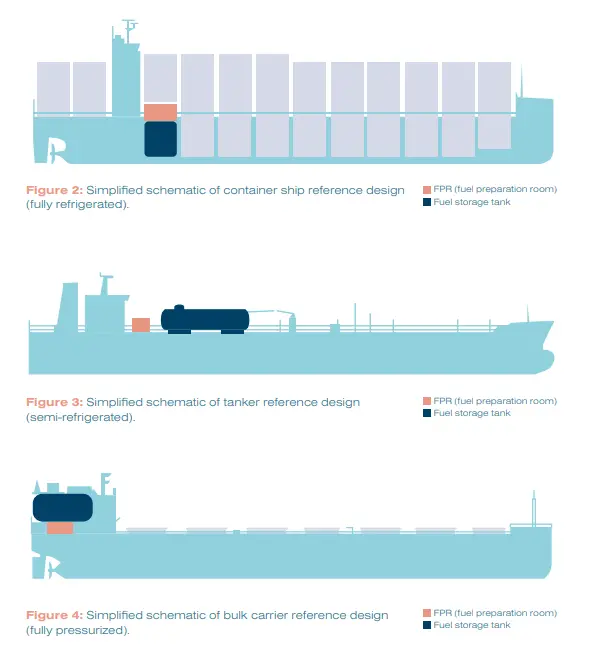
In Recommendations for Design and Operation of Ammonia-Fuelled Vessels based on Multi-disciplinary Risk Analysis, the organisations evaluated a theoretical arrangement for a container ship, tanker and bulker each with a different storage system (fully refrigerated, semi-refrigerated, and fully pressurized, respectively).
They used an iterative approach to risk assessment that led to conclusions such as having a single fuel preparation room divided into three separate spaces on a semi-refrigerated tanker reduces the individual risk per annum to engineering ratings by 56% risk relative to a base case. Increasing ventilation rates in the fuel preparation rooms and re-liquefaction room from 30 to 45 air changes per hour, together with modifications to the fuel system design would further reduce risk by 5%. Having a shut-off of the ventilation (rather than switching to recycle) in the accommodation upon gas detection in the ventilation intake would further reduce risk by 3%. And further subdividing the fuel preparation room to provide a separate room for duplex filters would further reduce risk by 9%.
The organisations see this iterative quantitative risk assessment (QRA) analysis as a powerful data-driven method that allows users to assess risk in a quantitative and granular manner. Overall, the analysis indicates that a lower storage temperature reduces the safety risk from ammonia fuel – with fully pressurised liquified gas being the riskiest storage type. The change from fully pressurised to semi-refrigerated storage on the bulk carrier resulted in a 26% reduction in individual risk per annum.
The study concludes that the risks to crew can be kept within published tolerable limits, provided that a range of mitigations are adopted. These include:
- Division of the fuel preparation room into two or more separate spaces containing different groups of equipment that could leak ammonia.
- Minimising, monitoring and controlling access to and length of time spent in spaces containing ammonia equipment.
- Placing ventilation outlets from spaces containing ammonia equipment in a safe location adequately separated from areas accessed by the crew.
- Installation of multiple, sensors of different types to detect ammonia leaks.
- Installation of a distinctive, vessel-wide audible toxicity alarm for ammonia leaks.
- Installation of ammonia leak alarms both in controlled areas (for example, the fuel preparation room) and near potential leak sources.
- Subjecting the fuel system to rapid and reliable manual and automated shutdown in the event of an ammonia leak.
- Depending on storage conditions and ammonia tank location, shutdown of the ventilation for crew accommodation should be made possible in the event of an ammonia leak.
Additionally, secondary containment mechanisms, such as double-walled piping, used for ammonia-related equipment outside of already-restricted areas have been proven to significantly reduce risk. Ventilated gas-tight enclosures installed around any gas valve units in engine rooms also reduce risk.
Ventilation challenges
Ventilation provides mitigation of toxic effects for many smaller, but not all, potential ammonia leaks. It is particularly efficient for smaller leaks, and reduces the risk of leaks reaching a flammable level, but it is only partly effective at preventing ammonia concentrations from reaching levels that may be fatally toxic. Even at short exposure times, the concentration threshold for ammonia toxicity is much lower than the threshold for flammability. Therefore, other additional precautions will need to be considered for personnel entering these spaces.
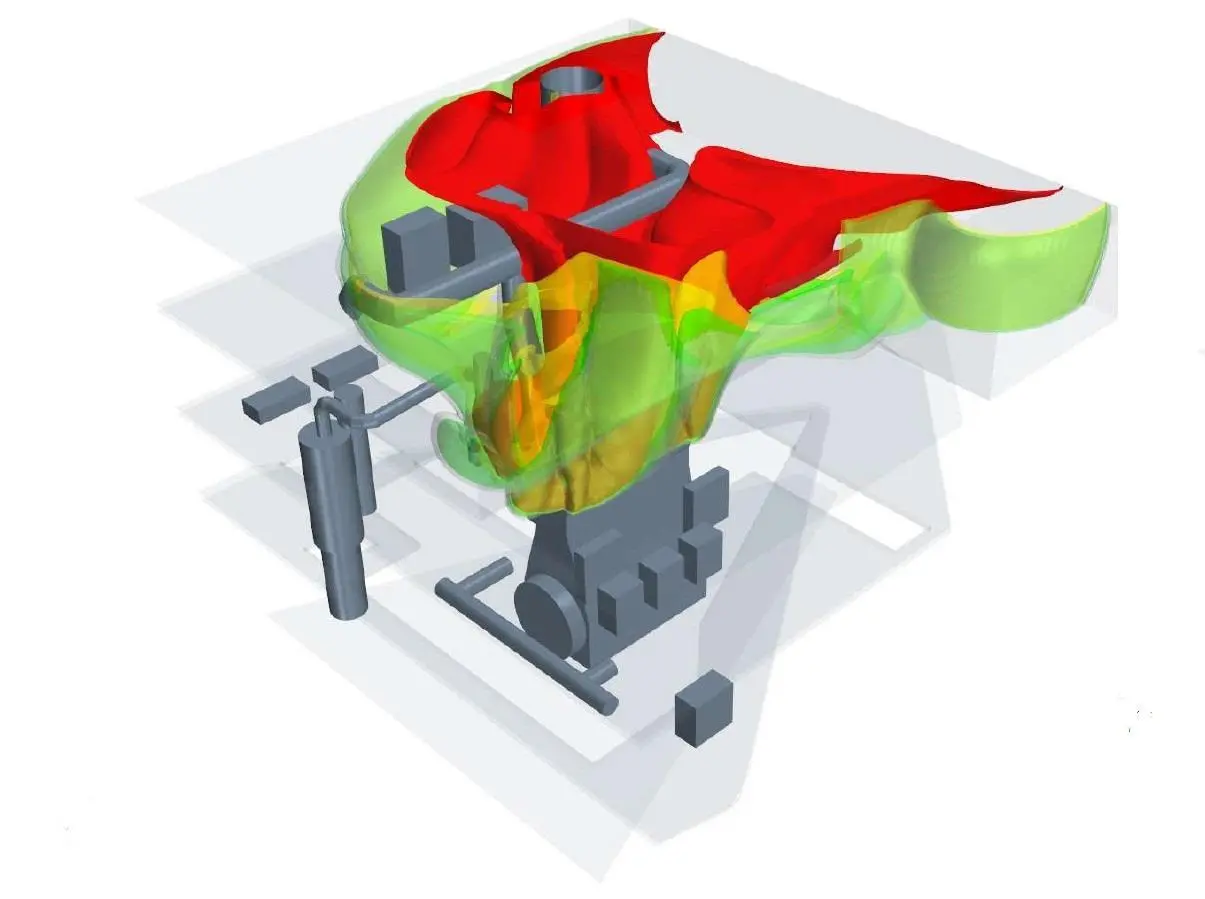
Gas detection is most challenging in a large space, such as an engine room. The study includes a CFD analysis of the dispersion of leaked ammonia, and this indicated that dispersion is highly dependent on the direction of the leak flow compared to the ventilation flow. Additionally, a high ventilation rate may divert the flow of a gas leak away from a gas sensor and may dilute the gas to a level where a leak is not detected. Therefore, an array of detectors will be needed. They could be of a variety of types (e.g., concentration, temperature, acoustic) to improve reliability.
The human nose is very sensitive to ammonia, but smell should not be relied upon as a leak detection method. After a period of exposure to even low concentrations of ammonia, smell sensitivity decreases, and smaller leaks may not be noticed. The use of personal gas detectors could help address this problem.
Due to toxicity risks, mustering and abandonment procedures will need to be revised to reduce the potential for exposure of personnel to ammonia. Safe havens for sheltering and mustering would need to be engineered to account for potential ammonia impacts. This includes the use of totally enclosed motor-propelled survival craft which may instead need to replaced by other craft, similar to those used on chemical tankers.
Human factors
The organisations analysed human factors to complement the quantitative risk analysis. They considered training and work practices that would be impacted by a transition to ammonia fuel use and concluded that specific training will be required to prepare crews for operation and maintenance on ammonia-fuelled vessels.
For example, ammonia bunkering will introduce new hazards, safeguards, and crew activities. While personnel on conventional fuel oil vessels already undertake leak detection, this task would become more complex and require additional safeguards due to ammonia’s toxicity, explosivity, and flammability. The overall impact of the changes would be lower for personnel with LNG / LPG, bunkering, or ammonia cargo experience.
The introduction of ammonia-fuelled vessels may also change how the vessel interfaces with other organizations, such as ports, vendors, contractors, and other ships. Appropriate safeguards must be in place during these interactions to protect all involved in case of events such as leaks. For instance, firefighting regimes may need alteration where ammonia could be present or if the ammonia systems could be affected. Changes to spill response would be required, and activities where outside organisations may be involved would have to be rethought and addressed.
PPE
Effective occupational health safeguards, such as personal protective equipment (PPE), will need to be developed and implemented, and appropriate safety management procedures for emergency response and other events need to be developed. Additionally, it is important to anticipate potential side effects of some safeguards on task performance and timing.
For example, donning additional PPE such as respirators for maintenance tasks may physically encumber the crew. The organisations recommend that further guidance on specific PPE requirements be developed to define recommended PPE and other occupational safeguards for various expected operating and maintenance scenarios.
Additionally, various issues need to be addressed to ensure that personnel could be safely rescued after exposure to ammonia. This would include a review of the use of PPE and suitability of rescue equipment and first aid items. Personnel participating in this operation would need understanding of ammonia and its characteristics and hazards.
Safe work practices
Safe work practices and standard procedures will need to be updated and should be implemented through systematic change management programs. Most process hazards related to ammonia fuel revolve around control of storage and handling pressures and temperatures to prevent loss of containment and reduce effects of unwanted consequences of any leaks or spills. Such consequences include accelerated corrosion, displacement of oxygen, fire, and explosions.
The organisations say that the introduction of ammonia fuel will be accompanied by various technical innovations including automation, new maintenance regimes, and modernisation of process control. As part of this process, the shipping industry will encounter challenges that require further attention to human factors themes.
To ensure the competency and preparedness of crew, contractors, and external emergency agencies, the industry as a whole and individual companies will need to tailor existing (or develop new) safety and emergency arrangements. These arrangements should be guided by the IMO’s International Safety Management (ISM) Code and should address all reasonably foreseeable unwanted events involving ammonia-fuelled shipping operations.
Acceptably safe
Seen as one of the most promising alternative fuels for the maritime energy transition, ammonia can be combusted with almost no carbon dioxide (CO2) emissions.
The report concludes that the risks to crew of using ammonia as an alternative maritime fuel can be kept to a tolerable level provided that the maritime industry can ensure that technical barriers, administrative safeguards and human factors are adequately addressed. The organisations state that the recommendations and results from this report can and should be used to further inform specific regulations, guidelines, and best practices that will allow ammonia-fuelled vessels to be acceptably safe for the crew.
Related Articles
 AMMONIA
 AMMONIA
 AMMONIA