



Seafarer training undergoing its own new fuels transition
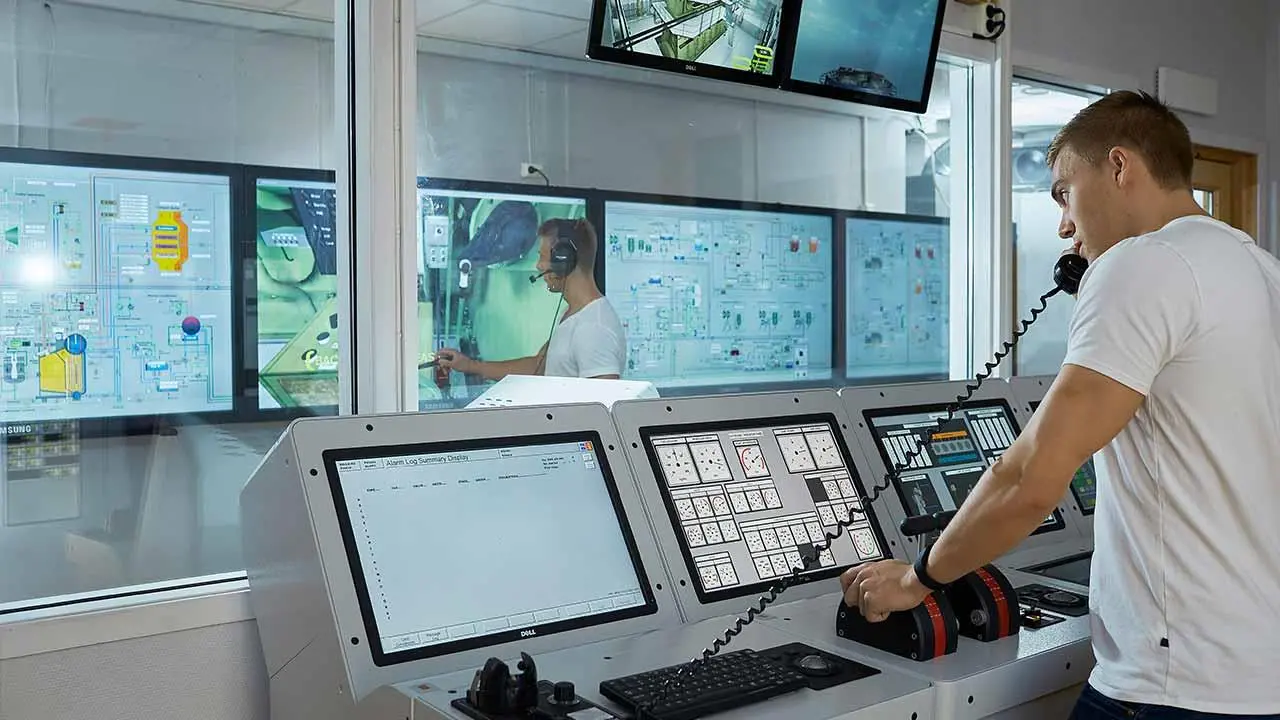
Earlier this year, training specialist Aboa Mare announced the development of a tailor-made IGF Code training program for crews on Maersk’s methanol-powered newbuildings. The expansion of methanol training in the industry was also highlighted in August, when Kongsberg Digital announced delivery of a full mission K-Sim engine simulator package to Danish training company Maskinmesterskole in February 2024 that will include modelling of a hybrid passenger vessel with four methanol dual-fuel generators.
With a new generation of new-fuel and dual-fuel engines coming to market and the expansion of IGF Code training to methanol comes the question of whether the industry supports the idea of expanding the scope of IGF Code refresher training to cover practical engine specific training?
Mr Tony in’t Hout, Director of Glasgow-based training consultancy Stream Marine Technical, says it would be a good idea. “Many of the engines used on IGF Code vessels have unique features and components that you do not find on conventional-fuelled engines. These unique features are best explained on a manufacturer-specific course.
“The best people to guarantee a suitable level of training are the equipment manufacturers themselves,” he says, and training covering the unique equipment other than engines found on IGF-fuelled ships should also be included.
“In its current form, IGF training focusses heavily on LNG, as that is the only fuel covered in detail within the IGF code. Training on other alternative fuels such as methanol, ammonia and hydrogen should receive more attention as their usage will increase over the coming years and they all have unique storage, handling, and health implications that should be addressed.”
While there are many IGF-fuelled equipment courses provided by manufacturers, it may be preferrable to have a regulatory framework behind the courses stipulating what is mandatory, but Arvind Natrajan, Senior Marine Adviser – Crewing & Training, International Chamber of Shipping (ICS), says that while ICS is supportive of expanding the scope of IGF Code training to include practical aspects, engine specific training has to be addressed outside the scope of STCW requirements by the shipping companies themselves.
Engine manufacturers have varied specifications, and it would not be possible to include all of these within the STCW Convention and Code, which is the minimum requirements for proficiency. “Generally, the company provides this kind of ‘add-on’ proficiency training by either having an in-house training course or a system of supervised onboard familiarisation for new joiners.”
With the development of interim guidelines on other alternative fuels such as methanol, ammonia and hydrogen, it is expected that the IGF Code will be expanded to include training in these as well. Asked if it was time to rethink the training in the light of an increasing number of dual-fuel engines in operation, Mr Natrajan says: “Dual-fuel engines have been in commercial operation for some time now, so the technology is not new. The question we should be asking is what new elements should be included into the existing IGF Code training which presently addresses only LNG-fuelled ships. The answer to this is that Member States at the IMO are working towards developing interim guidance for other power sources (alternative fuels, fuel cells etc) and a review of the STCW Convention and Code is in progress.
“One of the review areas that has been identified is the need to revise the STCW Convention and Code so that it addresses new technologies and is also flexible to accommodate future technical developments. The IMO is currently conducting work on its regulatory framework for ships using new technologies and alternative fuels. This work is expected to identify and address, among other issues, gaps related to training requirements for these fuels.”
When guidelines for other alternative fuels become mandatory (interim guidelines are at various stages of development), the training aspects will also be addressed within STCW Code. ICS is involved in several workstreams towards development of these guidelines, including training. However, says Natrajan, there are many considerations to be taken into account – widespread availability and scalability of these fuels being some of the important ones, hence understandably, progress in this matter will take time.
Gregory Sudwoj, General Manager Customer Training, WinGD, notes that the IGF Code requires that at least one engine room officer on a gas fuelled vessel is trained to IGF Code requirements and supervises gas bunkering. “This is not engine specific and only marginally engine related, as it focuses on the interface between landside bunkering facilities and the bunkering manifold on the vessel. We offer training tools that can support this requirement – for example interactive simulations of the bunkering manifold – but do not deliver the IGF Code training itself.”
WinGD does not believe engine specific training should be added to the IGF Code or the STCW. “Regulated engine training under STCW is separate to OEM- or designer-led training. STCW ensures that seafaring engineers have the basic proficiency to operate and maintain marine engines in general and serves as a minimum requirement for engineers. Training provided by WinGD ensures that those using its specific engine designs can operate and maintain the specific engines safely, reliably and efficiently.
“An engine-specific requirement in the STCW or IGF Code would be equivalent to issuing a different driving license for each make of car. It would add complexity when what is needed is crew that understand the basic principles of operating and maintaining all marine engines, so that they can be deployed across vessels,” he says.
“Training beyond STCW and led by the engine designer is and will remain the best way for operators to ensure that their engineers can get the best out of the engines on their particular vessels. Most operators are very aware of the need to go beyond STCW in order to maximise the value generating potential of their expensive assets.”
At the moment, WinGD does not offer IGF Code training. These courses are supplied by specialist third-party training institutions which are more familiar with the specific flag state requirements in respect to the code. “This is something we keep under review in case we can add value for our customers, but at the moment the regional variations in how the code is implemented mean it is more cost effective for third-party institutions to deliver the training,” says Sudwoj.

“IGF Code training will also need to expand to accommodate further alternative fuels including methanol (for which there are already interim guidelines) and ammonia. It will have to either incorporate or work alongside the various requirements that individual countries or even ports put on bunkering these fuels. WinGD is developing the engine training that will be needed to use its alternative fuel engines, in particular its X-DF-A and X-DF-M ammonia- and methanol-fuelled engines.”
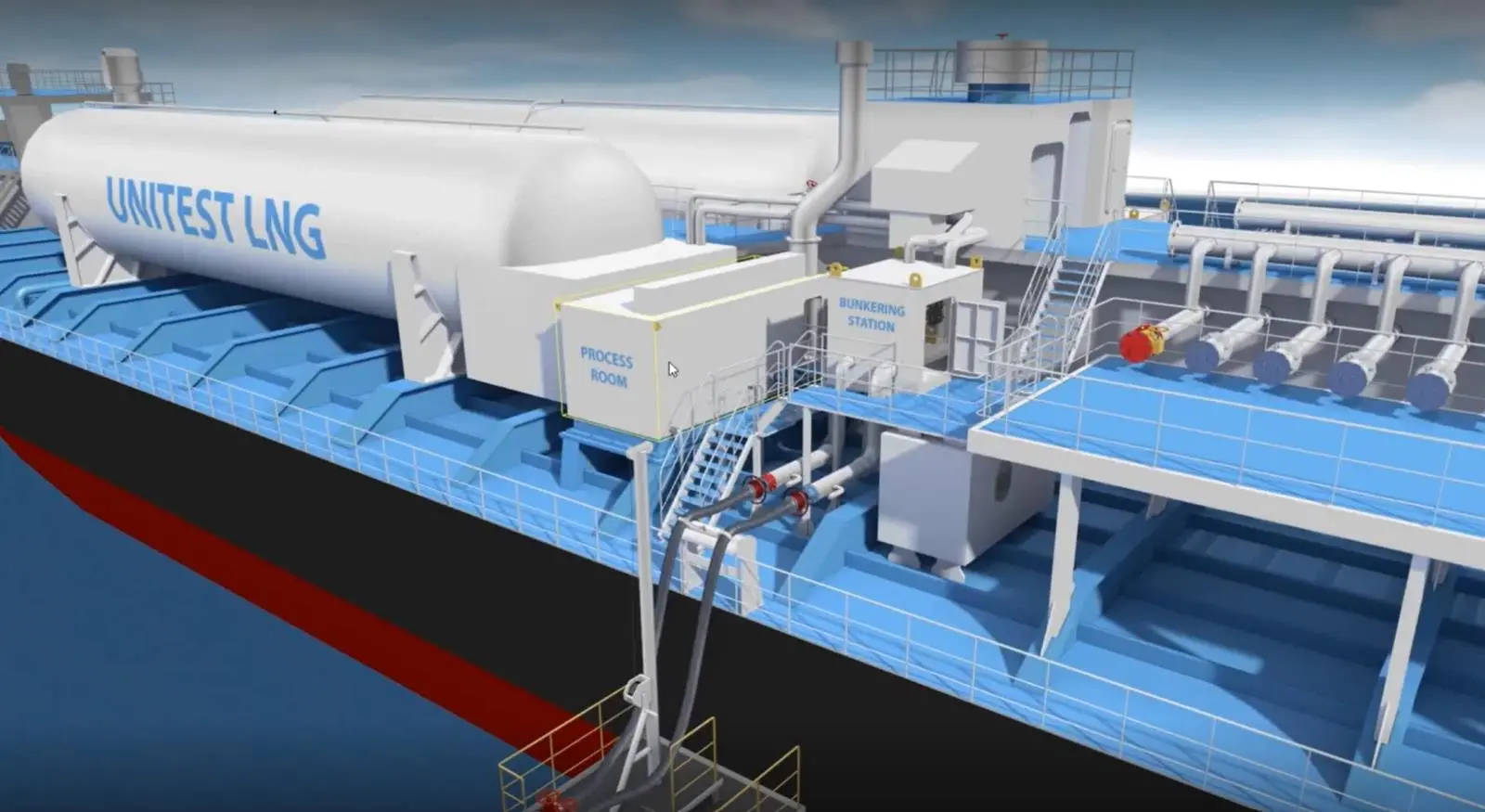
One of the training institutions that WinGD collaborates with is Unitest Marine Simulators. Earlier this year, Unitest opened a new Unitest Full Mission Engine Room Simulator in Dubai. This simulator is a key addition to the number of WinGD authorised training centres and is designed to conduct specialised training in handling modern low-speed engines, both conventional and adapted for LNG combustion. The simulator’s model library encompasses a wide range of engine models.
Meanwhile Ocean Technologies Group has been instrumental in developing a green curriculum to upskill and reskill the maritime workforce with partners like The Nautical Institute and supporting initiatives like the Maritime Just Transition Task Force, an initiative set up during COP 26 in Glasgow by the ICS, the International Transport Workers’ Federation, the United Nations Global Compact, the International Labour Organization, and the IMO.
The Just Transition Taskforce refers to the IGF Code in the conclusions of its November 2022 report Mapping a Maritime Just Transition for Seafarers, stating that once developed, the model for IGF Code compliance, consisting of basic and advanced model courses at an approved training facility, plus minimum seagoing experience (including familiarisation), could be adapted by the IMO for training on alternative fuel technologies. This would serve as a minimum training framework.
Captain Jeffrey Parfitt, Head of Safety and Environment at The Nautical Institute, said earlier this year: “While The Nautical Institute recognises that existing standards for gas as a fuel, in particular the IGF Code, will provide a great starting place, we need to ensure that it is used as a basis from which to go further, particularly for the more hazardous new fuels.”
Related Articles
 2-STROKE & 4-STROKE
 2-STROKE & 4-STROKE
 2-STROKE & 4-STROKE