



Wärtsilä introduces new 31DF ultra low emission variant
The new version of the Wärtsilä 31DF is being added as a specifiable option for new Wärtsilä 31DF main mover orders from 1 November 2023. The ultra low emisison solution is also being offered as an option for genset orders for constant speed Wärtsilä 31DF gensets, which cover electric propulsion installations.
Unchanged Engine Dimensions
Wärtsilä is understood to be developing the ultra-low emissions solution for variable speed installations, and plans to add the option to its portfolio in the future. The engine builder noted that the new version of the Wärtsilä 31DF engine will not alter the Wärtsilä 31 outline dimensions, and that the new version would not require any additional off-engine module or aftertreatment system. Wärtsilä’s Director of R&D and Engineering, Juha Kytölä, told a press conference that upgrading existing Wärtsilä 31DF engines to the new ultra low version would require the replacement of some engine components and an upgrade to the engine management system, rather than a larger engine conversion project.
Improved Performance at Lower Loads
The technology also improves the emissions profile of the dual-fuel engine to an even greater extent when operating at low and medium loads, which will offer significant emission reduction opportunities for customers operating vessels on short-sea routes with frequent port calls. In gas mode, the new ultra-low emission version can reduce methane emissions by up to 56% and nitrogen oxide (NOx) by up to 86% when operating at 50% load.
Green Ray and SeaTech
As previously reported by The Motorship, the solution was developed as part of the EU co-funded Green Ray and SeaTech projects. In July, The Motorship reported that the SeaTech project has involved the development of a set of engine technologies which enable a novel combustion concept that leads to a drastic reduction of CH4 and NOx emissions.
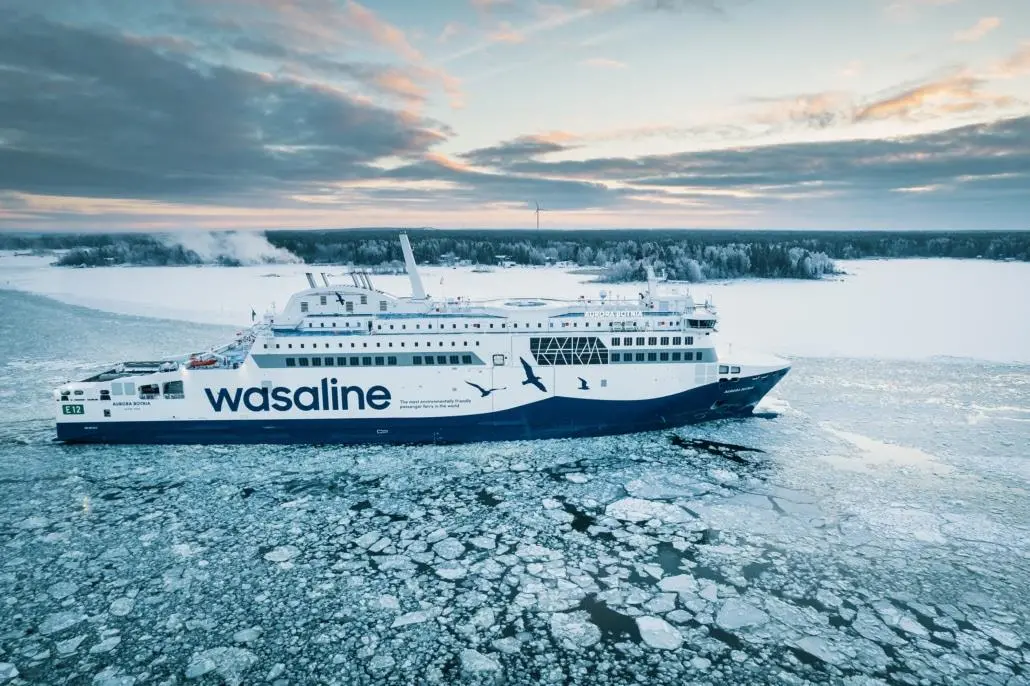
The new engine version was trialled on one of the four W8V31DF engines on board Wasaline’s Aurora Botnia ferry. The retrofit work took place in September 2022 and by the end of 2022 the engine had accumulated about 300 hours in gas mode. The operational results, which indicated that the engine combustion solution had reduced the Aurora Botnia’s methane emissions by 10%, were verified through an independent study conducted in December 2022 by VTT, the Technical Research Centre of Finland.
Jonas Teir, Technical Director at Wasaline, confirmed that the shipowner was opening discussions with Wärtsilä to convert the RoPax’s remaining W8V31DF engines to ultra low emission variants.
The solution makes use of a two-stage turbocharger design consisting of one low pressure and one high pressure turbocharger arranged in series, akin to that introduced with the 46TS-DF engine in 2022. The new 31DF also leverages the stepless valve timing on both inlet and exhaust valves, which makes it possible to adjust the timing of the inlet valve and exhaust valve whilst operating the engine, within a range, in a stepless manner, for each cylinder. This optimises air supply and combustion which, together with its two-stage turbocharging, helps to improved combustion stability and efficiency across the load range.
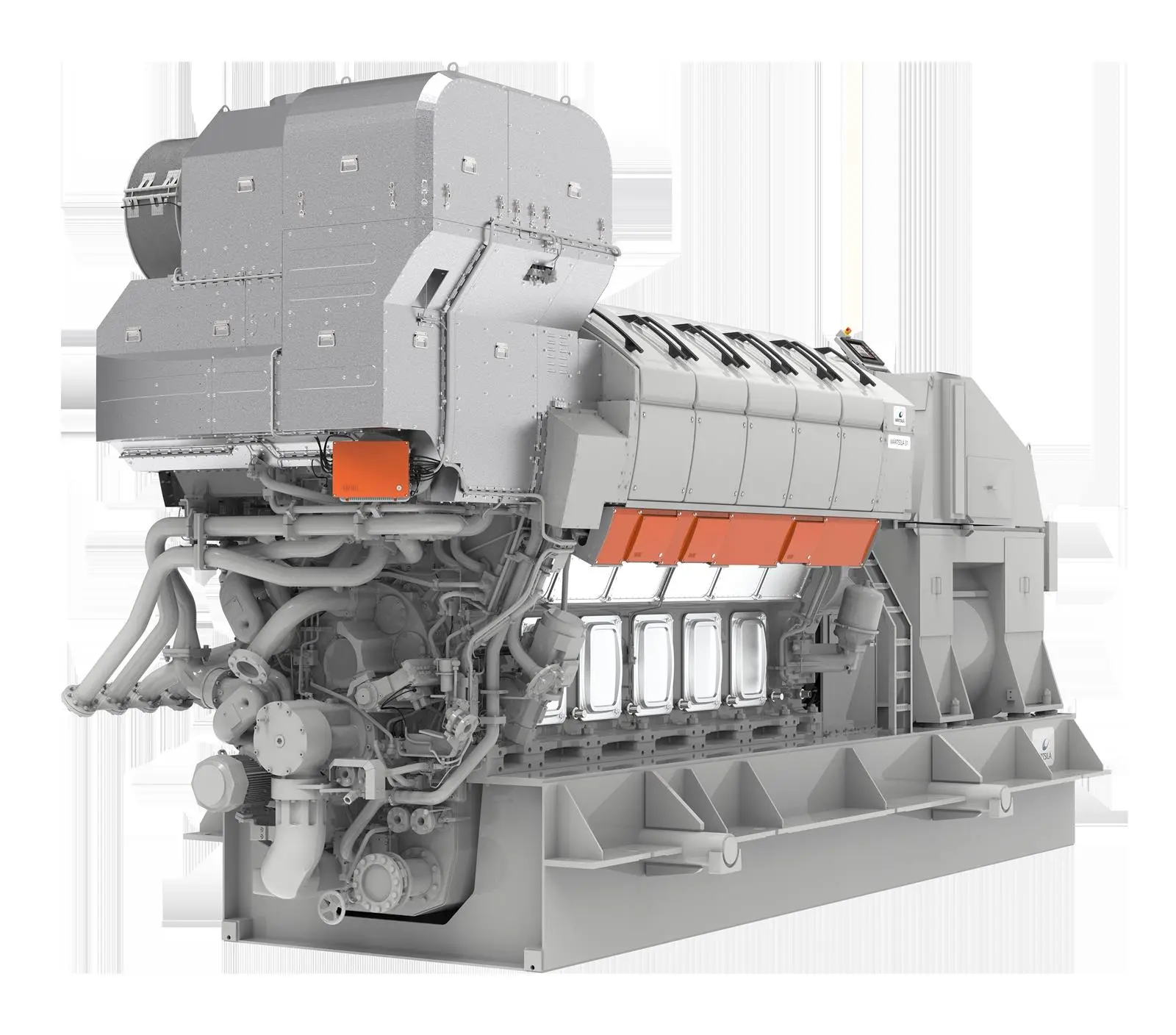
Wärtsilä has not divulged significant details about the advanced combustion closed-loop controls leverage the flexibility of the fuel injection and valve train systems. The technology itself is in-built into the control and automation system of the engine, and does not require any special training for the ship’s engineers, beyond normal engine training.
Juha Kytölä previously told The Motorship that the ability to optimise the engine’s operation to suit each fuel’s methane number was expected to help the engine optimise operations with variable gas qualities. Wasaline’s Teir confirmed that this was expected to benefit Wasaline, which is exploring the use of biogas in its engines as part of its decarbonisation efforts.
Related Articles
 2-STROKE & 4-STROKE
 2-STROKE & 4-STROKE
 2-STROKE & 4-STROKE