



Opinion: Dawn of the Ammonia Age
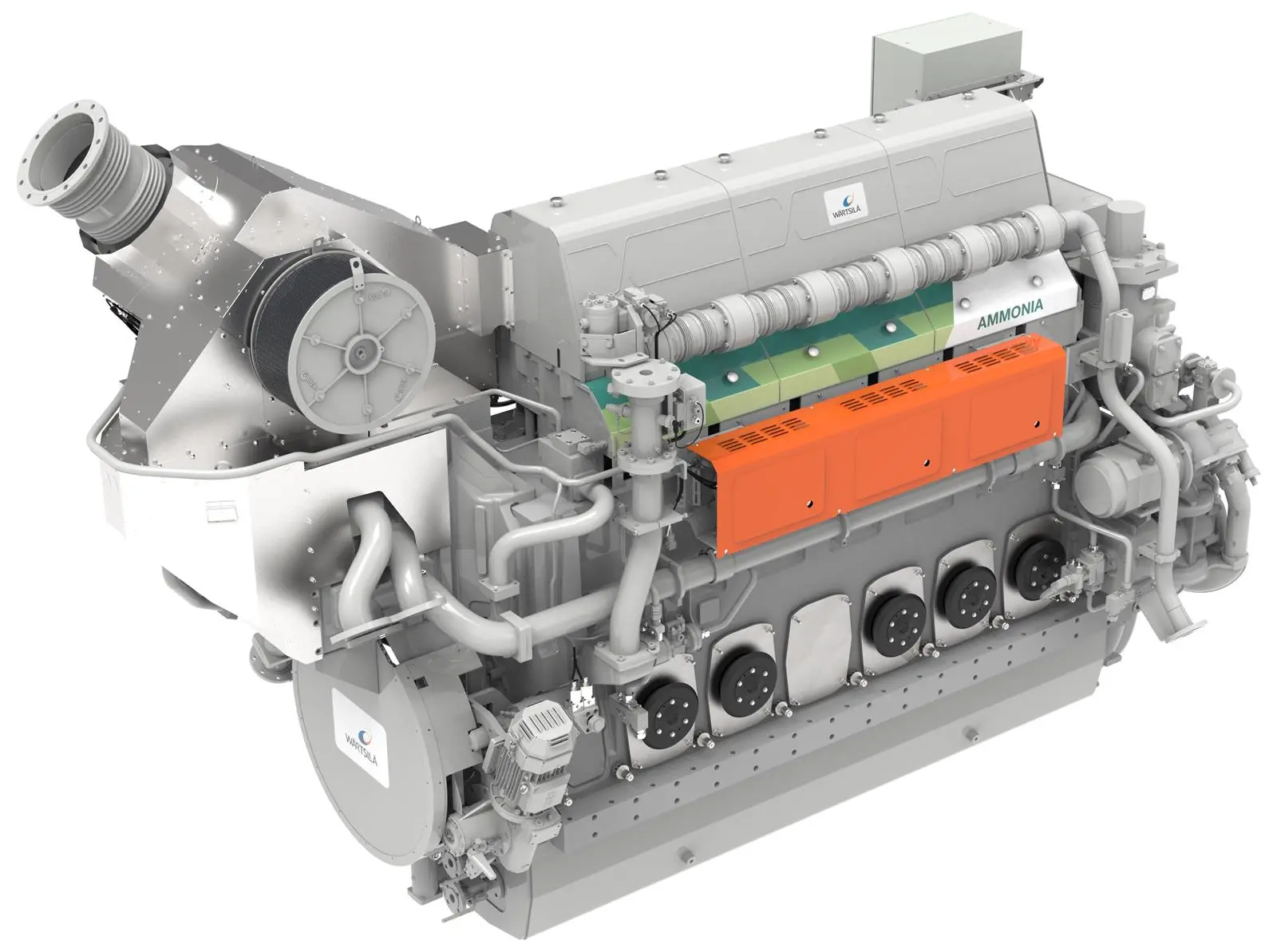
The introduction of a new alternative fuel into the maritime fuel mix has previously been likened to manned space travel. “Introducing a new fuel is like space travel – to get to Mars, you do not have to fix one problem, but all of them,” GTT’s Julien Bec, Vice President, LNG as Fuel, told me in 2020, when discussing hydrogen combustion.
Sadly, there are no David Bowie songs waiting to accompany footage of this morning’s announcement – and the decline in technical literacy among the mainstream media means few outside the industry will appreciate the scale of this achievement.
Regular readers of The Motorship’s coverage of research into ammonia-fuelled engine technology over recent years will know that ammonia-fuelled combustion has required the development of solutions for the fuel injection system, the engine’s lubrication requirements, component material choices, the aftertreatment system, turbocharging solutions and efforts to limit the emissions profile (including minimising nitrous oxide, N2O, formation). These efforts have required sustained research and development work from suppliers as well as Wärtsilä’s engine development team.
Power output similar to natural gas engine
However, it would be churlish not to recognise the combustion challenges that have been overcome. Ammonia as a fuel presents technical challenges for engine designers as it is both harder to ignite and slower burning and has a lower energy density than fuel oil, requiring larger fuel injection volumes.
For Wärtsilä to deliver an engine capable of delivering similar power output to that offered by its existing natural gas engine is a testament to Wärtsilä’s engine development engineers. It also lays down a strong challenge to other 4-stroke developers who are currently developing their own alternatives. Wärtsilä’s reluctance to discuss just how they overcame these challenges is more than than customary Finnish modesty.
This achievement – which is if anything even more astonishing than the ability to develop an engine that can combust ammonia as a fuel at varying engine loads and during transients – leverages the improved cylinder level combustion management system recently introduced in the 31DF ultra low emission variant, after its successful trial as part of the Green Ray and SeaTech technology development projects.
Roger Holm, President Marine Power & Executive Vice President at Wärtsilä, also confirmed to me that the engine would deliver N2O emissions within “acceptable limits”, which again draws on combustion chamber design work to ensure that N2O formation is minimised during the ammonia combustion process.

Norwegian ammonia-fuelled vessel
However, the engine launch is being combined with the announcement of the world’s first letter of intent (LOI) for the construction of a coastal vessel that will be powered by a Wärtsilä ammonia engine. Viridis Bulk Carriers, a partnership between Amon Maritime, Mosvolds Rederi and Navigare Logistics, signed a Letter of Intent with Wärtsilä for the 25 ammonia engine solution in November 2023.
If the commercial contract is agreed in early 2024, the engine will be delivered by Wärtsilä by the end of 2024, and the vessel itself will enter service at a certain point in 2025 (subject to the satisfactory conclusion of sea trials and ammonia liquid fuel trials).
In other words, this morning’s announcement does not only cover the launch of a new combustion engine, but also the introduction of a new fuel into the maritime market.
Norwegian investors are playing a crucial role in the earliest stages of the introduction of the technology, with Yara and Azane Fuel Solutions moving ahead with plans to establish a network of ammonia bunkering stations at ports along the country’s coast.
Once again, Norway is demonstrating the unique advantages of a maritime ecosystem in which regulators and technology developers and industrial partners cooperate closely with progressive shipowners and the wider maritime commercial complex.
What happens in Norway, doesn’t stay in Norway
However, the introduction of the ammonia engine is unlikely to be the end of the story for ammonia. While ammonia as a cargo has been shipped for decades, the demands of the green transition and import-led green hydrogen strategies in Germany, Japan and South Korea are propelling interest in worldscale ammonia export terminals, including the forthcoming NEOM project in Saudi Arabia.
The steady emergence of a green hydrogen transportation chain driven by demand for ammonia shipments means that this morning’s announcement will only be a first step on a longer journey for the next hydrogen derivative to enter the fuel chain.
Related Articles
 2-STROKE & 4-STROKE
 2-STROKE & 4-STROKE
 2-STROKE & 4-STROKE