



Payback Promise From New Bulbous Bow
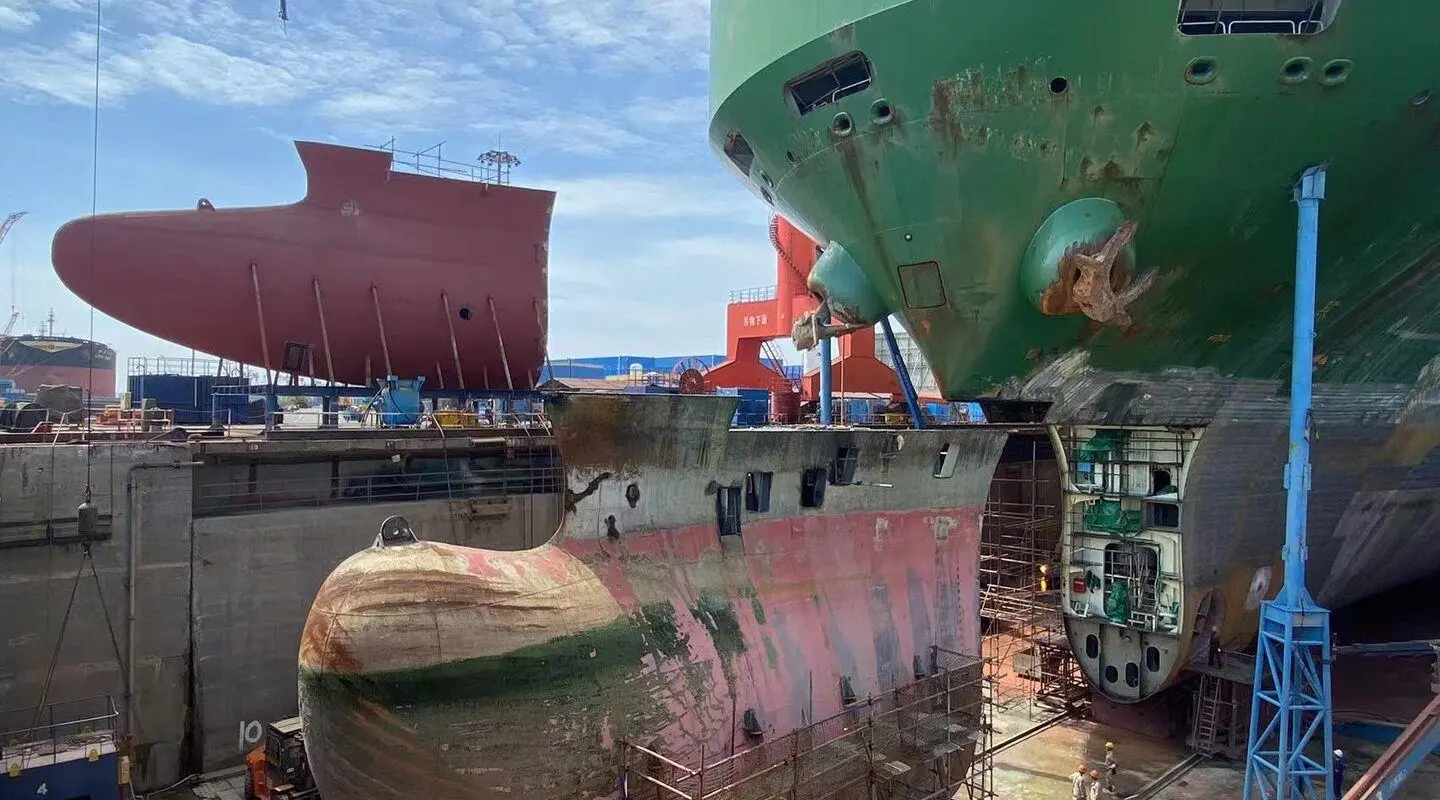
Marking the completion of the first phase of the programme, the 7,620 CEU-capacity PCTC Aniara re-entered service last month after foreship rebuild in China. Installation of the prefabricated, replacement bow section was accomplished within the anticipated three-week drydocking timeframe at the Zhoushan premises of repair yard IMC-Yongyue.
Similar enhancements are being made to three more units of the fleet, the Oberon, Tijuca and Tirranna, all of the same class completed in 2008/2009.
While the original bulbous bow design had been optimised for one very specific draught and speed, Wallenius Wilhelmsen’s investigations into potential improvements were predicated on an evaluation of actual operating profiles, which showed that ships were sailing at a greater range of draughts and lower speeds for a significant portion of the time. In such conditions, the as-built bulbous bow performed below par, creating additional resistance, to the detriment of vessel hydrodynamic efficiency.
A revised optimum design, tuned to typical service profiles, reducing resistance and promising significant fuel savings, was subsequently arrived at by the shipowner’s technical team in partnership with designers from the South Korean companies DSEC and Hanwha (formerly DSME).
The 6% medio gain in fuel efficiency may well be exceeded. “We can expect even larger average savings if actual operating speeds are reduced in the future, because the new design compared to the old will perform much better at lower speeds,” counselled Adam Larsson, Wallenius Wilhelmsen’s senior manager of energy efficiency and performance. “Worth noting is that at some operating conditions, such as lower draught (about 8m) and 14-knot speed, the savings can be as much as up to 30%,” he added.
Mr Larsson had initiated the project based on a fleet screening, by checking suitable retrofit candidates and defining a representative operating profile for optimisation. The work with the Korean consultants to develop and verify the performance of the new bulbous bow design entailed extensive use of computational fluid dynamics (CFD) simulations and physical scale model tests carried out in South Korea.
For the Aniara, the precision-designed, 23m bulbous bow section weighing 137t was prefabricated in two months, then coated and lifted into the drydock by means of floating crane. Wallenius Wilhelmsen has previously ventured into bulbous bow conversion endeavours, and states that the current upgrades will not be the last.
Related Articles
 ENERGY SAVING DEVICES
 ENERGY SAVING DEVICES
 AMMONIA