



Schottel celebrates 60 years of CPP
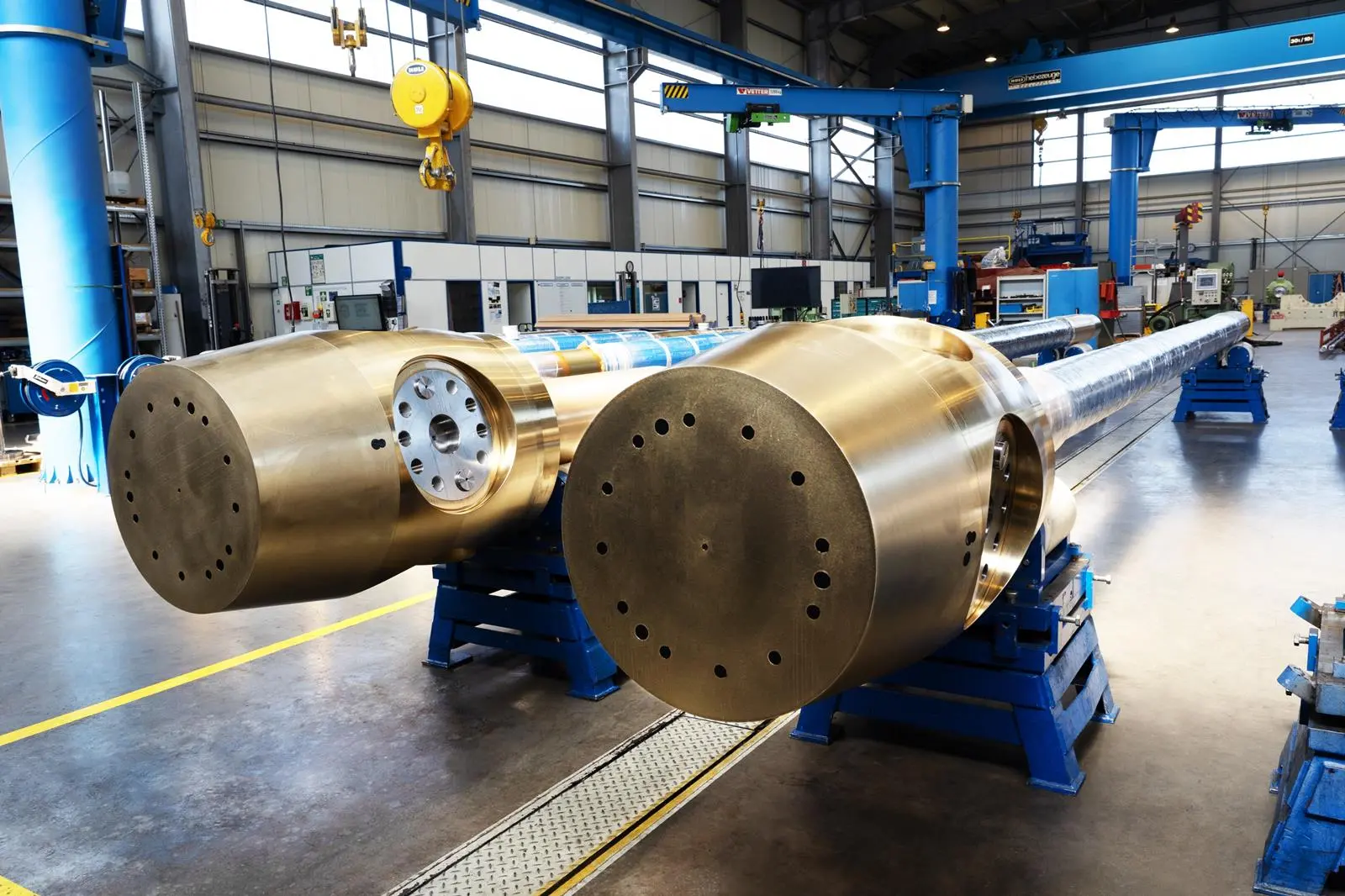
The high-performance propulsion system is suited to applications with particularly high demands in terms of speed and power density and is a popular choice amongst trawlers, ferries and cruise vessels as well as for navies and governments.
“Each and every SCP is tailored to the customer’s specific requirements,” said Dr Michael Potts, branch manager of Schottel Wismar.
“With each order we rise to the challenge of providing the most reliable and effective system. Extensive analyses of each propulsion system and vessel plus modern design methods such as CFD ensure sound hydrodynamics and maximum overall efficiency,” he added.
Wismarar Propeller und Machinenbau began building the first series of controllable pitch propellers sixty years ago in Wismar, Germany. After six years of successful cooperation, Schottel acquired the company in 1998.
Major investments and an extensive modernisation programme followed and since then, this combined competence in engineering has resulted in a number of iterations and improvements to the design.
Today, the SCP comes with a flow-optimised hub, catering for the specifications of various fields of application. Both variants are available with a four- or five-bladed CPP system.
The system is modular to enable easy tailoring to the requirements of each vessel. All variants of the SCP are EAL approved and maintenance-friendly and can optionally support full-feathering mode and be operated by Schottel’s PropControl remote-control technology.
The SCP is available in a power range of 600 kilowatts to 30 megawatts, with propeller diameters up to eight metres in length. Single shaft lengths of up to 20 metres can also be produced.
Related Articles
 LNG
LNG
 LNG
LNG
 SHAFTS AND PROPELLERS