



BMT hydrogen propulsion retrofit white paper
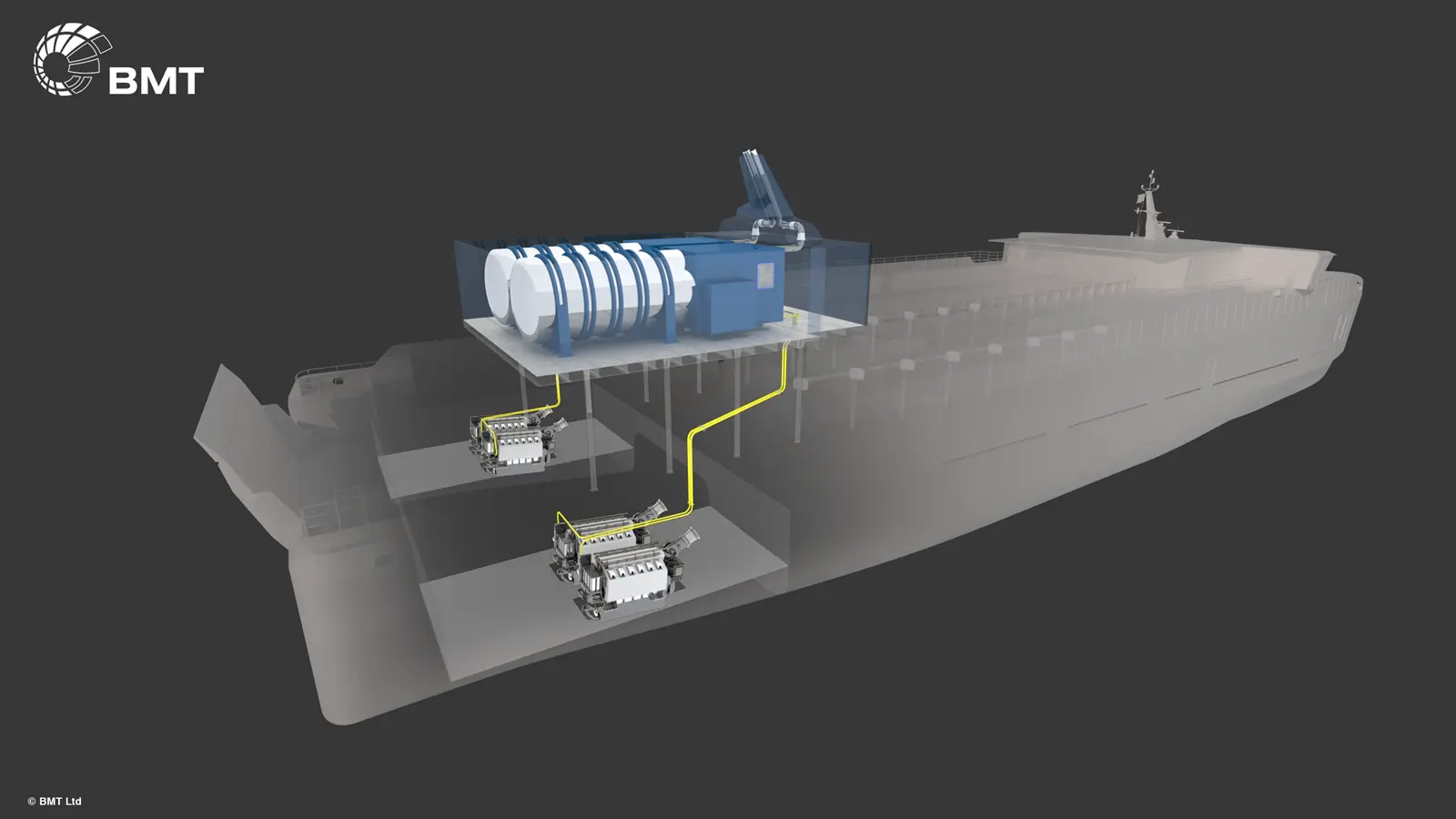
This study focuses on the potential of using hydrogen as a low-carbon alternative for Ro-Pax ferries. The objective is to assess the economic and technical feasibility of retrofitting existing vessels with hydrogen propulsion systems, by presenting the results of a comparison between the capex and opex costs of three retrofit alternatives with varying complexity, hydrogen demand, and costs.
Dr. Thomas Beard, Senior Analysis Engineer at BMT and co-author of the industry white paper discussed the results. “The recently launched white paper, Feasibility of retrofitting medium-sized Ro-Pax ferries to utilise hydrogen propulsion and storage technology, delves into the challenges and opportunities unique to the maritime sector. The study underscores the urgent need for tailored solutions within this dynamic industry. The requirement to meet Net Zero will require a change in fuel, as such BMT are exploring several options to support the maritime transition onboard vessels. However, the total cost of ownership (TCO) is an important aspect and collaboration with PA allows the techno-economic facts to be fully explained.”
The white paper employs an 85-meter Ro-Pax catamaran as a case study, analysing the vessel’s characteristics, operational profile, and potential for retrofitting. The vessel’s size, speed, and operational frequency make it an ideal candidate for transitioning to hydrogen propulsion. The study considers three retrofit options, incorporating technoeconomic modelling to assess costs and benefits.
The results of the study found that the cost of the production of hydrogen played a major role in determining the most cost-effective solution from an operational perspective, as well as regulations. Interestingly, the study found that a hydrogen fuel cell option, powered by blue hydrogen, was likely to be a more cost effective choice, given cost differentials between blue and green hydrogen. The study noted that a dual fuel engine could be a viable interim solution, but technical constraints, such as the requirement for hazardous zones associated with areas where hydrogen might be present (e.g. hydrogen tank connection spaces, bunkering stations, ventilation inlets and outlets) would limit retrofit possibilities in smaller vessel classes.
Mike Davis, energy transition expert at PA Consulting, says: “The need to identify credible decarbonisation pathways in the maritime sector is more pressing than ever, and we need to start looking closely at the various practical decarbonisation solutions that are available. Our aim for this study was therefore to move beyond high-level analysis and present a detailed technical and economic assessment of a realistic low-carbon retrofit option, considering an example vessel in operation today. This allowed us to get right to the heart of some of the key questions that we’re hearing from the sector as it looks to adopt low-carbon fuels, such as the quality of the business case for vessel operators, realistic expected emissions reduction benefits, and the detail around key technical challenges.”
Related Articles
 AMMONIA
 HYDROGEN
 HYDROGEN