



CMB.TECH puts technology at heart of Euronav reorientation
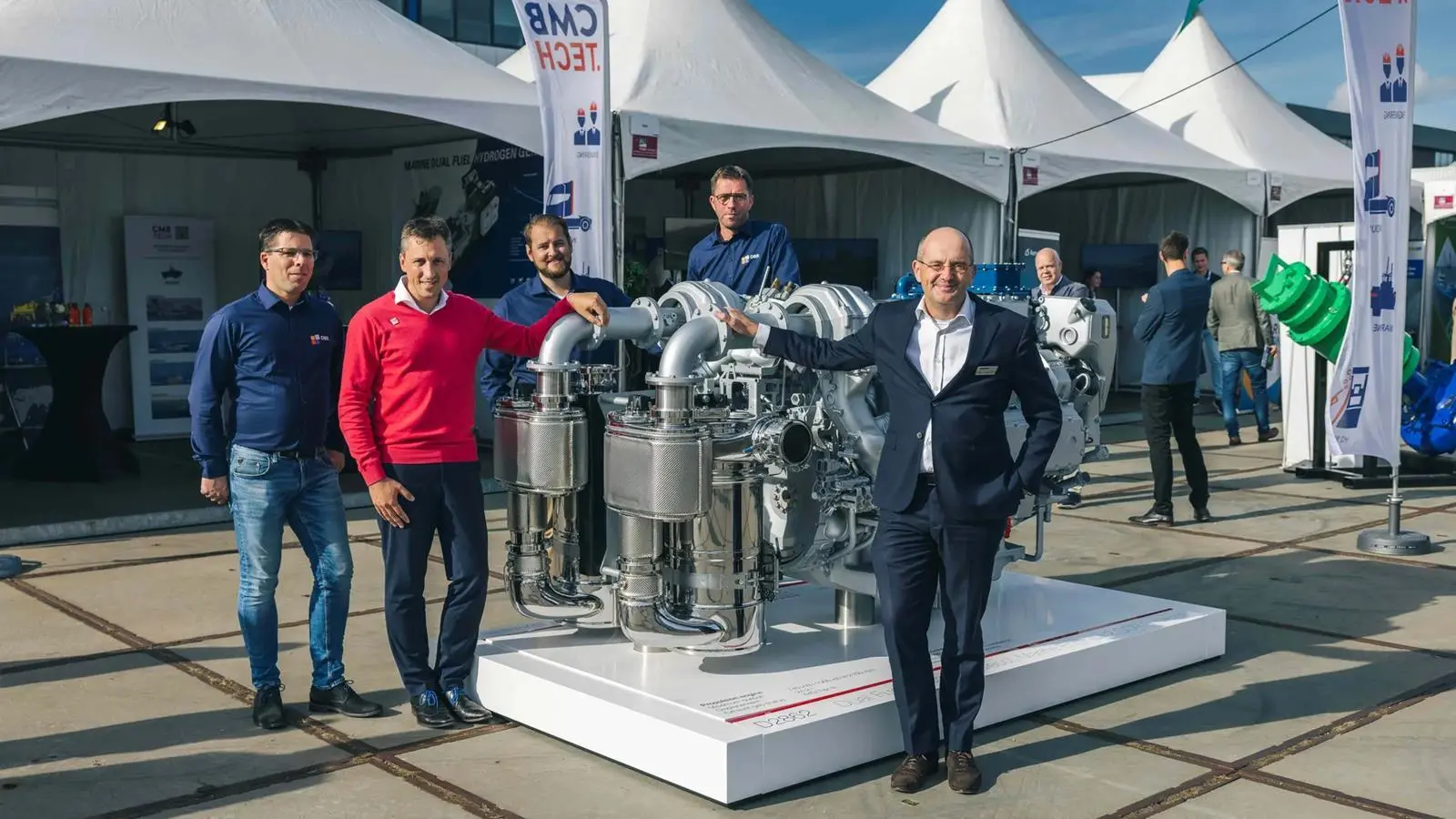
CMB and Euronav believe that the addition of CMB.TECH to Euronav’s business will enable a flywheel strategy – positioning the group to tap into each step of the energy transition towards low carbon shipping. Speaking at a Capital Markets Day on January 12, 2024, Campe outlined the company’s history of engine and vessel development but also pointed to its truck, rail and port infrastructure ventures that will deliver new fuels to those vessels.
While hydrogen, as a base molecule easily produced from green electricity and an electrolyser, is an obvious fuel choice for some applications, the large volumes required make ammonia a more suitable choice for deepsea shipping, so he sees a strong future for both. Combined with that outlook, Campe points to the benefits of combustion technology.
“We believe that hydrogen and ammonia are the real choices if you would like to decarbonise our industry. It’s nice to have a new fuel, but it is also about the technology,” he said. “We have chosen combustion technology.” It is reliable, robust, and cost efficient. Additionally, burning hydrogen, a combustion engine is not sensitive to impurities that may be present. Although ammonia is harder to combust than other fuels, the long stroke of a slow-speed engine provides the time to burn the ammonia completely and efficiently.
“This is the way we’d like to go forward,” he said, also noting the importance of the company’s dual-fuel engine developments while new fuel supply develops. The company’s dual-fuel capabilities overcome the “chicken and egg” dilemma of new fuel availability, both landside and at sea. The company’s ecosystem approach includes hydrogen engine solutions for both rail and truck, so the supply chain needed to get new fuels to ships can be zero emission, to match the performance of the ships themselves.
CMB.TECH is connecting the various parts of the ecosystem with a string of recent partnerships including WinGD for ammonia-fuelled marine engines, DBR for hydrogen-fuelled gensets, Antwerp Terminal Services for hydrogen dual-fuel straddle carriers, Ports of Stockholm and Volva Penta for hydrogen-fuelled roro tractors, and Van Moer Logistics and Delhaize for hydrogen dual-fuel trucks.
Looking at the entire hydrogen supply chain
The company is also advancing its role in the production of new fuels. In September 2023, Cleanergy Solutions Namibia, a joint venture between the Ohlthaver & List Group and CMB.TECH, announced the start of construction of Africa’s first public green hydrogen refuelling station. The hydrogen production plant the companies are developing in Walvis Bay, Namibia, uses solar energy for hydrogen production onsite. The facility will supply hydrogen to trucks, port equipment, and railway applications.
It is expected to be fully operational by mid-2024, but that is just the first phase of CMB.TECH’s ambitions in Namibia. The strategic Walvis Bay location provides direct access to major shipping routes. Besides further scale up of hydrogen production for land and sea applications, a green ammonia plant and terminal is planned for the site. Speaking at the Capital Markets Day, project manager Liesbeth Verhaert said the partners are taking a phased approach to the developments in Namibia to build up experience and a skilled workforce. Ultimately, it will be a gateway from a country with abundant solar resources to supplying the company’s fleet and customers with new fuels at low cost.
CMB.TECH’s marine division already builds, owns, operates and designs a wide range of low and zero-carbon ships powered by dual-fuel diesel-hydrogen and diesel-ammonia and monofuel hydrogen engines: offshore wind support vessels, dry bulk vessels, container vessels, chemical tankers, tugboats and ferries.
Fleet reorientation
Euronav says its older tanker tonnage provides excellent opportunities to recycle capital over time into more future-proof, attractive and diversified end-markets and contract types. For example, in December 2023, the company announced that it had lifted the option for one more VLCC at Qingdao Beihai. Euronav now has three VLCCs on order at the yard following the ordering of two VLCCs earlier in the year. The vessels are expected to be delivered in 2026 and will be powered by a dual-fuel diesel-ammonia engine.
Euronav’s ceo, Alexander Saverys, told the Capital Markets Day meeting that he envisaged the vessel owner and operator diversifying into the containership and dry bulk markets, alongside the interest in ordering ammonia/LPG carriers capable of transporting ammonia. Saverys noted that the company was looking at ordering up to 120 such low-carbon vessels as part of plans to reorientate the fleet toward lower-carbon solutions.
Building on CMB.TECH’s strong technical reputation, Euronav intends to change its corporate name to CMB.TECH in February 2024. The company aims to be the reference for decarbonisation in the shipping industry, and Campe says the ecosystem concept will add value to the enlarged group.
Related Articles
 AMMONIA
 AMMONIA
 AMMONIA