



Belgian Maker Lands Methanol Engine Deal
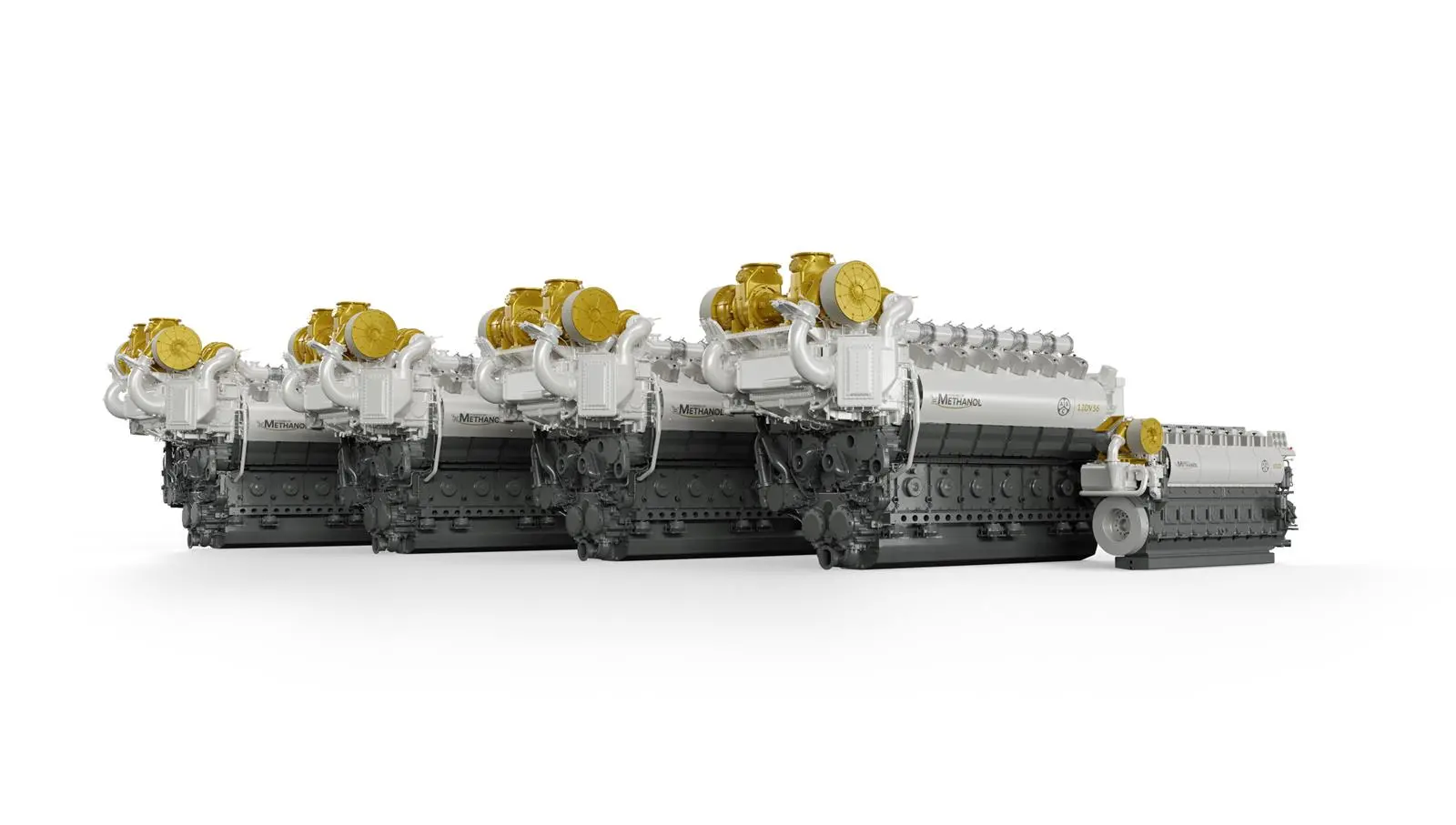
The deal secured from construction and dredging group Jan De Nul encompasses the full shipset of five engines that will drive the 30,600kW primary genset installation in the company’s 215m newbuild cable-layer. The nascent Fleeming Jenkin, booked from China Merchants Heavy Industry (CMHI) Haimen and due to be delivered in 2026, will provide an unmatched cable-carrying capacity of 28,000t for assignments in the interconnector and offshore renewable energy sectors.
The entire medium-speed engine outfit will enable firing on methanol (ideally ‘green’ methanol), bio diesel or hydrotreated vegetable oil (HVO), as well as diesel, and will incorporate SCR and diesel particulate filter (DPF) technologies.
By adopting sustainable fuels in combination with ultra low-emission vessel (ULEv) technology, the next-generation cable-layer will ensure a significant reduction in emissions across-the-board, irrespective of operating mode, and spanning CO2, SOx, hydrocarbons (HC), particulate matter (PM) and NOx. Running on ‘green’ methanol, for instance, will also achieve compliance with the most exacting PM standard under Euro Stage V regulations, and nitrogen emission criteria under the Euro 6 edict.
The machinery package comprises four 12-cylinder models of the DV36MeOH design, plus an eight-cylinder unit of the latest DZDMeOH series released last year. With the vee-12 engines individually rated at 7,200kW, and the 8DZDMeOH producing 1,800kW, the power concentration of the shipset amounts to 30,600kW.
The dynamic-positioning vessel will have four azimuthing propulsion units, a triple set of bow tunnel thrusters and two retractable thrusters. The ship’s main machinery will be supplemented by a 2.5MWh-rated battery system.
The vessel’s scale, deadweight and power caters to market developments, whereby offshore wind farms are being constructed further offshore and in deeper waters, and electrical interconnectivity between countries and regions is assuming growing importance for both economic and energy security reasons. These factors shape a need for the capability to transport and handle longer, stronger and heavier cables.
Related Articles
 2-STROKE & 4-STROKE
 2-STROKE & 4-STROKE
 2-STROKE & 4-STROKE