



EU Backs efuels Retrofit for Bulker
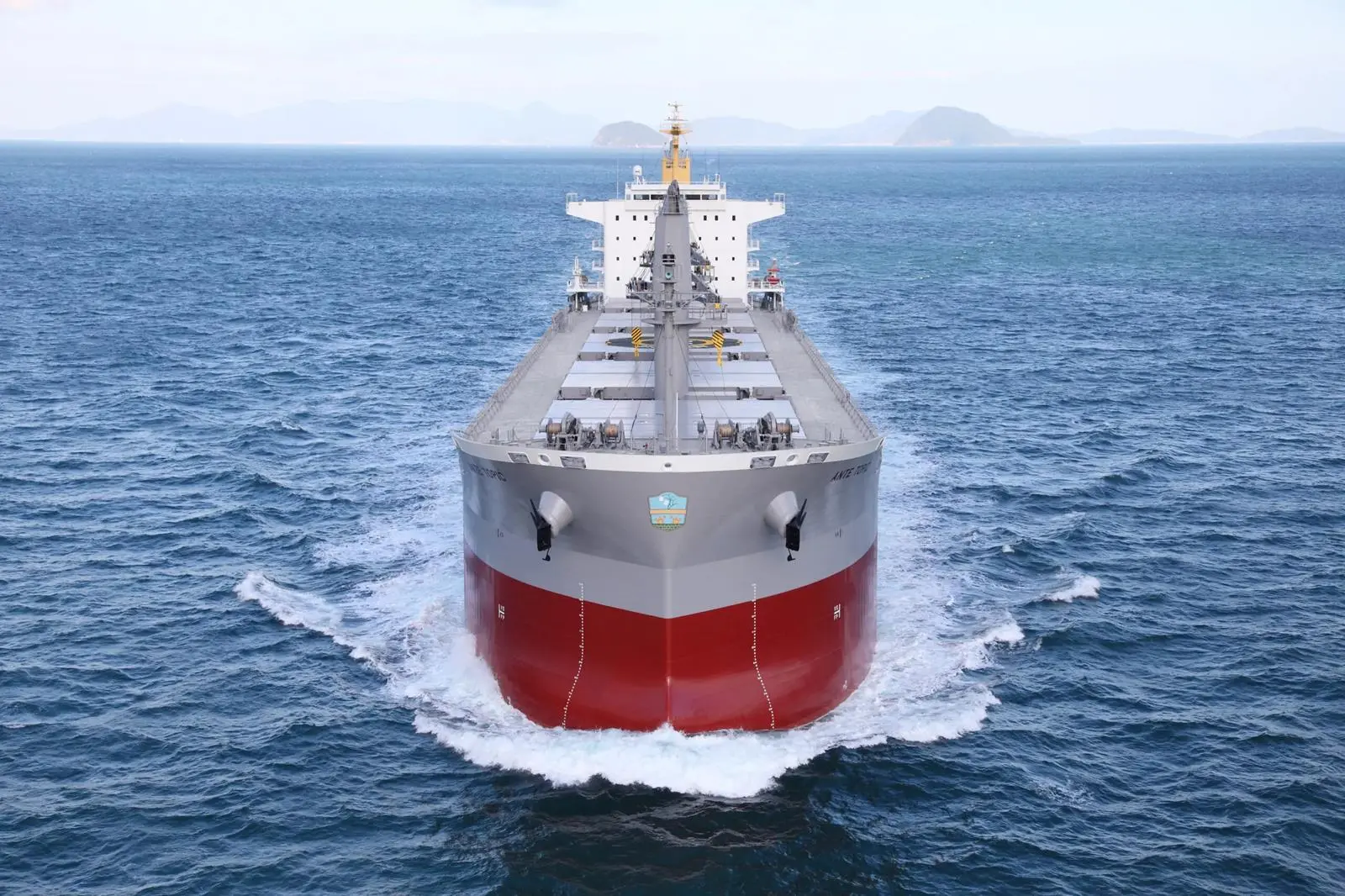
Launched in January this year with a five-year timescale, GAMMA entails the development and demonstration of an innovative, electrofuel-based system with the potential to supersede the ship’s auxiliary generators. After proof of concept, the next step would be replacement of the main engine so as to realise the ultimate goal of a comprehensive energy transition.
The demonstration campaign will validate the safe shipboard integration of the biomethanol and ammonia fuels, and the biomethanol reformer, ammonia cracker and proton exchange membrane (PEM)-type fuel cell systems that will convert the hydrogen produced into electricity.
The subject vessel is a unit of the Topic fleet, under the aegis of the Italian company ANT Topic, one of the 16 partners from eight countries involved in GAMMA. The project has qualified for funds totalling EUR13m ($14m) out of the European Commission’s Horizon Europe programme, and is led by the Icelandic engineering consultancy Verkis. A further subvention equivalent to around EUR103,000 ($108,000)has been made to Verkis from the Icelandic Climate Fund.
The Dutch participant in the enterprise, marine technical consultancy Aurelia, which specialises in the concept design of what are described as climate-friendly vessels, will supervise the engineering tasks behind the design and integration of ‘green’ technologies into the bulker, without compromising its operational capabilities. The integration process will factor-in weight, volume, cost and safety considerations, and draw on competences across the multi-disciplinary, 16-party developmental consortium.
Under the novel fuel system to be installed, ammonia and ‘green’ methanol will be bunkered by the ship and then converted into hydrogen by means of cracker and reformer technologies. The purified hydrogen will then be used in a fuel cell, providing electrical energy for the shipboard net and dispensing with the need for power from the auxiliary generators running on fossil fuel.
Further raising the environmental credentials of the system, part of the energy needed for the hydrogen conversion will be met by electrical supply from photovoltaic (PV) panels that will be fitted on the bulk carrier’s hatch covers.
Fraunhofer Institute in Germany will provide the requisite conversion technology, the hydrogen purification system will come from the Portuguese specialist Amnis Pura, while Ballard Power Systems Europe will deliver the fuel cell plant.
To evaluate the environmental performance of the blend of technologies embraced by GAMMA, Politecnico di Milano will perform a well-to-wake analysis and calculate the CO2 emissions. The substantial Italian representation in the endeavour also includes RINA.
Related Articles
 2-STROKE & 4-STROKE
 2-STROKE & 4-STROKE
 2-STROKE & 4-STROKE