



CHANGE OF ROLE FOR TRIESTE ENGINE PLANT?
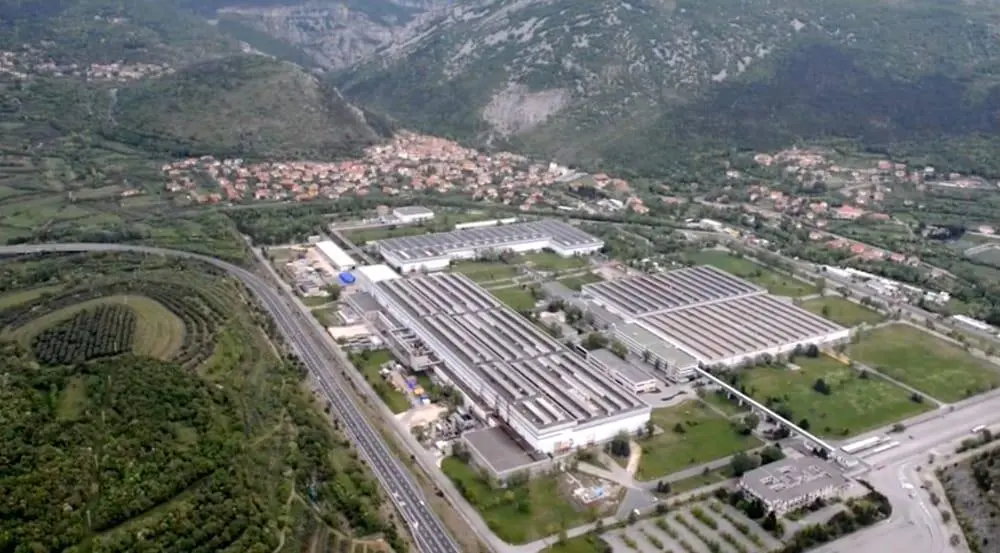
The Bagnoli della Rosandra complex in north east Italy may be re-purposed for the manufacture of railway rolling stock, complementing the MSC Group’s growing stake in the rail transport sector.
Back in July 2022, Wartsila announced its intention to cease production at Trieste, and centralise four-stroke engine output at the Vaasa factory in Finland. Last November, during its Capital Markets Day presentations, the Finnish corporation confirmed that engine manufacturing at Trieste had ended, while indicating that R&D and after-sales activities would continue.
It is understood that MSC’s plan to acquire the plant comes with a commitment to retain all 300 or so jobs threatened by what Wartsila describes as its ‘ramping down’ strategy.
The envisaged transition to railway engineering, potentially in the form of the manufacture of rail wagons for container transport, would denote a further chapter in the Geneva-headquartered group’s development of rail industry interests. These currently include the Genoa-based rail transport company Medway, a specialist in block train services connecting main Italian ports with inland terminals, and the intermodal transport and rail freight operator Medlog, plus its more recent 51% ownership of Italian high-speed train operator Italo.
Located close to Italy’s border with Slovenia, the Bagnoli della Rosandra factory stands as a testament to Italian post-war industrialisation, having been constructed at the end of the 1960s as Grandi Motori Trieste (GMT), at the joint initiative of Fiat Grandi Motori and state-owned IRI.
Wartsila Corporation became a shareholder in GMT during 1997, with a 40% stake. The Finnish group assumed full control in 1999 when it bought up Fincantieri’s 60% holding. GMT was immediately subsumed within the new entity Wartsila NSD Italia, subsequently Wartsila Italia.
The plant became the production point for the remarkable Wartsila 64 engine, which offered the highest cylinder output of any medium-speed diesel (2,000kW/cyl), together with the Sulzer ZA40S medium-speed design, and all two-stroke Sulzer machinery apart from the top-of-the-range, widest-bore RTA96C type.
The assembly line product range at Trieste went on to encompass many Wartsila medium-speed series, notably the W26, W38, W46, W46F, W46DF, and W50DF types.
The Italian premises have also played a major role in Wartsila R&D and engine technology testing, enhancing the portfolio as a whole. The many references included the development of a new family of highly-supercharged four-stroke engines for high-speed vessels.
Related Articles
 2-STROKE & 4-STROKE
 2-STROKE & 4-STROKE
 2-STROKE & 4-STROKE