



Preparing for the next Generation
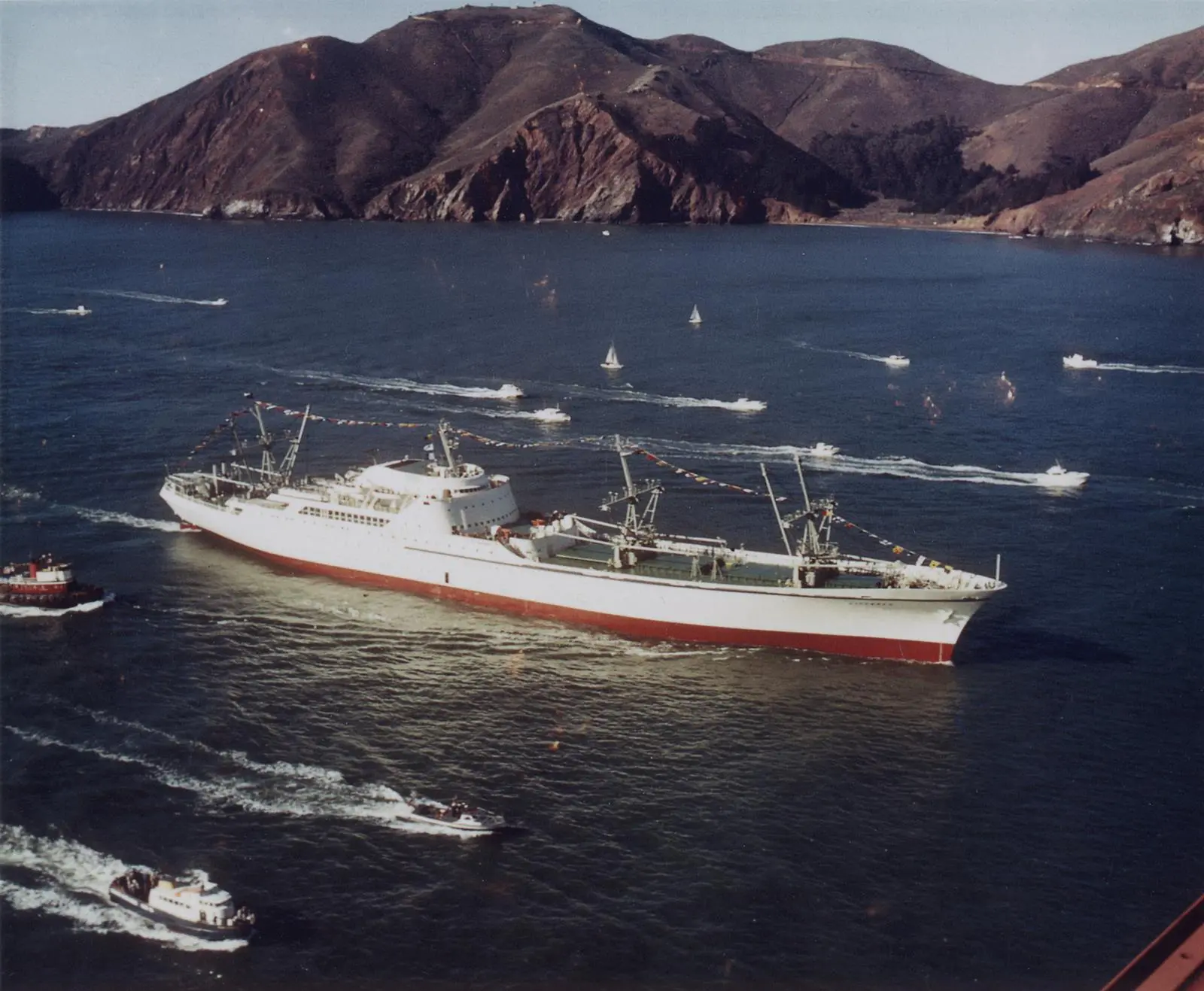
The first generation of nuclear ships were small compared to today’s specialised ship types and utilised a source of power that was generally perceived as dangerous. That perception has at least been proved wrong in the more than 60 years that have passed since the Savannah became operational.
Furthermore, the Pressurised Water Reactor (PWR) used to date in all nuclear ships has a safer alternative in Molten Salt Reactors (MSR) which are what is envisaged in all of the projects currently underway. MSRs – of which there are numerous variations were first developed in the 1950s and intended as the propulsion system of a nuclear-powered bomber. That early project was abandoned in favour of PWRs possibly because MSRs do not produce weapon grade nuclear material while PWRs can and in the nuclear arms race, weapon grade material was essential.
There are numerous projects underway to develop new generation nuclear ships and in all probability they could become ready long before appropriate new regulation is in place. In anticipation of a nuclear ship future, the IMO adopted Resolution A491( XII) – the CODE OF SAFETY FOR NUCLEAR MERCHANT SHIPS in 1981. This however outdated and does not take into account changes in nuclear technology since it is composed around the use of PWRs.
In December 2022, the UK Maritime and Coastguard agency acknowledged this shortcoming in MGN 679(M) section 1.6 where it states that ‘the Code should be reviewed as necessary to ensure it captures technological progress’ and also ‘There is currently no confirmed information from the IMO on when the next formal review of the Code will be. The Code itself lists reasons for a review; however, it does not specify how frequently the Code should be updated’.
On the development front, UK-based Core Power is arguably the front runner in the field of commercial nuclear ships is developing a variety of MSR known as a molten chloride fast reactor along with its partner TerraPower and others. After 11 years of work on the project, it is anticipated that a micro experimental reactor of the type now being built will be switched on in 2026. If all goes according to plan, Mikal Boe, CEO of Core Power the UK-based organisation believes that commercial versions could be ready in the 2030s. That is a time scale that Professor Jan Emblemsvåg of the Norwegian University of Science and Technology (NTNU) agrees with.
Emblemsvåg has been involved in the Norwegian NuProShip project which has been studying three reactor types for use in commercial shipping. That work has encouraged Norwegian shipbuilder Ulstein Verft to develop a concept design called Thor which could be powered by a thorium reactor. Thorium is a quite abundant element but is only mildly reactive until bombarded with neutrons and then produces Uranium 233 for the reaction. Uranium 233 is not a weapon grade product.
Boe, recognises that appropriate regulation will be key to ensuring their acceptability. He makes the point that under current rules, a mechanically linked steam turbine propulsion system would be considered a nuclear installation, but a nuclear electric system would be permitted. There is a small power loss in electric systems, but this is easily overcome because the reactor would provide more than sufficient power with just a tiny increase in fuel.
Looking at the advantages for owners and operators, there is likely to be a weight saving advantage with Boe estimating the weight of a nuclear reactor, its concrete containment system and the ancillary equipment is around 70% that of a comparable diesel engine. Doing away with the fuel tanks allows for more cargo space.
Both Boe and Emblemsvåg put the additional space as a small percentage overall with Boe suggesting around 4.5% additional space on a 185,000dwt Capesize bulker. That equates to around an additional revenue from 8,000 tonnes of freight earning cargo on top of the zero cost for bunker fuel.
Furthermore, in an electric propulsion system, the reactor could be placed anywhere in the hull with just the electric motors and gearbox at the stern. This would allow for optimising the ship configuration for enhanced hydrodynamic performance.
Boe believes that nuclear electric also has a less obvious benefit. “As well as decarbonisation ships, a nuclear electric vessel could help decarbonise ports. Using reverse cold ironing, the power of the nuclear reactor could be made to power shore cranes, conveyors and other cargo handling gear while the vessel was being worked”.
He also believes that is a powerful argument in persuading ports to accept nuclear vessels which is something that may need to be done if nuclear vessels are to become acceptable.
The safety of MSRs is due to many factors including they operate at pressures lower than 5 Bar reducing risk of failure, the fuel and coolant salts are chemically inert, the boiling point of fuel salt is about 1670K or more, much higher than the operation temperature 973K. Therefore, the pressure of primary system cannot increase, and the risk of explosion is therefore reduced or eliminated. Even if a radiation leak does occur, any spread is likely to be limited to just 20m or so rather than the several kilometres of a PWR. That means that for a large ship with a beam of over 40m, all radiation would be contained inside the protective concrete housing.
Convincing the ship operating sector of the benefits of nuclear is possibly the easiest hurdle to overcome. Boe points to a recent online poll conducted by a maritime news service. Of the 197 respondents, 49% said that nuclear power will definitely be a viable alternative, and another 21% were positive that nuclear power will play a role, but only in the longer term. On the other side, 13% said they saw no role for nuclear power as a viable alternative for ships. The remaining 17% thought nuclear power was an unlikely fuel for commercial shipping. He also highlights that of Core Power’s 65 shareholders, the majority are either ship operators, shipbuilders or financial institutions that will be financing the commercial nuclear fleet.
Nuclear ships – the benefits
Ships today must comply with more regulations on emissions and efficiency than at any time in the past. Until the year 2000 when the NOX Tier I level became effective and 2005 when the Baltic SECA came into effect, ships were not subject to any emission regulation at all although the future limits for SOx and NOx had been set in 1997. Then in 2015, thee EEDI rules began limiting CO2 emissions.
Apart from any auxiliary generators on board, a nuclear ship would be unaffected by any of the emission rules. With emission charging (EU ETS scheme) now beginning, nuclear ships would be outside of those charges.
Since power limitation is often a consequence of meeting EEDI or EEXI rules, ship speed generally has been reduced significantly in recent times. At the turn of the century when containerships operated at 25kt there were plans and projects for even faster ships to come into service. The Maersk B class of 4,196teu Panamax ships built from 2005 were part of this movement with a service speed of 29kt and a maximum of 37kt. The ships are still in service but today operate normally at around 14-16kt.
A nuclear powered ship would have no speed limitations except for safety reasons in congested areas and could thus bring about the speed revolution once envisaged. Sailing at economic speed would become a thing of the past.
A ship built with several years or even a lifetime of fuel supply on board would be spared the necessity to take bunkers into account when calculating cargo capacity for daily operations. More to the point most of the bunker capacity would be freed up for cargo although some additional ballast tanks might be advisable for stability purposes. The cost of delays for bunkering would be dispensed with.
Nuclear ships can also assist in solving the latest environmental focus of biofouling. This often occurs when ships are idle for long periods or laid up. In times of low demand, laying up ships could be avoided as the vessel could sail aimlessly in circles without wasting fuel. This would ensure that fouling does not accumulate and so help prevent transfer of species.
Faster ships would mean fewer ships are needed for the same volume of trade. That would mean less need for newbuilding capital and better profitability for ships. It would also help address the seafarer shortage. Taking that point further, as the reactor would be maintenance free, fewer engineering crew might be needed. The propulsion system and things such as steering, ballast treatment, electrics and the like would be much as on conventional ships. Oily bilge water might also be expected to be less of a problem.
Geopolitical events have been a feature of recent months. Whilst there would be an initial period of disruption if something like the attacks on shipping in the Red Sea occurred, the rerouting of ships and the ability to increase speed would minimise the delay and of course no additional bunkering would be required.
Related Articles
 AMMONIA
 AMMONIA
 OTHER ALTERNATIVE FUELS