



Cheaper supply and regs Needed to support MeOH use
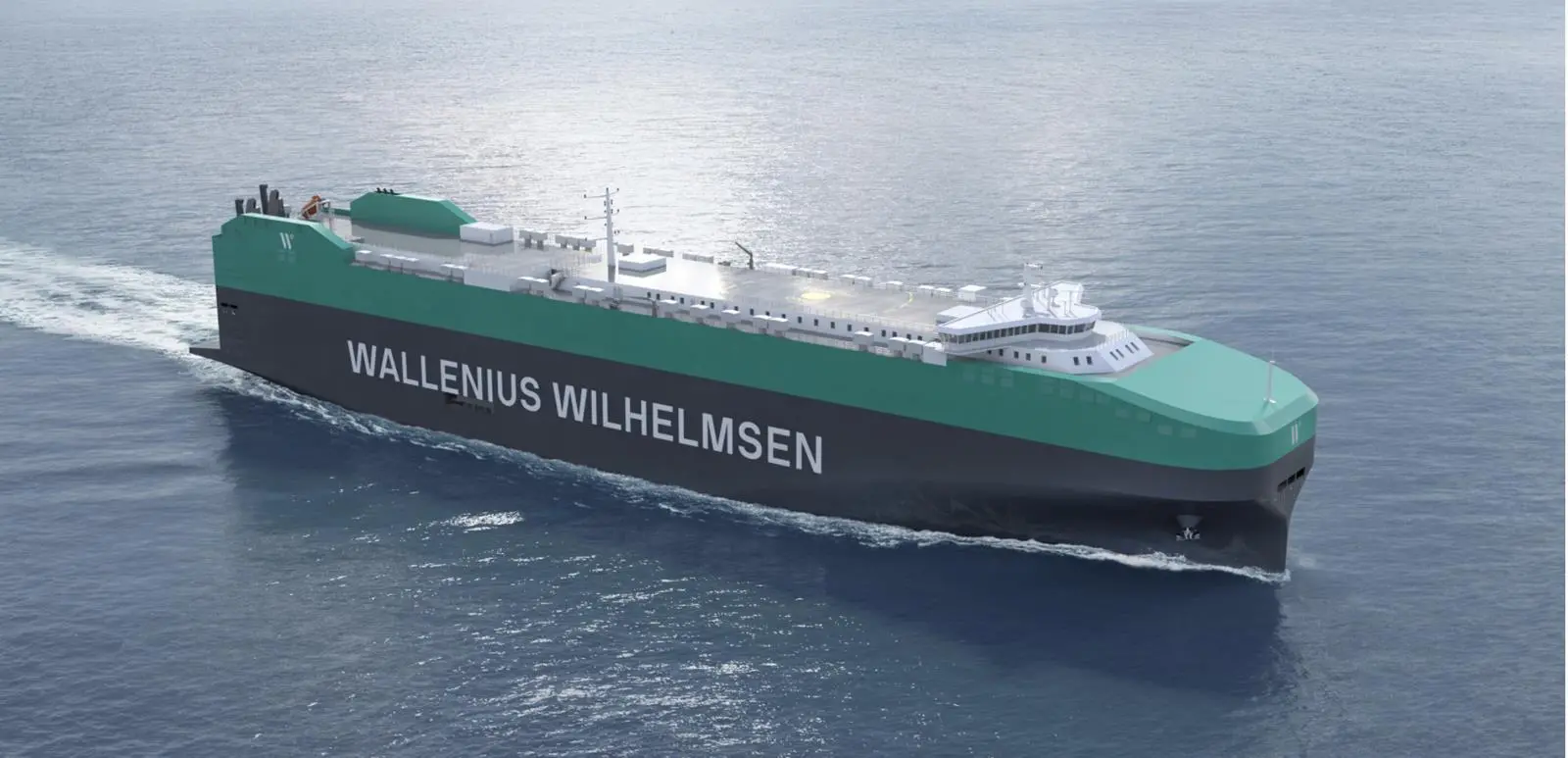
“They will also be ammonia-ready and able to be converted as soon as ammonia becomes available in a safe and secure way. These next generation vessels will play a key role in the introduction of Wallenius Wilhelmsen’s net zero emissions end-to-end service by 2027,” the company said in a statement.
“Together with our customers we are committed to further shaping our industry and accelerating towards net zero. These new vessels are a vital part of that journey,” Xavier Leroi, EVP & COO Shipping Services at Wallenius Wilhelmsen, said in the statement. The first of the Shaper Class vessels are expected to be delivered in the second half of 2026 and the four additional vessels should enter service between May and November 2027.
While many shipping companies are placing orders for vessels capable of running on green fuels, the uptake of these is likely to remain slow due to supply and cost concerns. “At the moment, the questions whether owners will be able to buy these fuels and if yes, at what price, remain,” said Kristian Knaapi, Sales Manager at the Finnish consulting naval architect firm Deltamarin that was in charge of basic and detail design work of the Shaper class ships.
However, making ship ready for these new full can mean fitting them outright with the necessary equipment or reserving space for the equipment in the design of the layout of the vessel. Either case will make it cheaper to take the step to the use of alternative fuels at a later point than not preparing the ship for this at the design stage.
Customers so far agreed to pay for costlier, green fuel
As fas as the willingness of customers to pay for more expensive green fuels, Wallenius Wilhelmsen’s experience so far is encouraging.
“It is correct that greener, low GHG fuels are more expensive than conventional fuels. While we expect this price premium to reduce over the long term with increased supply, without advancement in production processes and regulatory developments aimed at bridging the cost gap, the premium will remain relatively high in the near term, said Lene Bårli Wiederstrøm from the group’s Orcelle Accelerator team, who are responsible for work with biofuels and future fuels.
“Wallenius Wilhelmsen’s experience so far, is that customers are willing to pay for emission reductions, currently based on using biofuel. We are committed to contributing to a low carbon future and will be a shaper on the journey to net zero,” she told The Motor Ship.
“As such we are continuously working on new ways to improve the energy efficiency of our vessels, by exploring alternative fuels, promoting regulation that enables decarbonisation in shipping to occur at scale and at shape, and by looking at different mechanisms to reduce the cost gap both within our organisation and through external mechanisms. We believe the introduction of carbon price mechanisms are essential for bridging the gap between conventional and low carbon fuels,” she concluded.
Meanwhile figures from Clarkson Research in London show that 45% of newbuilding orders in gross tonnage terms placed in 2023 were designed to run on an alternative fuel – 125 of these being for methanol dual fuel ships.
Incentives lacking for use green fuels
The reason the transition to lower ore zero carbon marine fuels will take time is that there is little incentive transition, said Robin Meech, Managing Director at Marine and Energy Consulting Limited in the UK. The green fuels are very expensive – green LNG $2,000 more costly per ton of fuel oil equivalent, according to one estimate.
“Increasingly legislating for ships to be greener globally can only be achieved through the IMO where political wrangling is delaying such regulation as everybody sees the cost,” he told The Motor Ship.
“Current EU carbon equivalents are at about €50/ton to $55/ton. A ton of FO (fuel oil) emits 3.1 tons CO2, hence the additional cost of ‘paying’ to pollute is $170/ton of fuel oil. With VLSFO (very low sulphur fuel oil) above $600/ton this is an absorbable cost,” he said, adding that some may see this as the way forward in the shorter term, out to 2030 when the carbon price will rise as the available credits are reduced.
The shipping industry – and the bunker supply side – are notorious for not complying or running very near the rules. The expansion of the dark tanker fleet to avoid sanctions on Russian oil is a case in point. These dark tankers are still being bunkered by the market. There is unlikely to be much more growth in the market for conventional, fossil fuels but global demand of over 250 million tons is still very likely in 2030, he concluded.
Related Articles
 AMMONIA
 AMMONIA
 AMMONIA