



Bulk carrier life cycle assessment quantifies benefits of energy-saving technologies
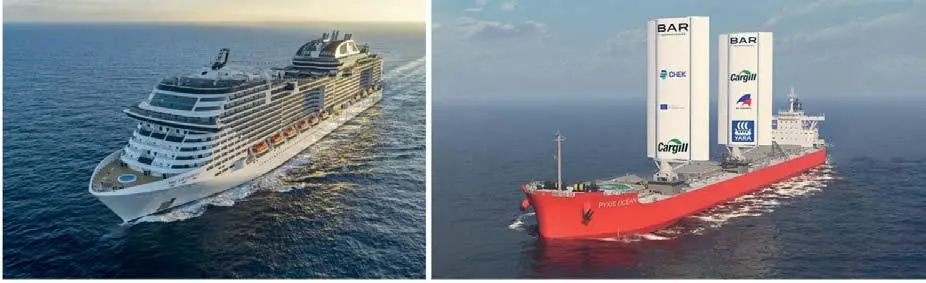
Researchers from World Maritime University and Deltamarin have conducted a design-stage life cycle assessment (LCA) comparing a standard EEDI phase 2 compliant Kamsarmax bulk carrier (as baseline vessel) with an optimised design that includes multiple energy-saving technologies and operation on liquified biogas (LBG) and hydrotreated vegetable oil (HVO).
The study is part of the on-going CHEK project and builds on the digital twin and lifecycle modelling that has been developed throughout the project. The results showed that the future vessel could reduce energy consumption by 31.23% compared to the baseline vessel model. A significant reduction in CO2 (48.6%), NOx (88.6%), SOx (100.0%), and black carbon (94.0%) in the tank-to-wake phase was also achieved as a result of the energy-saving technologies working in synergy with the alternative fuels.
The optimised bulk carrier model used in the LCA includes WindWings technology, air lubrication system, ultrasound antifouling system, waste heat recovery, shore power and a battery utilised for spinning reserve. A hybrid 4-stroke power plant minimises the impact of fluctuating engine loads resulting from, for example, the wind-assist technology.
The study acknowledges that there is no “silver bullet” solution for decarbonisation, so multiple technologies will have to be employed synergistically, along with alternative fuels, and this will require careful evaluation using a systematic tool to ensure optimal combinations are adopted.
The LCA methodology provides an accurate and systematic tool for evaluating the environmental impacts of the new design throughout its entire lifecycle, says Mia Elg, R&D Manager at Deltamarin. The LCA framework used consists in goal and scope definition, life cycle inventory (LCI), life cycle impact assessment (LCIA), and results interpretation, and Elg says Deltamarin now has the tools and databases to provide the analysis to ships operational today or to new ship designs on a design platform capable of evaluating how multiple energy saving devices can be combined to maximise efficiency. Initially, it has been used for the CHEK project vessels, but it’s also available to Deltamarin customers, where it can be used for vessels changing their operational profile mid-life or other new vessel types.
The CHEK project study investigated the comparative LCA of the two vessels, future vessel versus baseline vessel based on digital models and published research, thus including raw material extraction to production, operations, maintenance and vessel disposal. It aimed to be as holistic as possible. For example, the construction phase included also transportation of material from steel mills to the shipyard and electricity consumption in the shipyard. The future vessel had higher emissions during construction and maintenance than the baseline vessel.
Elg notes that some yards in China are already providing data on their emissions, so she anticipates vessel-specific LCA accuracy will increase further yet.
The analysis incorporated realistic modelling of the ship propulsion power system including the impact of weather on typical routes. Fuel consumption estimates were obtained from a system-level energy model “DeltaKey”, where the propulsion profile is combined with the ship’s other energy consumers.
The CHEK project is targeting long-distance shipping with its evaluation of multiple decarbonisation solutions combined on a single vessel. The project, while aiming to inform both newbuild and retrofit, has specifically involved the design of a wind energy optimised bulk carrier and a hydrogen powered cruise ship.
The three-year project started in June 2021 with project partners include BAR Technologies, Cargill, Climeon, Deltamarin, Hasytec Group, Lloyd’s Register, MSC, Silverstream Technologies, University of Vaasa, Wärtsilä, World Maritime University and Manta Marine Technologies.
“This LCA study is an important new dimension to vessel design which underscores the vital importance of adopting a holistic approach to maritime sustainability that encompasses innovative technologies, alternative fuels, and a comprehensive understanding of the entire life cycle of vessels,” says Elg. “By integrating the design stage simulations of ship fuel and energy utilisation into LCA, we are able to provide environmental assessment of the emissions of the vessel from a life cycle perspective, which is more accurate than indicators such as EEDI and CII. That way our customers can know how the design will actually impact the environment.”
She anticipates the modelling to extend beyond air emissions to water emissions (water footprint), acidification, land use, biodiversity impact and others. The next articles to be published from the CHEK project, due later this year, will be an LCA of a cruise ship running on hydrogen and the digital twin stage energy modelling results.
Related Articles
 ALTERNATIVE FUELS & LUBRICANTS
 ALTERNATIVE FUELS & LUBRICANTS
 ALTERNATIVE FUELS & LUBRICANTS