



Back to the FuTube
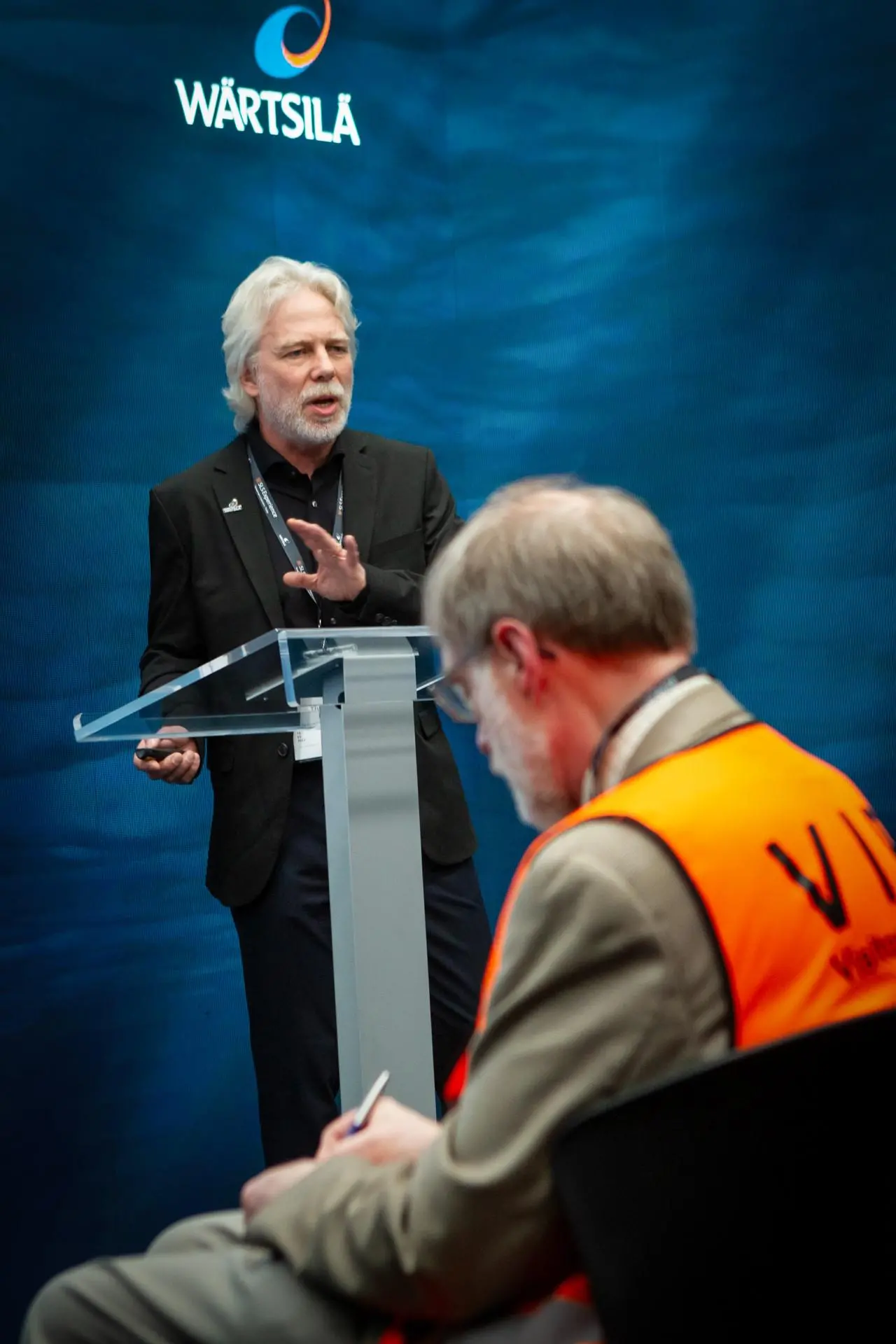
Thomas Pauly has an important job: he is a General Manager at Wärtsilä’s Shaft Line Solutions (SLS) and is responsible for its future portfolio and market intelligence. In any company, those roles form the basis of its success but in the competitive world of shipping, where price is often the decision-driver behind technology choices, they are especially vital.
So since 2017 he has been asking some simple questions in 180 customer interviews that generated 3,800 separate pieces of information. Mr Pauly himself conducted 150 of them and the headline outcome of all this work was stark: in general, customers believe that today’s equipment is good enough.
He was speaking to a small group of invited guests, including The Motorship, in late March in the heart of SLS’ Bearing Centre in Vigo, Spain, where he summarised the research and drew two important conclusions from it. One identified what customers wanted from their seals and bearings while the other discovered where their pain points were.
Those two lists were noticeably different. What customers most wanted from their seals and bearings, the survey showed, was ‘100% fail-safe [operation]; no leaks or oil spills’. But their biggest pain point highlighted a desire that bearings should ‘handle slight shaft line bending’, which ranked only seventh on the list of what customers thought they wanted.
The variation between the two sets of priorities prompted Mr Pauly to remark that “some voices were quite loud but their pain was quite low.” And vice versa, the analysis showed.
This was not just an academic exercise. It has formed “the foundation for all our innovations,” he said, going on to describe how Wärtsilä’s response had brought its international teams together to find solutions to address customers’ wishes and pain points in “a masterpiece of cross-collaboration”.
This masterpiece has been dubbed ‘FuTube’, a name chosen to convey Wärtsilä’s view that it represents the future of sterntube technology. It consists of a portfolio of new and upgraded systems (see ‘Unwrapping the FuTube package’), backed up by a demonstration test rig – part-funded by an EU grant – located in its Bearing Centre.
Mr Pauly made no secret of the strategy behind its research and the creation of FuTube: it is to increase market share by persuading owners and managers to specify FuTube-based shafting and bearing systems in their vessels. At the moment, they leave that selection to yards, which generally use price to decide which manufacturer will supply these important components, he said.
“This is the brutal reality. The market is not desperately pushing for something new and there is an extremely low price level in the market,” he said, which is a problem not only for Wärtsilä but also for other suppliers, he said. “We decided we wanted to break out of this cycle.”
He summed up Wärtsilä’s route out of this circle in three ambitions, based on the pain points identified from its research: “the more it hurts, the more they value [a solution]” he said. FuTube is the result, he said, with the goals of reducing costs, making crews’ lives easier and avoiding damage.
Related Articles
 LNG
LNG
 LNG
LNG
 SHAFTS AND PROPELLERS